Photo: Neurdein · Public domain · via Library of Congress via Wikimedia Commons
1889 · Paris, France
Exposition Universelle
- Dates
- 6 May – 31 Oct 1889
- Site
- Champ de Mars
- Declared purpose
- A world's fair for the 100th anniversary of the French Revolution.
- Fate
- The Eiffel Tower survives. The Galerie des Machines was demolished in 1910.
- Architect of record
- Gustave Eiffel, engineer and builder: about 54 when credited (1886, born 1832). Build time on record: 2 years 2 months (jan 1887 – mar 1889).; Maurice Koechlin, engineer (first tower sketch): about 28 when credited (1884, born 1856). Build time on record: same.; Ferdinand Dutert, architect: about 41 when credited (1886, born 1845). Build time on record: about 2 years (1887–89).All architects of record →
Hidden history
Found, Not Built
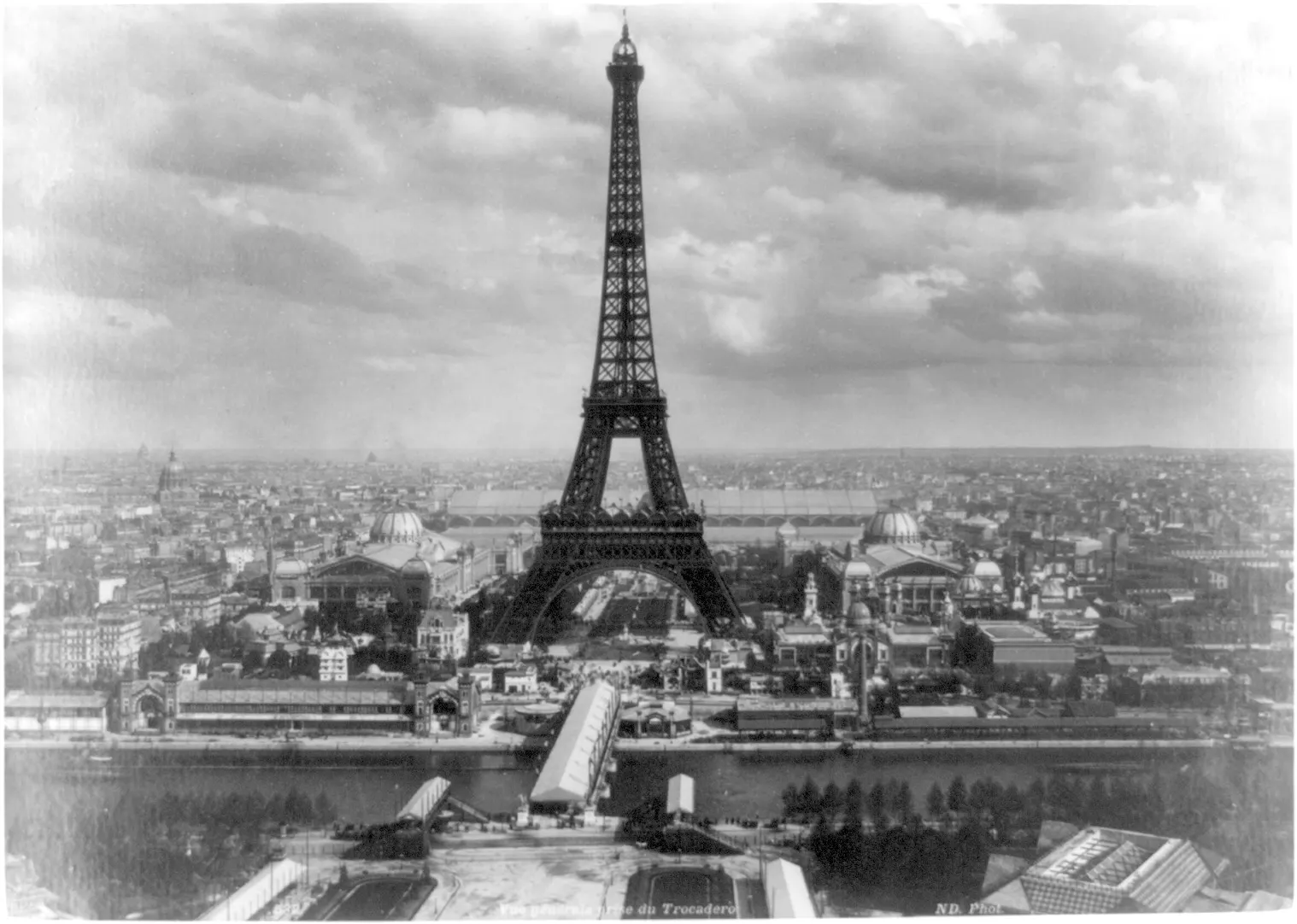
The tower was meant to stand for 20 years. It's still here, and it was saved because it was useful for transmission. The machinery hall next to it had the widest open span on Earth, and it was torn down.
Built for antennas?
The tower kept its place because it was useful for radio. Researchers ask whether tall iron towers and spires had a job like that from the start.
A 115-metre span, then scrap
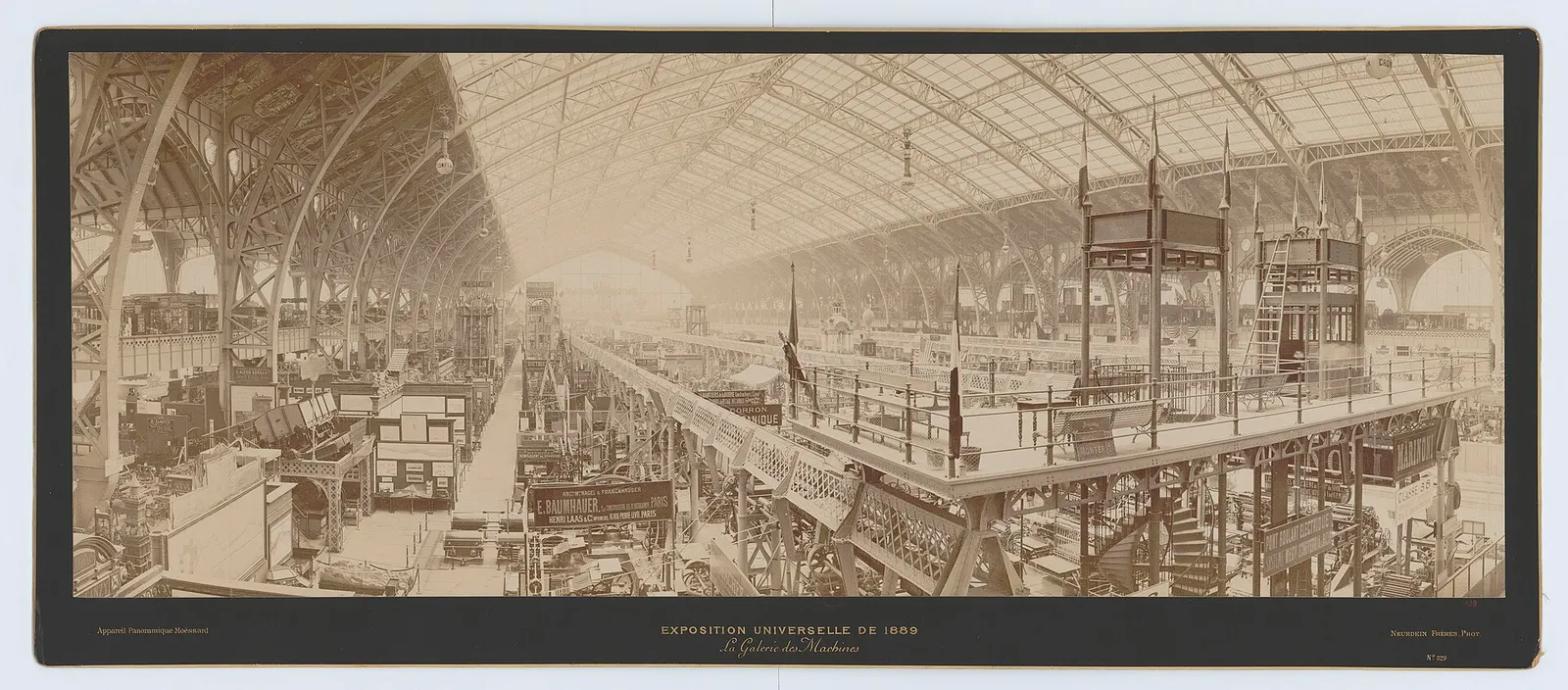
The Galerie des Machines spanned about 115 m with no supports in between. It was used again in 1900, then pulled down in 1910.
Night photos
The 1889 night photos show the grounds lit up and fountains glowing. The question: what powered it all?
Questions worth asking
- Why save the tower and lose the hall?
- Where did the iron and the skilled riveters come from so quickly?
- What do the earliest Champ de Mars maps show?
Possible original uses
- A transmission tower (the use that saved it)
- A great covered hall for assemblies or rail
- Power and lighting
What the photos show
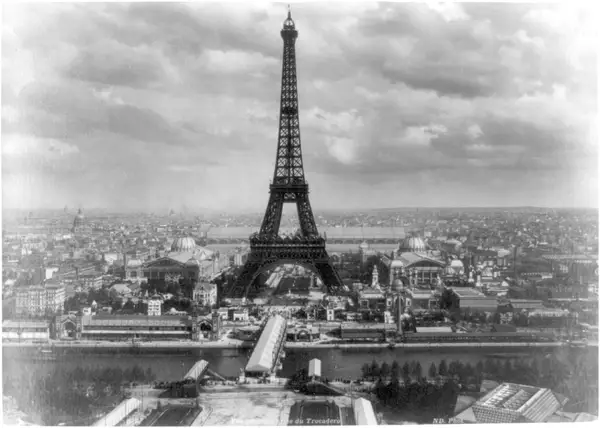 Eiffel tower at Exposition Universelle, Paris, 18891889 · Public domain
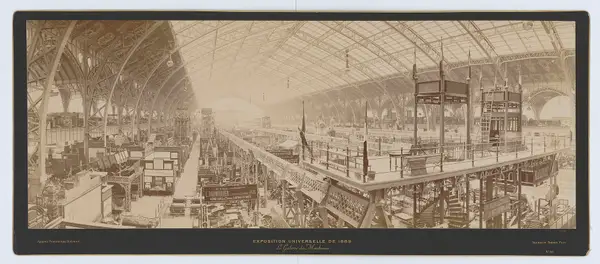 Exposition Universelle de 1889. La Galerie des Machines - btv1b11600096z1889date QS:P571,+1889-0 · Public domain
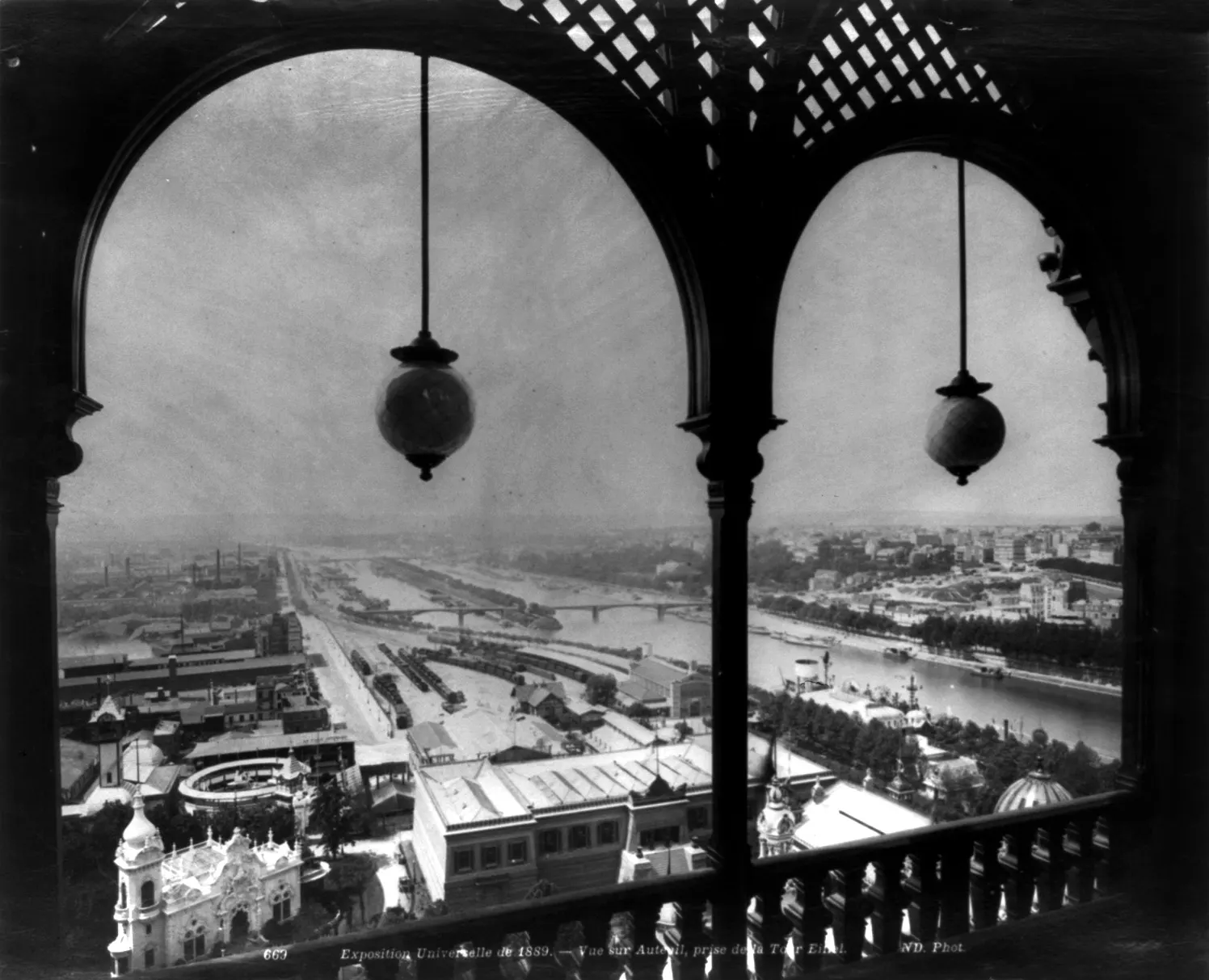
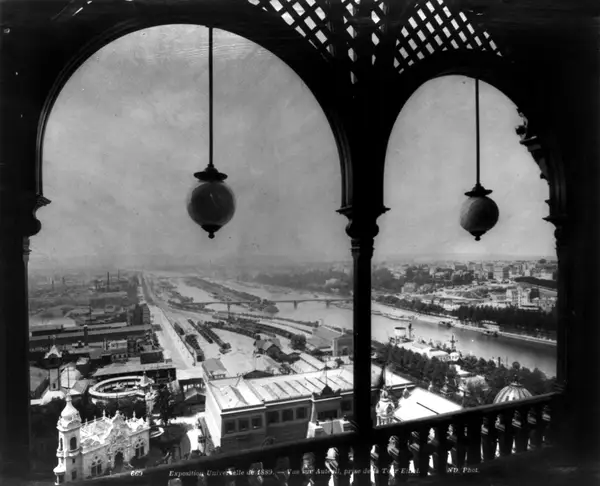 View of Exposition Universelle from Eiffel Tower, Paris, 18891889 · Public domain
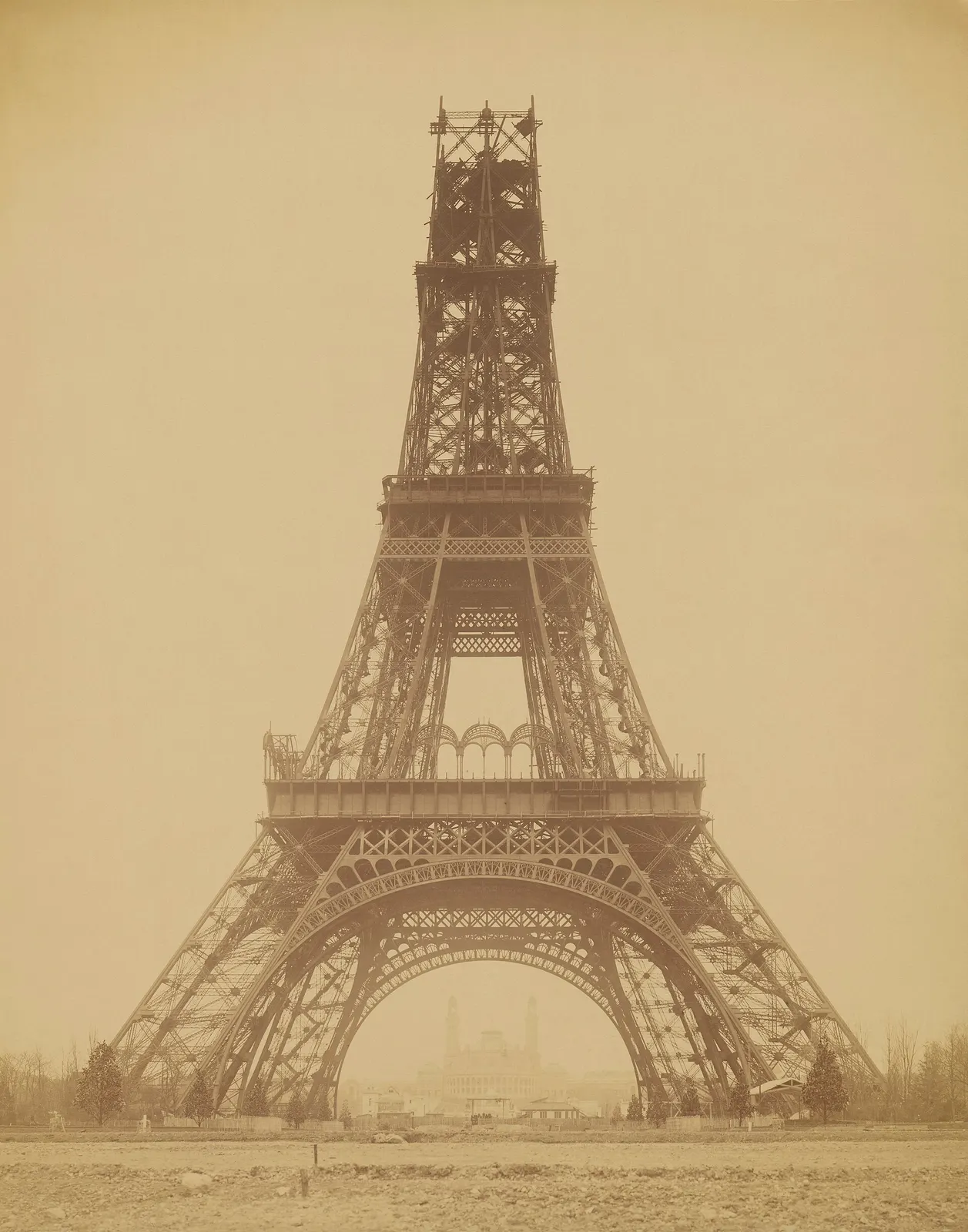
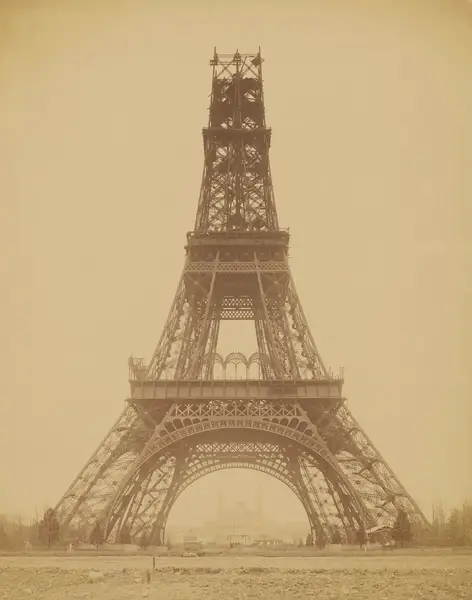 Louis-Emile Durandelle, The Eiffel Tower - State of the Construction, 188823 November 1888date QS: · Public domain
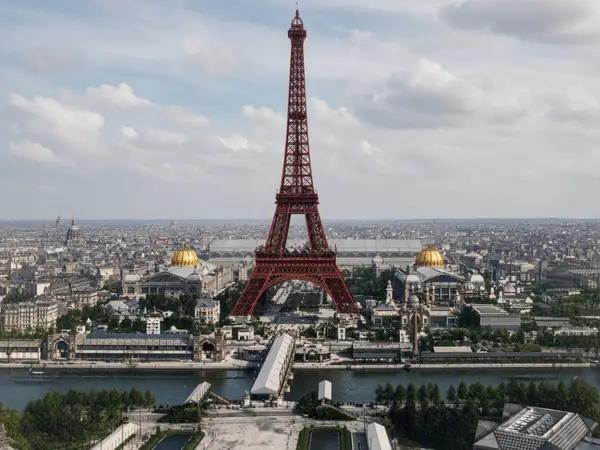
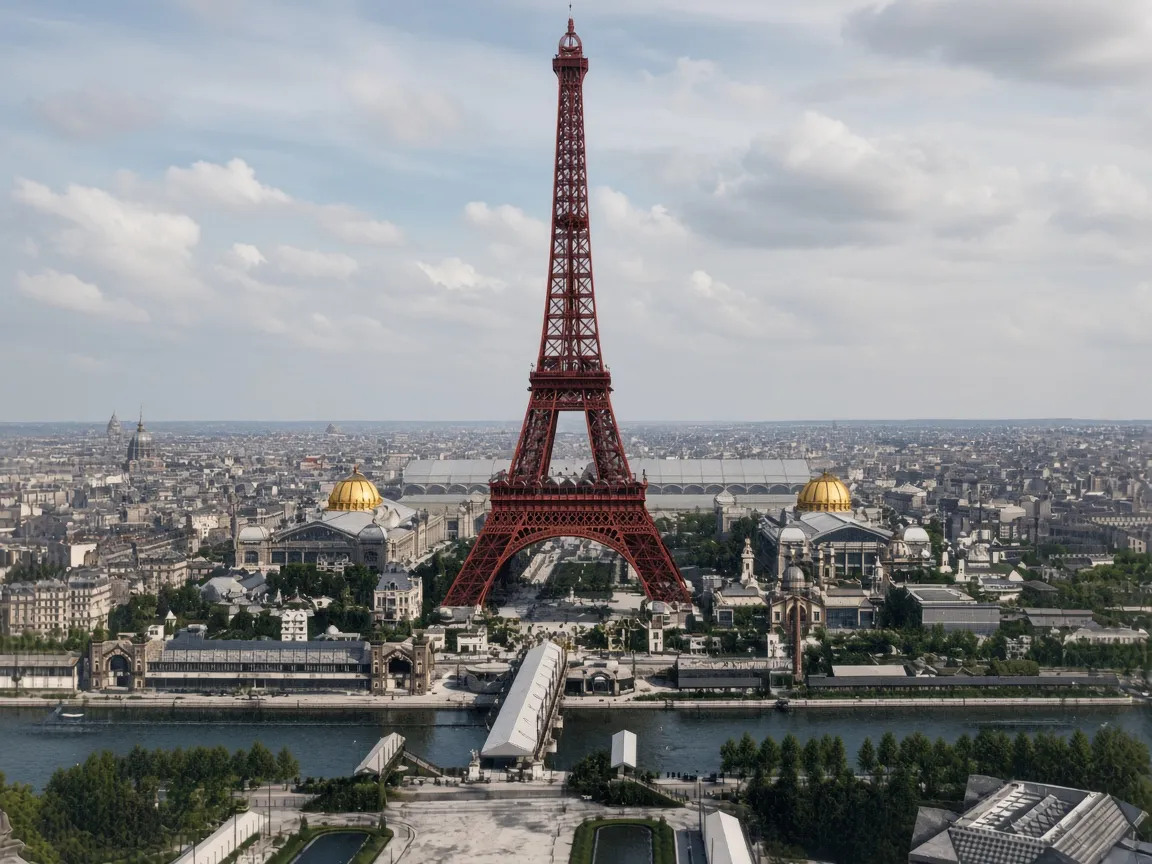
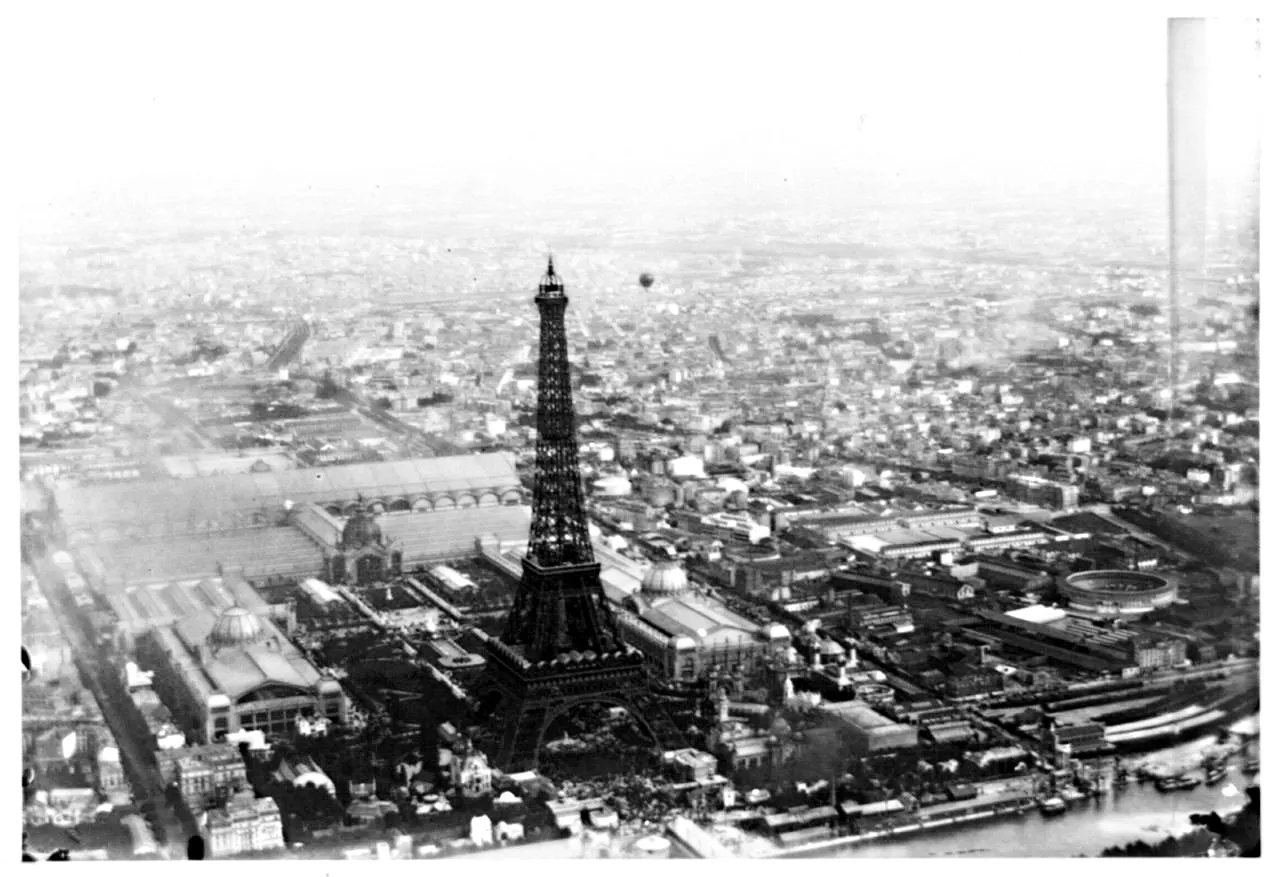
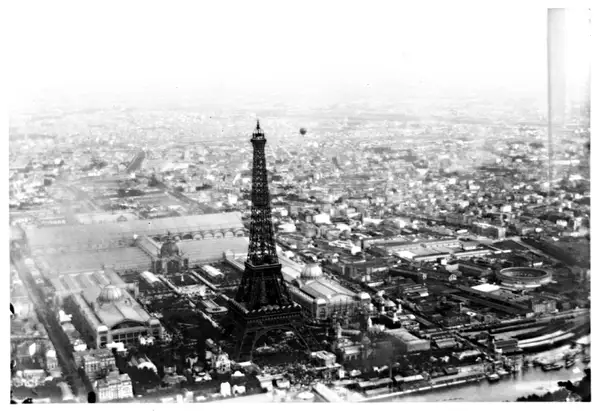 Aerial view of Eiffel Tower and Exposition Universelle, Paris, 18891889 · Public domain


The buildings
Tap a building for its photos and credits.
Further viewing
Episodes from My Lunch Break (Michael Kruse), the main lens for this app. They open on YouTube.

