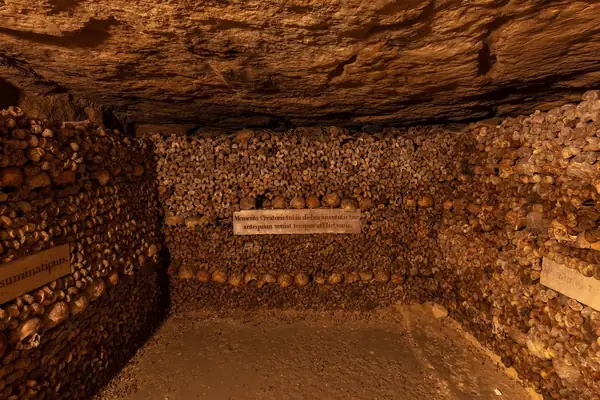
 France · 1789Catacombs of ParisA whole population, unnamed, arranged as decoration. Who decided that, and when?The Catacombs of Paris are underground ossuaries in Paris, France, which hold the remains of more than six million people. The ossuary was created as part of the effort to eliminate the effects of the city's overflowing cemeteries. In addition to directing the stacking of skulls, femurs and tibias into the patterns seen in the catacombs today he used the cemetery decorations he could find (formerly stored on the Tombe-Issoire property; many had disappeared after the 1789 Revolution) to complement the walls of bones.
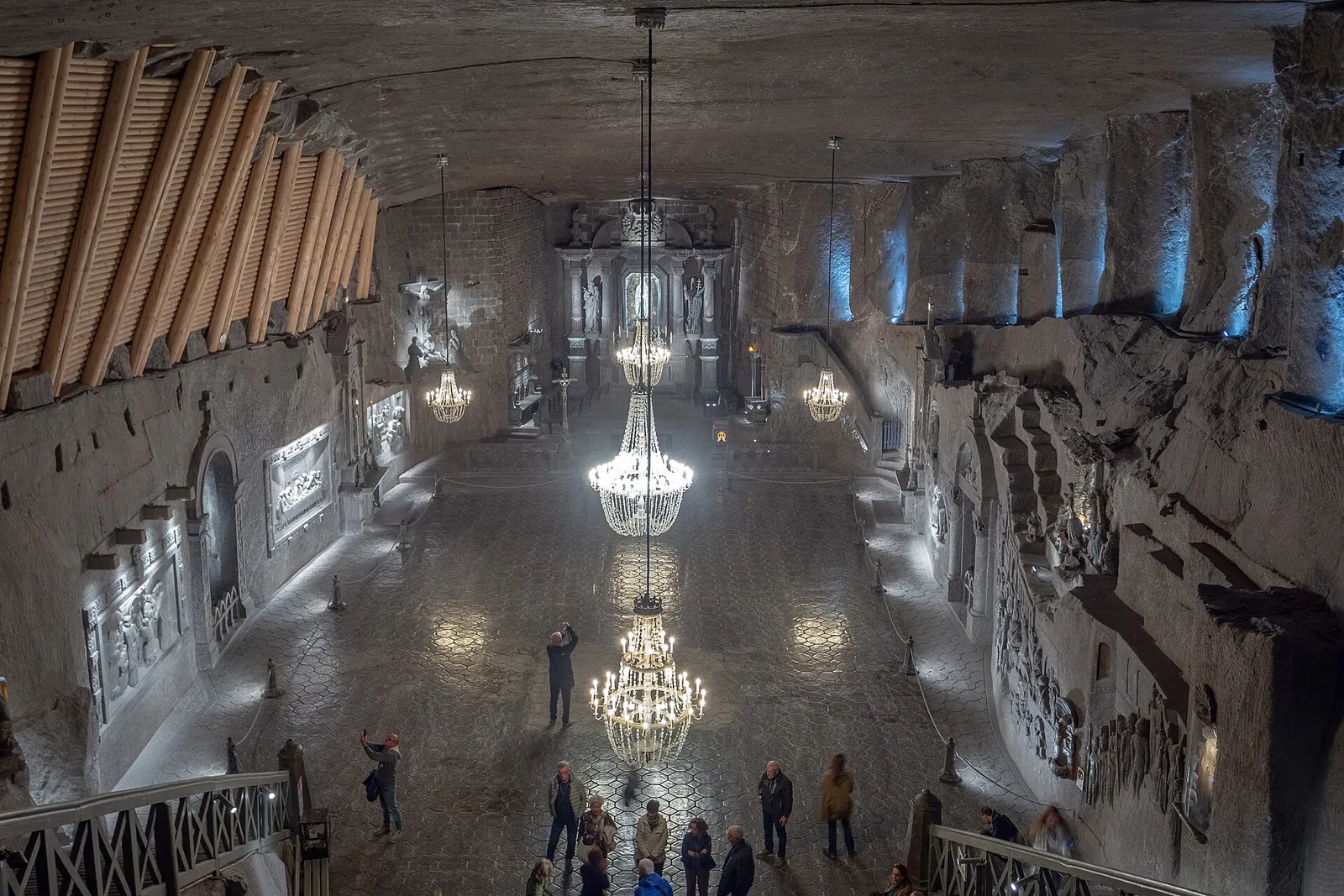
Photo: C messier · CC BY-SA 4.0 · via Wikimedia Commons
Catacombs & Underground · Poland
Wieliczka Salt Mine
The open question
Built, used, sealed and forgotten. Why does that keep happening with what's under our cities?
On the record
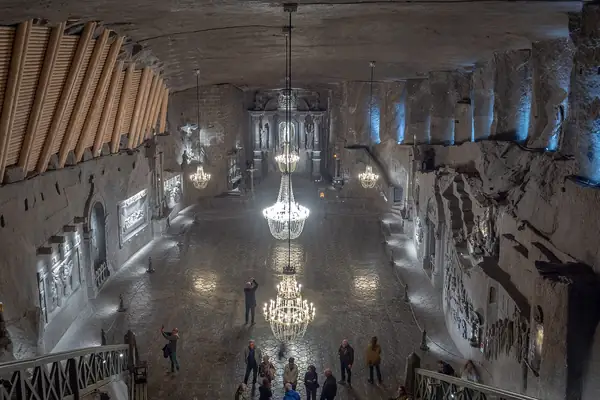
The Wieliczka Salt Mine is a salt mine in the town of Wieliczka, near Kraków in southern Poland. The Tourist Route consists of the first 3 levels of the mine. The Wieliczka salt mine, excavated from the 13th century, produced table salt continuously until 1996, as one of the world's oldest operating salt mines.
- Year
- 1996
- Kind
- tunnels
Sources
More from Catacombs & Underground
France · 1789Catacombs of ParisA whole population, unnamed, arranged as decoration. Who decided that, and when?The Catacombs of Paris are underground ossuaries in Paris, France, which hold the remains of more than six million people. The ossuary was created as part of the effort to eliminate the effects of the city's overflowing cemeteries. In addition to directing the stacking of skulls, femurs and tibias into the patterns seen in the catacombs today he used the cemetery decorations he could find (formerly stored on the Tombe-Issoire property; many had disappeared after the 1789 Revolution) to complement the walls of bones.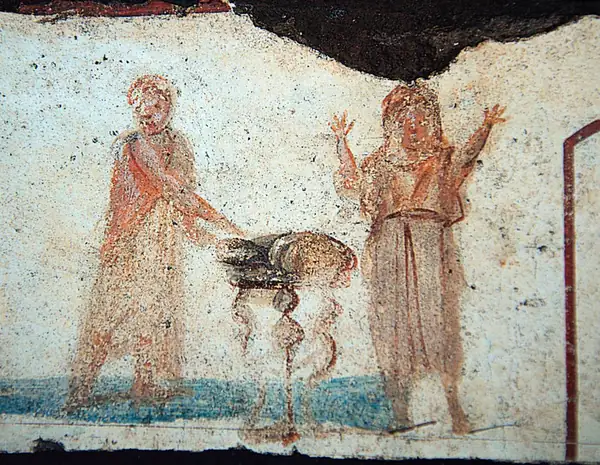 Italy · 1578Catacombs of RomeMiles of passages carved by hand for the dead. How many people, and how many years, did that take?The Catacombs of Rome are ancient catacombs, underground burial places in and around Rome, some rediscovered since 1578, others even as late as the 1950s. It is unknown exactly how many catacombs are in Rome. The Catacombs of San Callisto are around 90 acres large, 12 miles long and contain four levels, extending to a depth of more than 20 meters underground. The Catacombs of Rome (Italian: Catacombe di Roma) are ancient catacombs, underground burial places in and around Rome, some rediscovered since 1578, others even as late as the 1950s.
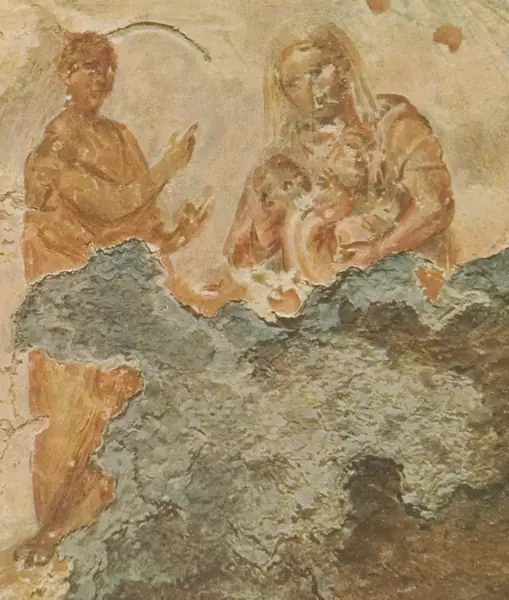 Italy · 1822Catacomb of PriscillaWho dug all this, and where did all the rock go?The Catacomb of Priscilla is a large archaeological site on the Via Salaria in Rome, Italy, situated in what was a quarry in Roman times. The catacombs extend underground for over seven miles, making them one of Rome's most extensive catacombs. it was used for thousands of Christian burials from the late 2nd century through the 4th century.
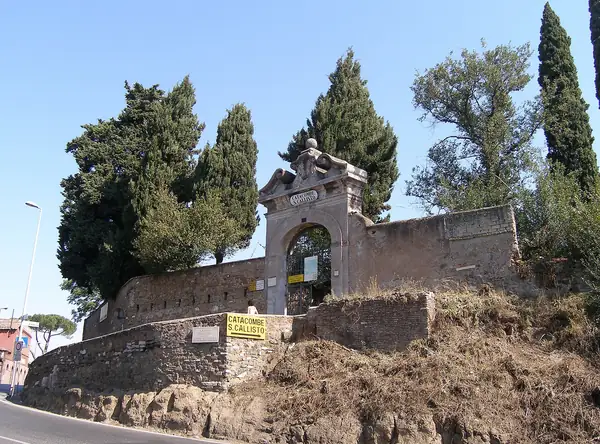 Italy · 1857Catacomb of CallixtusWho dug all this, and where did all the rock go?The Catacomb(s) of Callixtus is one of the Catacombs of Rome on the Appian Way, notable for containing the Crypt of the Popes, which once contained the tombs of several popes from the 2nd to 4th centuries. Joseph Wilpert (1857-1944) directed photographs to be taken by "Pompeo Sansaini, accompanied by his son Renato." These were printed on salted paper and hand colored with watercolors by Carlo Tabanelli, who sat in front of the artworks in the catacombs to accurately reproduce the colors.