1888 · Barcelona, Spain
Investigate this fair
5 clues in 5 photos, strongest first. Tap a photo to zoom in on each clue.
- 2 Masonry, not plaster
- 1 Impossible timeline
- 1 Other details
- 1 Repeated motif
Case file
The Hypothesis
Barcelona's fair rose on cleared citadel ground with permanent brick buildings and a hotel claimed in 53 days, which points to reuse of what was already on the site.
Barcelona built its fair on a demolished citadel, and its gate and castle are permanent brick. The record says a 2,000-guest hotel went up in about 53 days.
What the photos and records show
- The record says the fair sat on a demolished citadel.
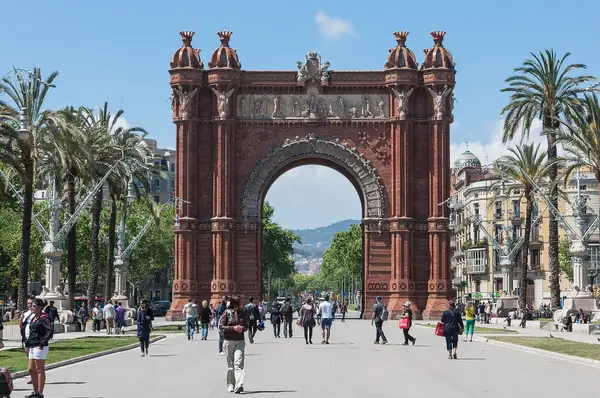
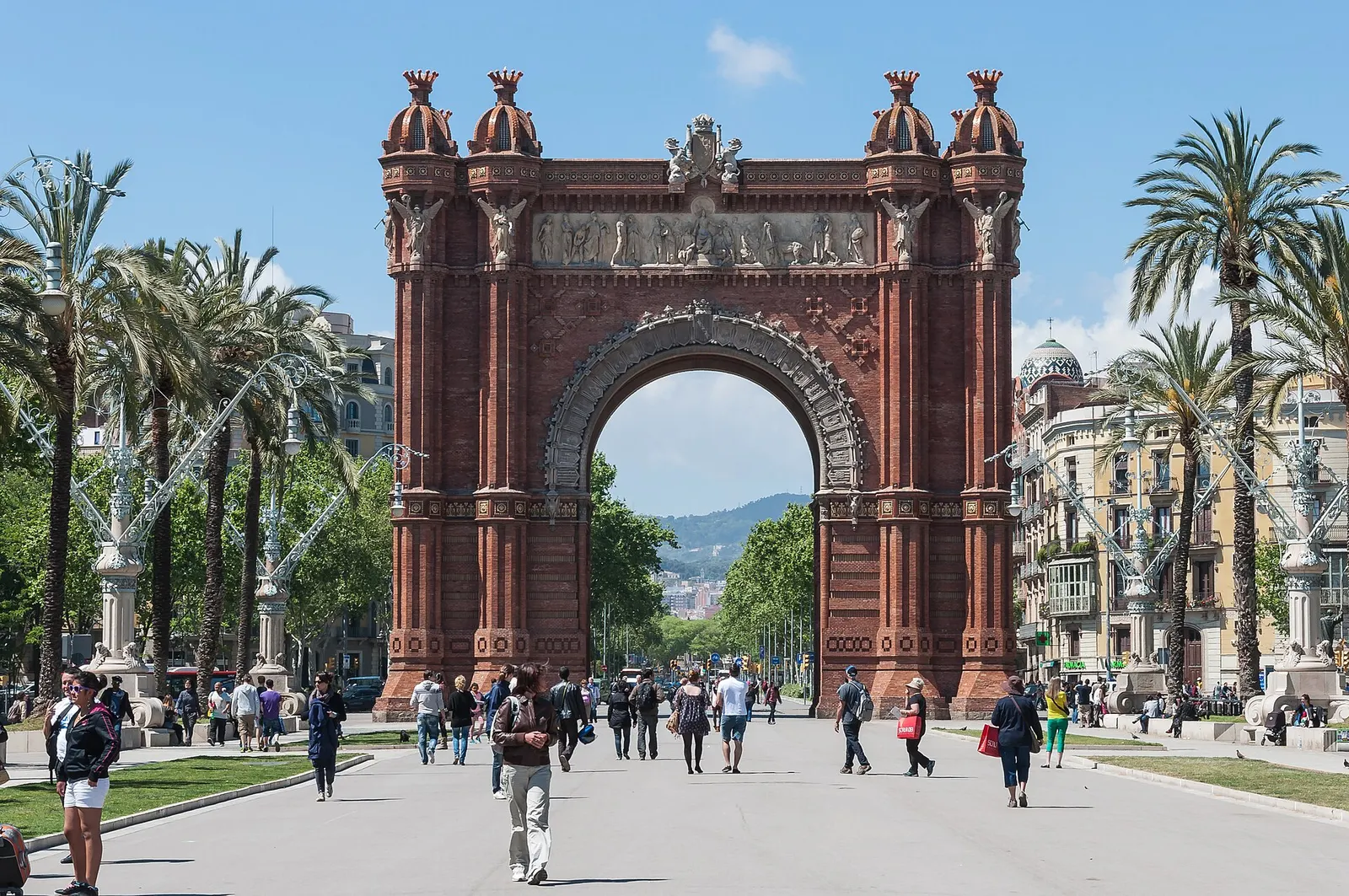
- The Arc de Triomf and Castle of the Three Dragons are brick with stone and ceramic.
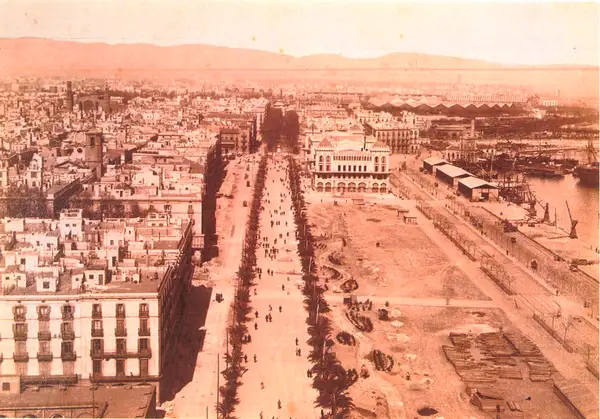
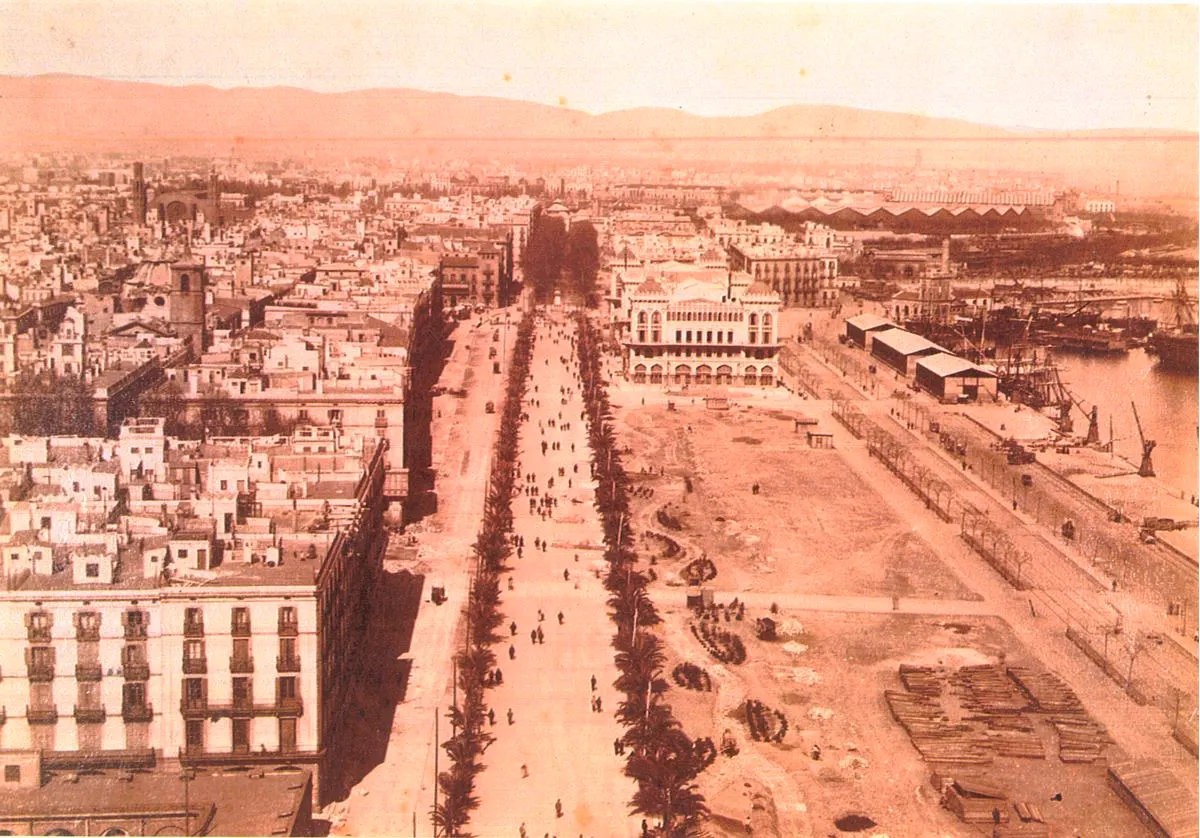
- The record says the Grand Hotel Internacional went up in about 53 days for 2,000 guests; the view shows ground scars and dockside cranes.
- The lamp standards match Pont Alexandre III in Paris.
Open questions
- What was found when the citadel was cleared?
- How was a 2,000-guest hotel built in 53 days?
- Why the brick for a temporary fair?
What would settle it
- Demolition records for the citadel.
- Construction records of the hotel.
- Pre-1888 site plans.
Photo 1
Barcelona arc de triomf
 Zoom in
Photo: Isiwal · CC BY-SA 3.0 · via Wikimedia Commons
Photo 2
Hotel Internacional 1888-des de Monument a Colom
 Zoom in
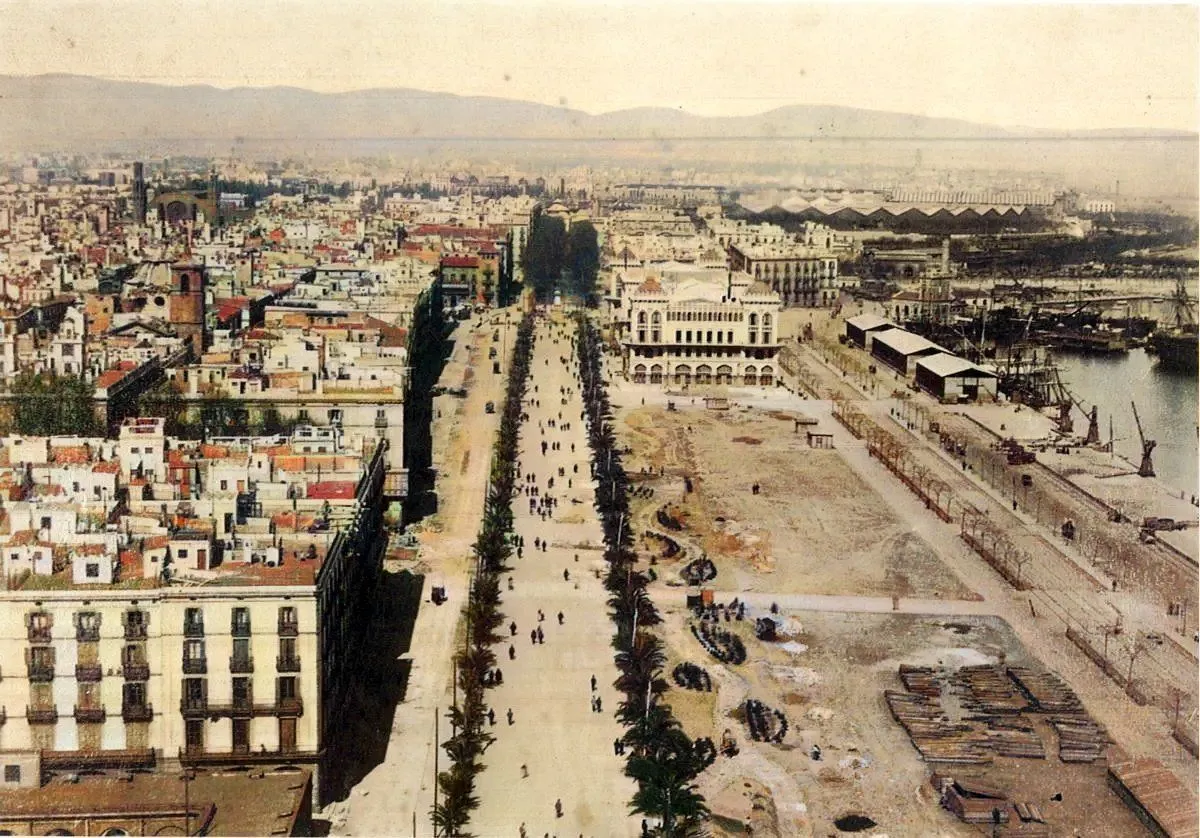
Photo: photgraph: UnknownUnknown . architect: Lluís Domènech i Montaner (1850-1923) (Transfered by amadalvarez/Original uploaded by Aerocat) · Public domain · via Wikimedia Commons
Photo 3
Castell dels Tres Dragons 01
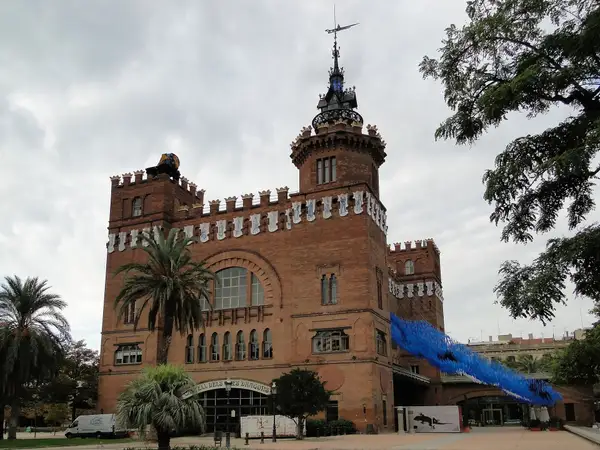
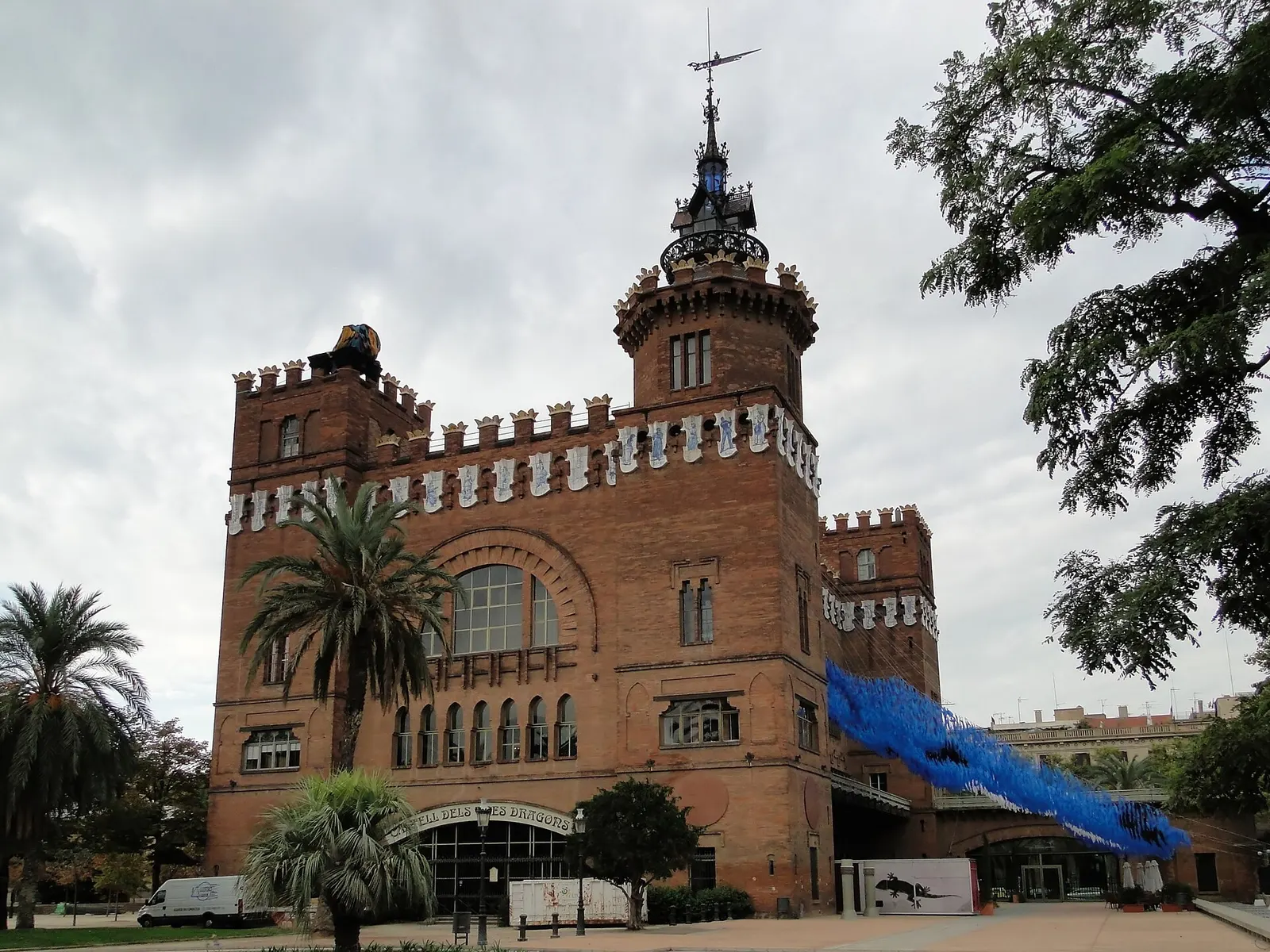 Zoom in
Photo: Bernard Gagnon · CC BY-SA 3.0 · via Wikimedia Commons
Photo 4
Expo Barcelona 1888
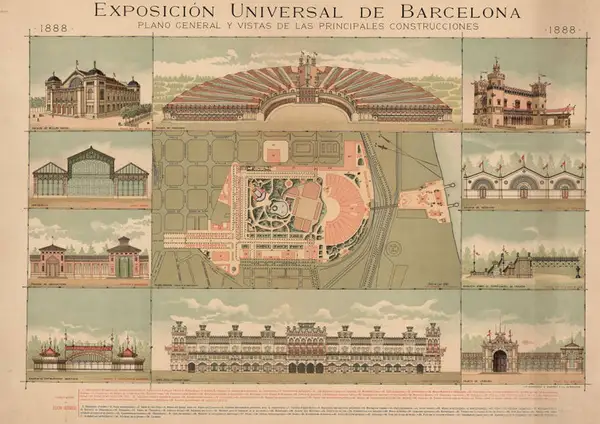
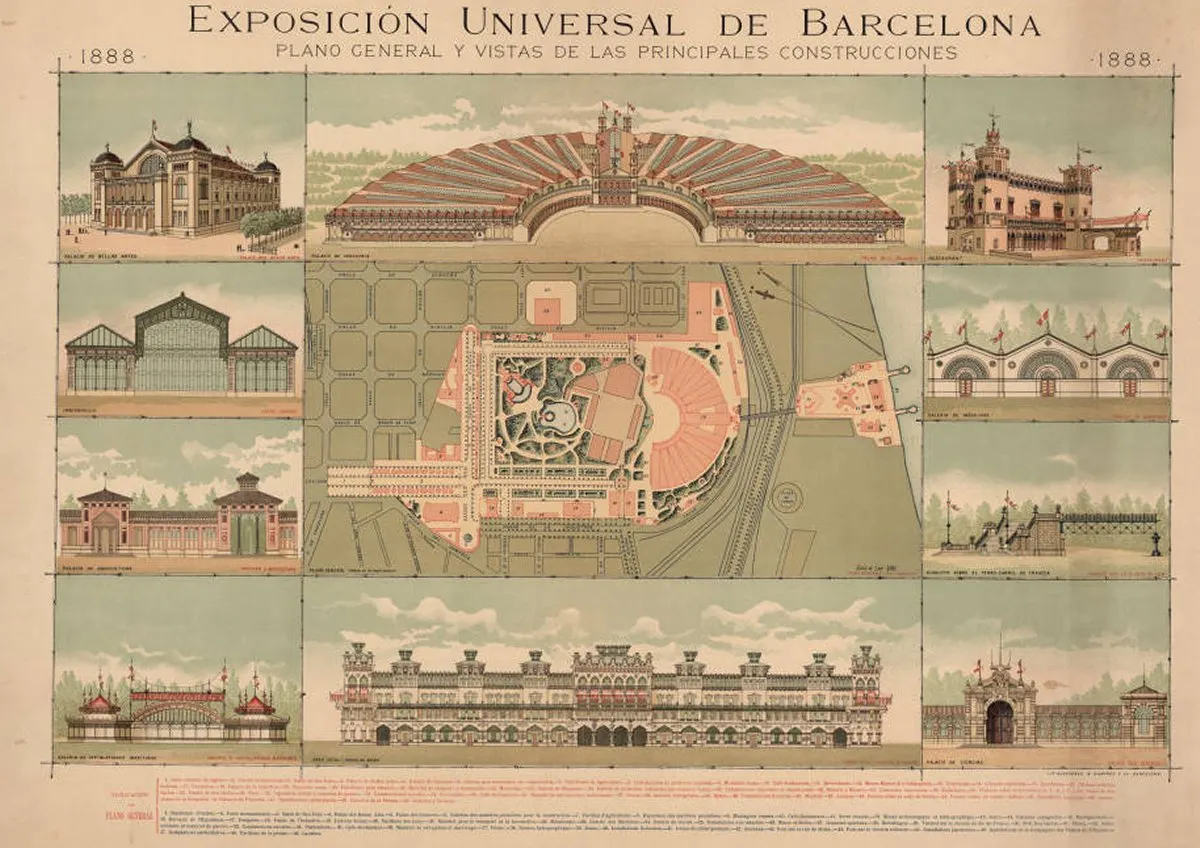 Zoom in
Photo: Lit. Sucesores N. Ramírez y Ca. · Public domain · via Wikimedia Commons
Photo 5
Barcelona arc de triomf lamp
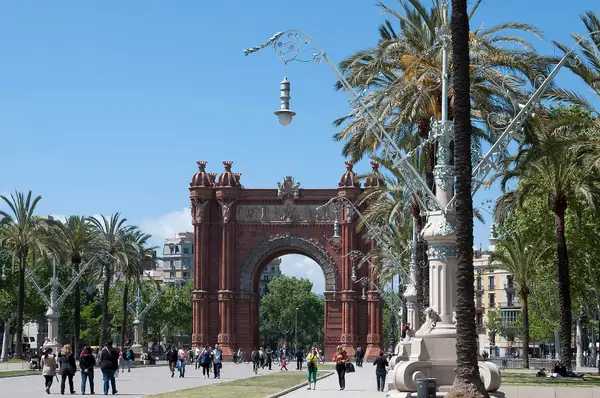
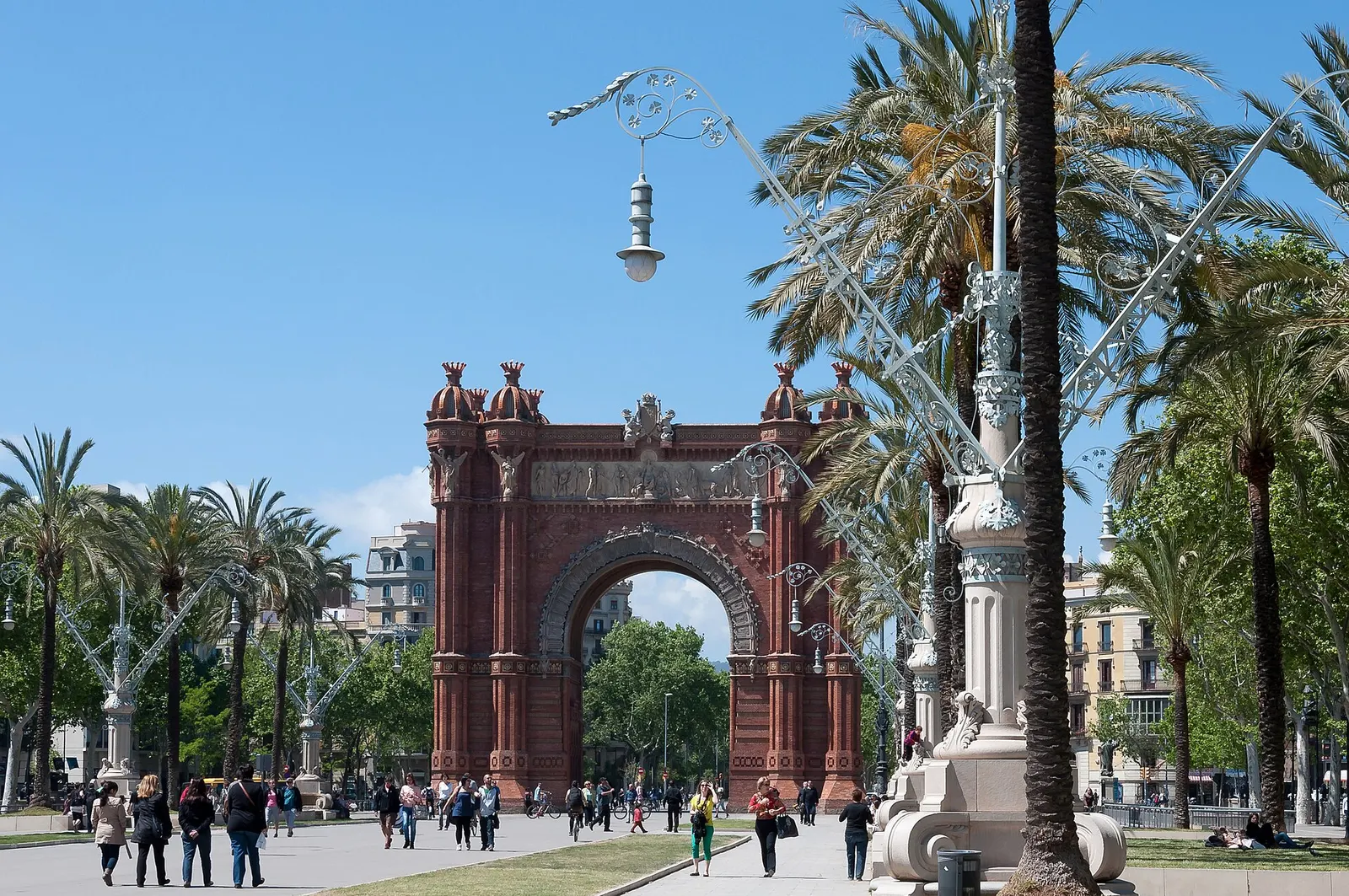 Zoom in
Photo: Isiwal · CC BY-SA 3.0 · via Wikimedia Commons
Hypotheses this fair feeds
Patterns where this fair, its buildings or its photo clues are part of the evidence.
 Strong57 entriesBuilt in two years, gone in one: the 'temporary' palacesEvery fair palace in our records is said to have gone up in three years or less, while permanent capitols and cathedrals of the same era took 8 to 24 years. Then most of the palaces were taken down or burned within months or a few years of closing. Common sense asks why anyone would spend that much effort on buildings meant to last one season, and why the 'temporary' ones went up so much faster than the permanent ones. One possibility is that some fair sites re-used or cleared existing structures, and the fair was the story that went with the clearance.
 Moderate18 entriesOlder cores behind newer facesOver and over the record itself says a 'new' building sits on, around or inside something older: a surviving medieval hall, a re-used palace core, a refaced 18th-century block, an old fort, prison or citadel site, a temple under a church. Common sense: if this is admitted in these cases, the same thing may have happened in others where nobody wrote it down, and the 'built' date may really be a 'refaced' date.
 Emerging12 entriesWhat was kept was stone, and the loved ones were recastOf the fair buildings that survived, the ones the record calls permanent are stone, marble or brick-cored. Three of the best-loved 'plaster' palaces were later rebuilt in concrete or stone, which means the building you see today carries a later date than the one in the photos. Common sense: if a 'temporary' palace looked good enough for a city to fight for it, maybe it was more solid than the record says, or maybe the rebuild date covers what was really there.
 Thin54 entriesWords that paper over the gapThe vocabulary in the records is soft at exactly the points where the question is hardest: buildings are 'dated', 'said to' be built in 100 days, 'rebuilt', 'restored', or 'founded'. Common sense: those words can describe building from nothing, or taking over, refacing or re-papering something already there. This is a reading guide, not proof.
Related clues at other fairs
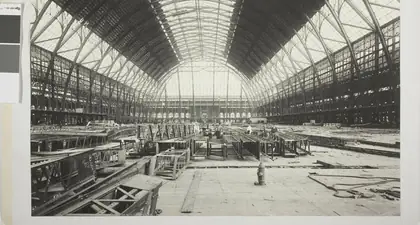 #7The iron arches, with three people in sightWhy is a 'construction' photo dated during the fair, and how was a span like this put up in the time recorded?
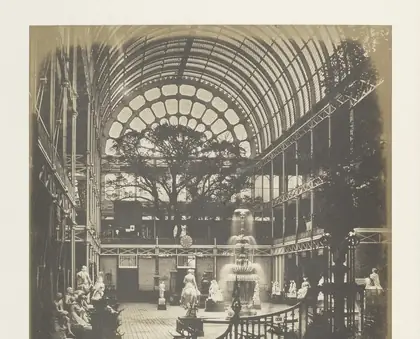 Solid wall at the lower levelWhat is that masonry base, when was it laid, and did it carry an earlier structure?
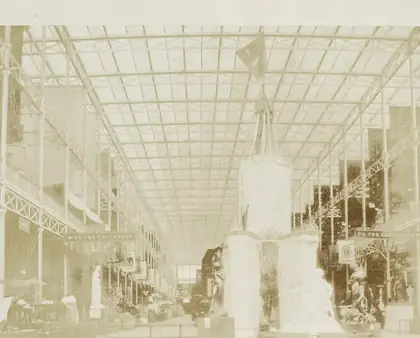 1,850 feet of iron and glass in about nine monthsHow many men, carts and horses would it take to cast, haul and raise thousands of matching iron parts that quickly, and where are the photos of that work?
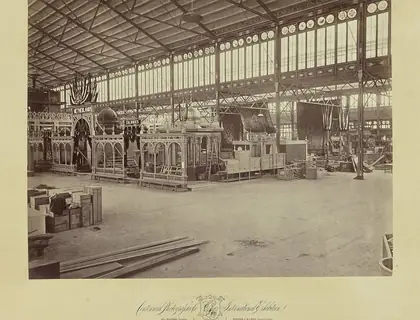 Medallions and arcades repeated down the naveWere these ornaments cast for 1876, or are they a standard pattern found in other halls of the era?
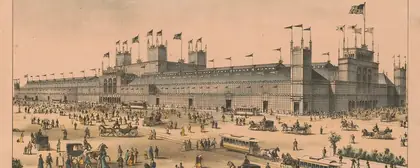 The 1,880-foot Main BuildingWith horses and horsecars as the heavy transport, how was this length of iron and glass raised in two years?
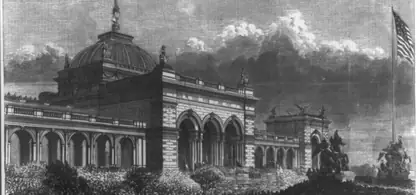 Memorial Hall: stone at the openingMemorial Hall was always meant to stay, but what does that say about the 'temporary' halls standing beside it?