1897 · Nashville, United States
Investigate this fair
5 clues in 5 photos, strongest first. Tap a photo to zoom in on each clue.
- 1 Scale
- 1 Weathering
- 1 Impossible timeline
- 1 Repeated motif
- 1 Other details
Case file
The Hypothesis
Nashville's Parthenon and grounds may reflect an older classical complex re-presented as a fair, with the 'crumbled plaster' account covering for a structure whose real origin is unclear.
Nashville's full-size Parthenon is the survivor people wouldn't let go, and the record says it was rebuilt because the original 'crumbled'. Its photos show a colossal Athena and a grotto that already looks old.
What the photos and records show
- The record says the 1897 Parthenon was plaster that crumbled and was rebuilt in concrete as an exact copy.
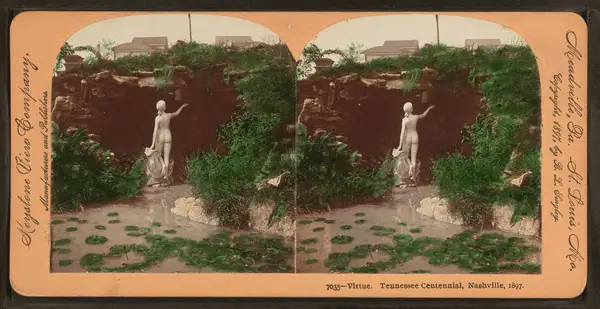
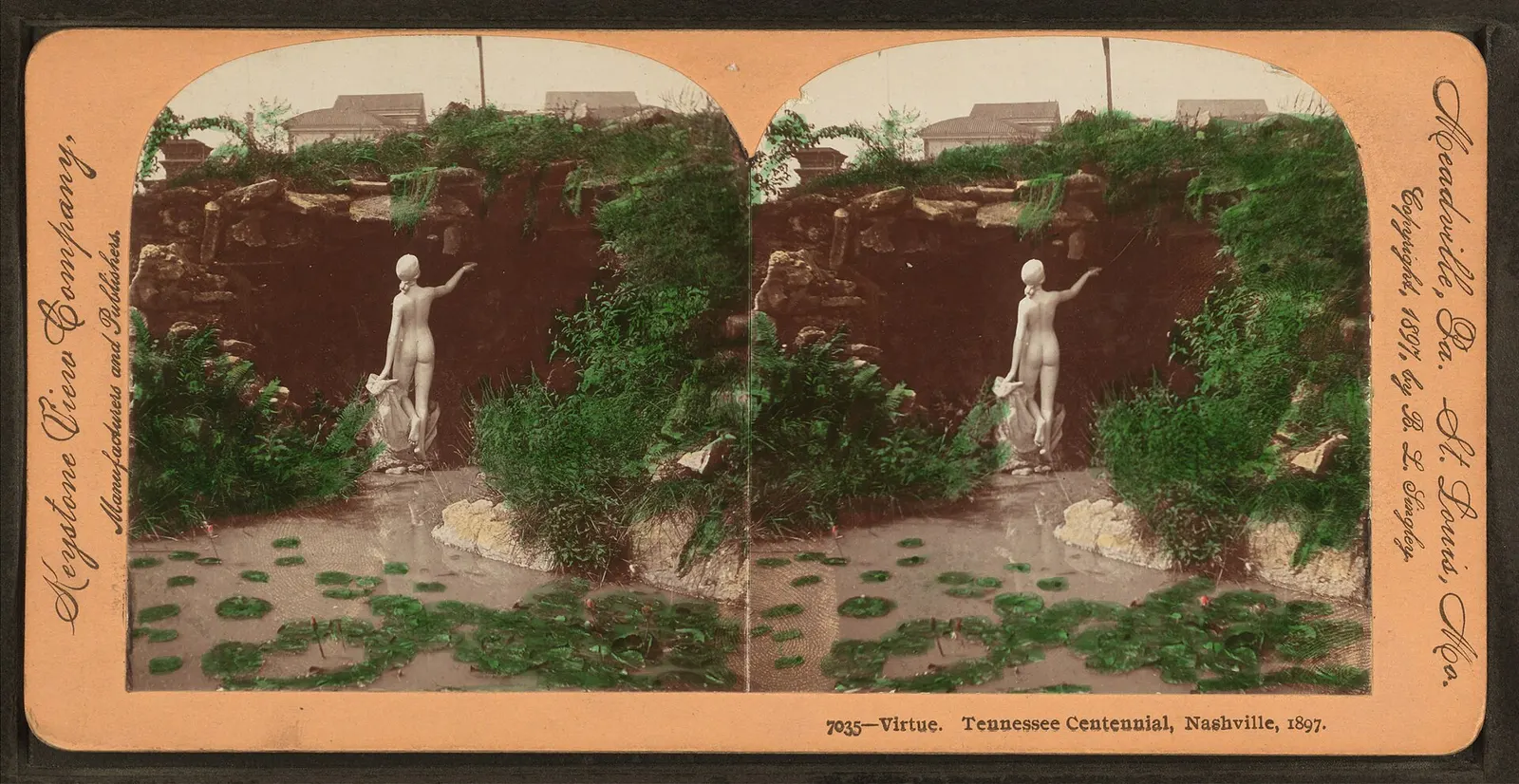
- The 'Virtue' grotto shows weathered stacked stone thick with vines at a fair that had just opened.
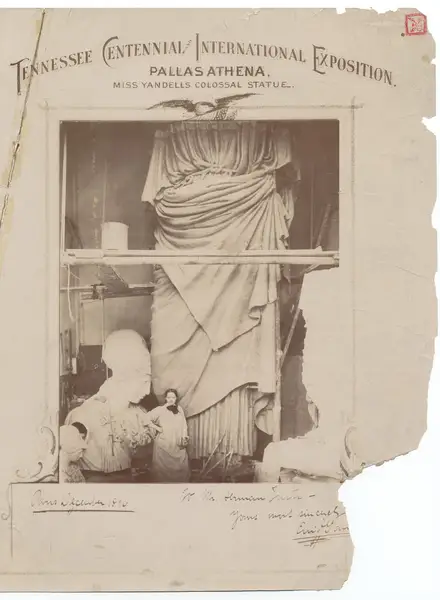
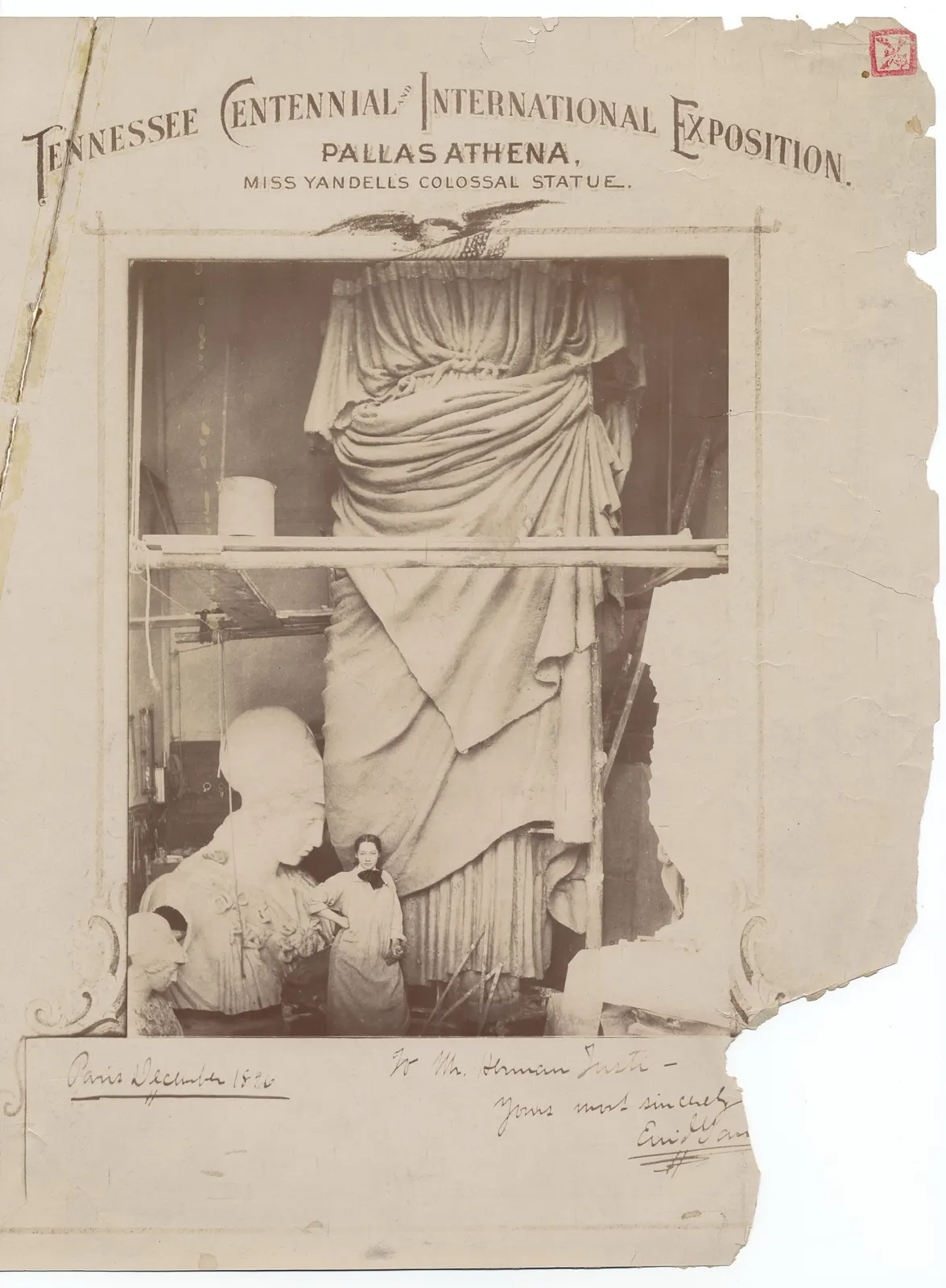
- A colossal Athena dwarfs a woman in the studio photo, raising the question of fabrication and transport time.
- The record pairs Greek and Egyptian forms (Parthenon and Pyramid), a pairing that repeats elsewhere.
Open questions
- What was the 1897 Parthenon really made of?
- How did the grotto weather so fast?
- Why the Greek and Egyptian pairing?
What would settle it
- Material samples or core records from the 1897 Parthenon before rebuilding.
- Dated photos of the grotto being built.
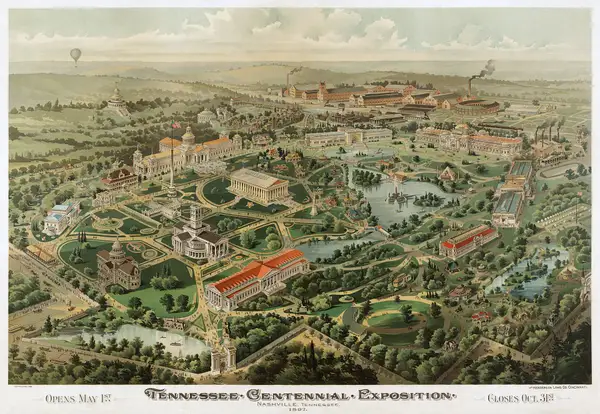
- Pre-1895 maps of Centennial Park.
Photo 1
Pallas Athena, Miss Yandell's Colossal Statue (Tennessee Centennial Exposition, 1897)
 Zoom in
Photo: Unknown photographer · Public domain · via Wikimedia Commons
Photo 2
Virtue. Tennessee Centennial, Nashville, 1897, by Singley, B. L. (Benjamin Lloyd)
 Zoom in
Photo: Singley, B. L. (Benjamin Lloyd) -- Photographer · Public domain · via Wikimedia Commons
Photo 3
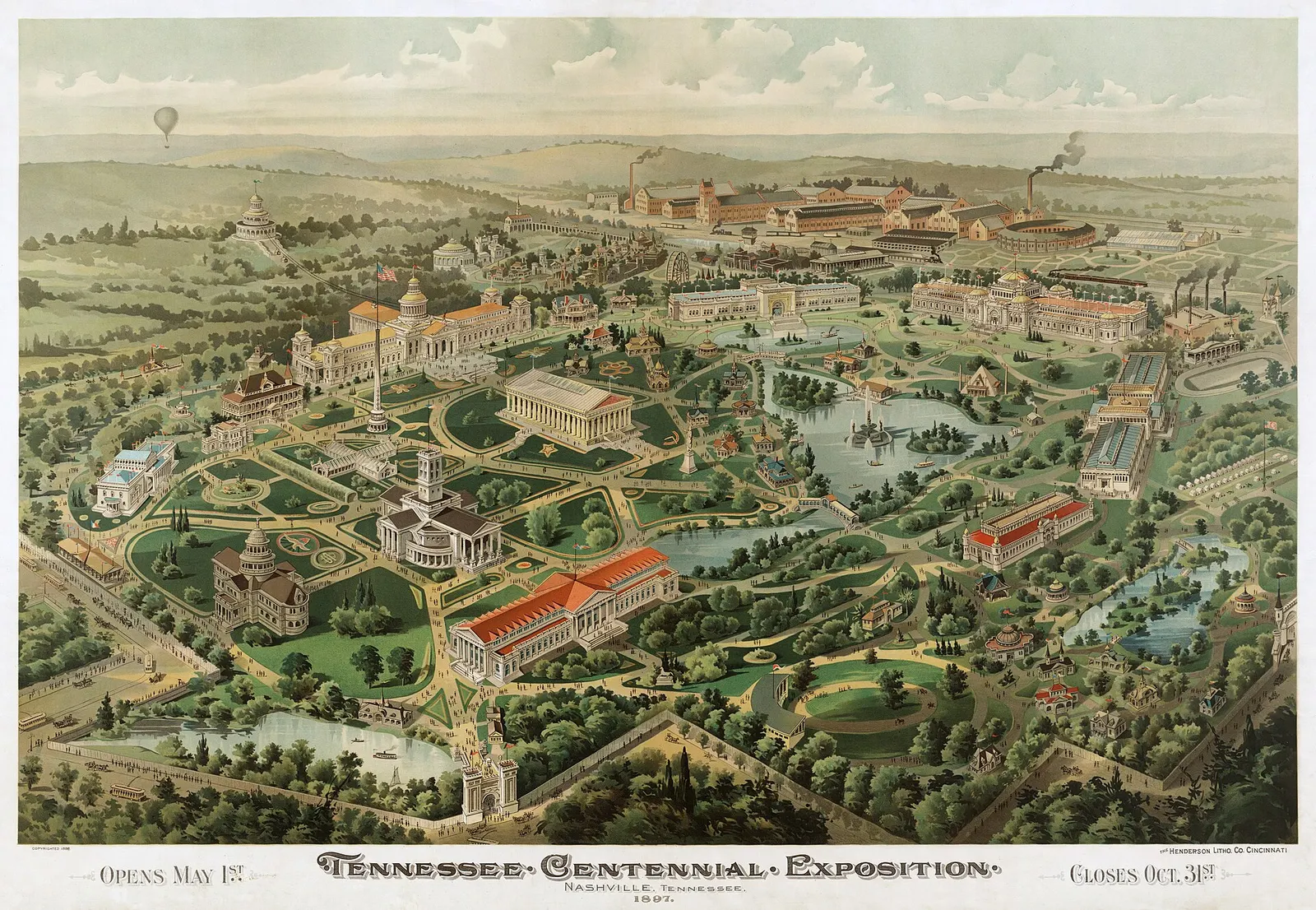
Tennessee Centennial Exposition 1897 (LOC ppmsca.03354)
 Zoom in
Photo: Henderson Litho. Co · Public domain · via Library of Congress via Wikimedia Commons
Photo 4
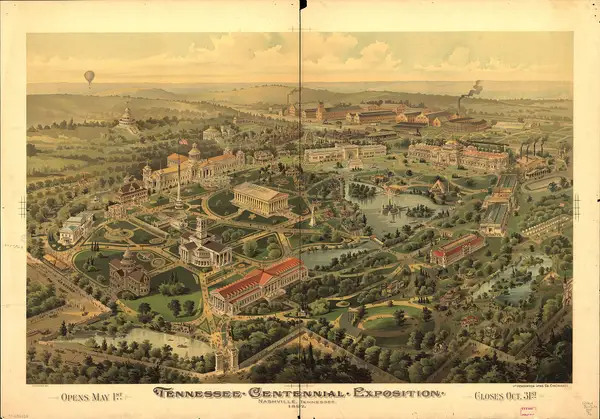
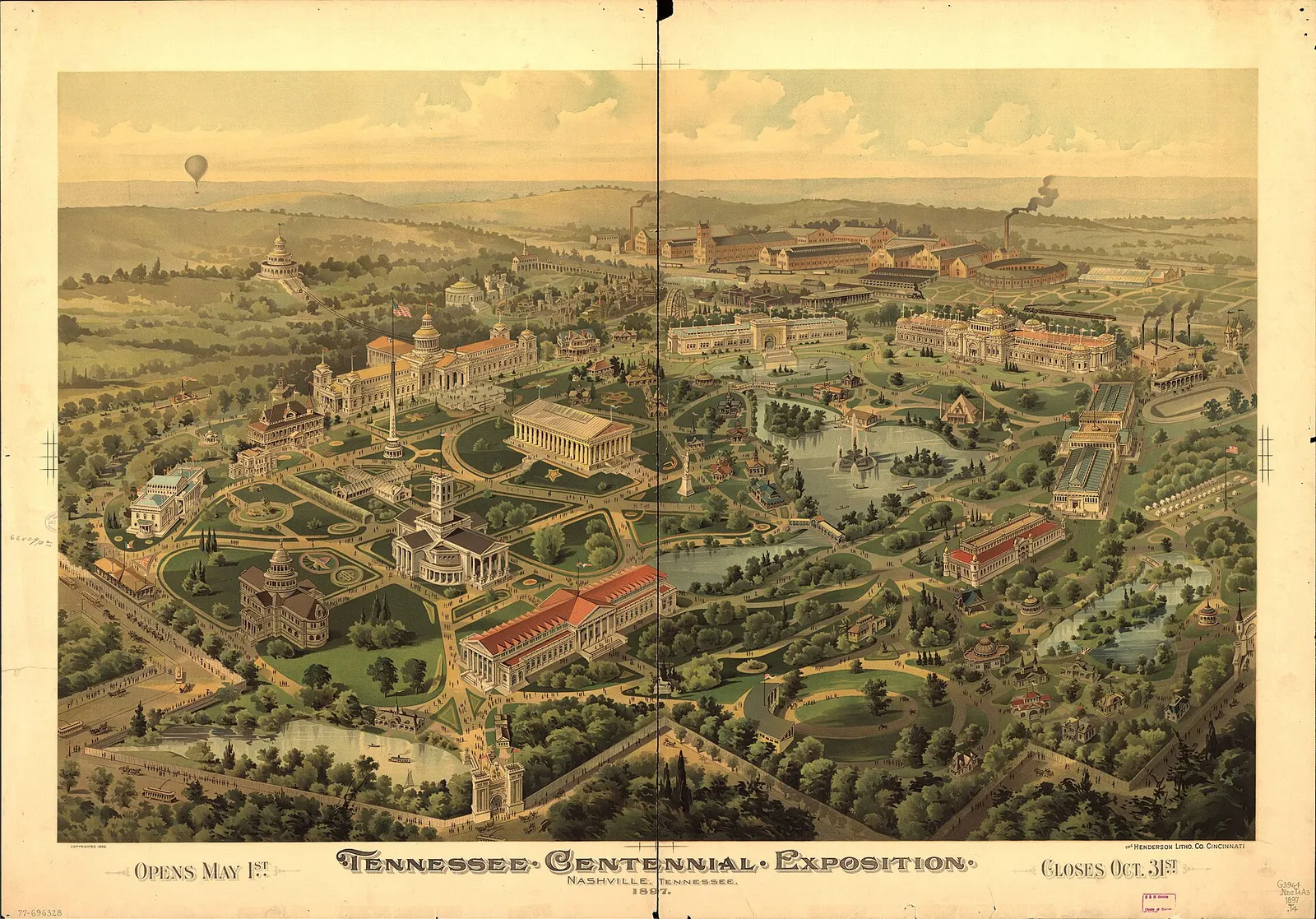
Tennessee Centennial Exposition, Nashville, Tennessee, 1897. LOC 77696328
 Zoom in
Photo: Unknown photographer · Public domain · via Library of Congress via Wikimedia Commons
Photo 5
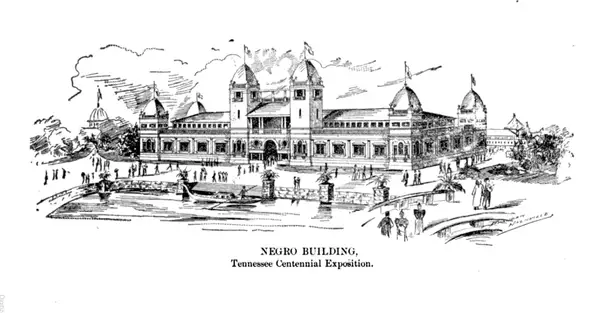
Tennessee Centennial Exposition, Negro Building
 Zoom in
Photo: Unknown photographer · Public domain · via Wikimedia Commons
Hypotheses this fair feeds
Patterns where this fair, its buildings or its photo clues are part of the evidence.
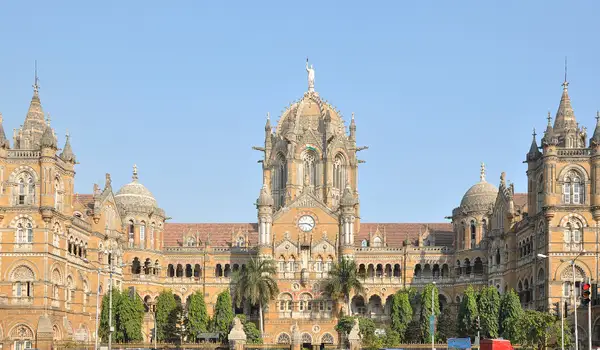 Strong124 entriesThe Great Completion Window, 1865–1915Most of the grand stone buildings in our collection are put on the record as finished inside one 50-year window, on every continent at the same time. Common sense says a world that had never built like this before doesn't suddenly finish capitols, opera houses, stations and city halls from Texas to Kuala Lumpur in the same few decades. One possibility is that much of this was older building stock that got new paperwork, new names and new 'completion' dates in that window.
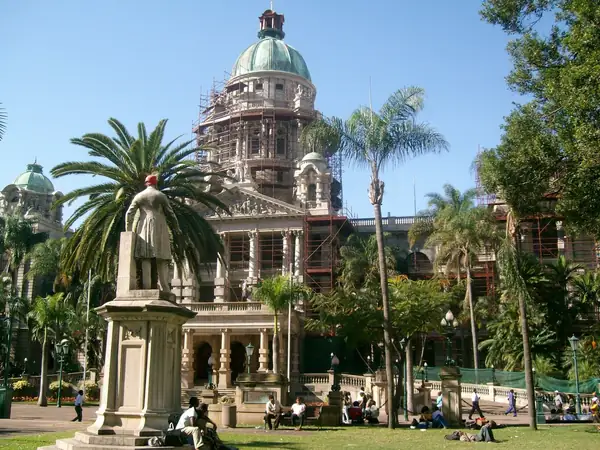 Strong111 entriesOne template, every continentThe same domes, the same Kirkbride layout, the same Garnier opera house and the same star-shaped fort turn up on every inhabited continent, often in the same decades and often openly called copies. Common sense says that in an age of letters and steamships, a style doesn't normally spread to Manaus, Hanoi, Durban and Winnipeg at once. One possibility is a shared source: a common building tradition or pattern-book much older than the names now attached to it.
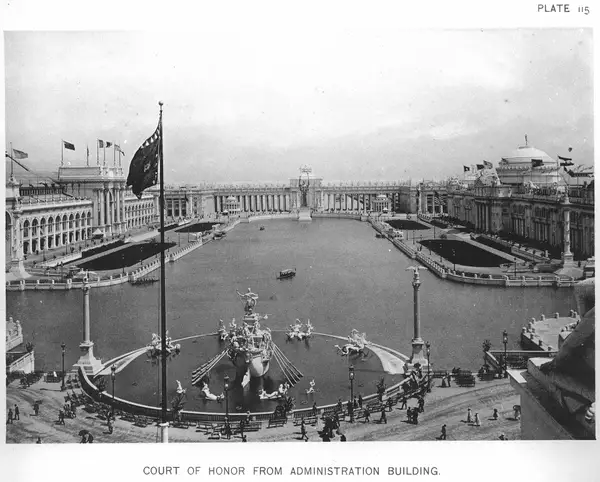 Emerging12 entriesWhat was kept was stone, and the loved ones were recastOf the fair buildings that survived, the ones the record calls permanent are stone, marble or brick-cored. Three of the best-loved 'plaster' palaces were later rebuilt in concrete or stone, which means the building you see today carries a later date than the one in the photos. Common sense: if a 'temporary' palace looked good enough for a city to fight for it, maybe it was more solid than the record says, or maybe the rebuild date covers what was really there.
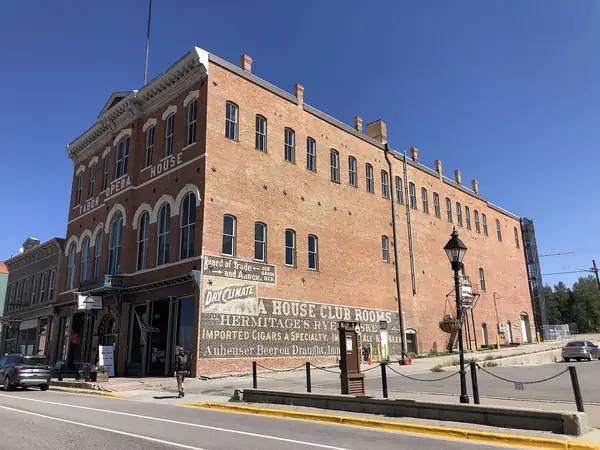 Thin54 entriesWords that paper over the gapThe vocabulary in the records is soft at exactly the points where the question is hardest: buildings are 'dated', 'said to' be built in 100 days, 'rebuilt', 'restored', or 'founded'. Common sense: those words can describe building from nothing, or taking over, refacing or re-papering something already there. This is a reading guide, not proof.
Related clues at other fairs
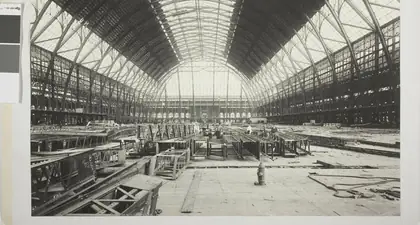 #7The iron arches, with three people in sightWhy is a 'construction' photo dated during the fair, and how was a span like this put up in the time recorded?
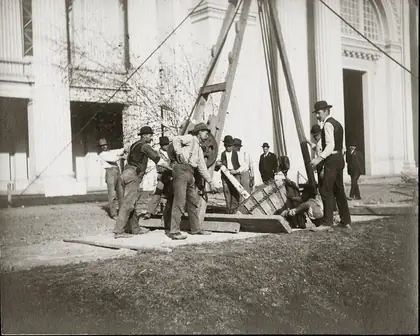 #10Twelve men and a tripod to plant one treeIf one tree took this much effort, what did the palaces take?
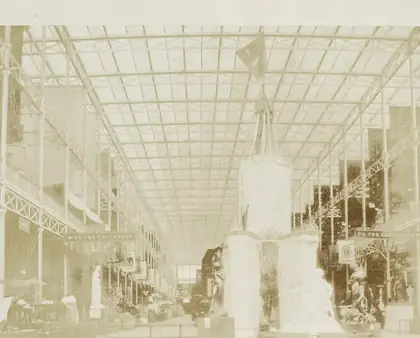 1,850 feet of iron and glass in about nine monthsHow many men, carts and horses would it take to cast, haul and raise thousands of matching iron parts that quickly, and where are the photos of that work?
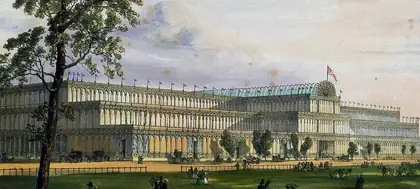 Carriages for scale along the north-east frontAt that scale, what did the hauling and erection really require from a horse-powered city?
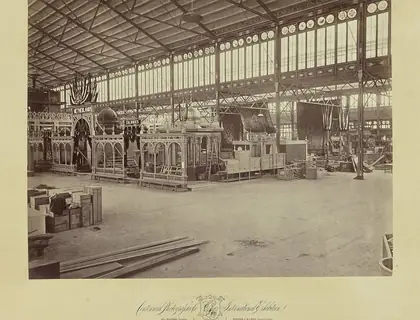 Medallions and arcades repeated down the naveWere these ornaments cast for 1876, or are they a standard pattern found in other halls of the era?
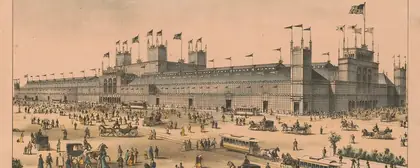 The 1,880-foot Main BuildingWith horses and horsecars as the heavy transport, how was this length of iron and glass raised in two years?