1898 · Omaha, United States
Investigate this fair
6 clues in 5 photos, strongest first. Tap a photo to zoom in on each clue.
- 1 Impossible timeline
- 1 Weathering
- 1 Masonry, not plaster
- 1 Other details
- 1 No work camp
- 1 Demolition core
Case file
The Hypothesis
Omaha's Grand Court was a palace district far beyond a 100,000-person city's means, and its complete removal leaves open whether it was built for five months or cleared after long existence. The young trees argue for a newly landscaped site, so this is the most contested case.
Omaha's court rivalled Chicago's and vanished within a year. Its photos are more mixed than most: heavy sculpture on the palaces, but young trees and light pavilions that look new.
What the photos and records show
- The record gives Omaha about 100,000 people for a court on Chicago's scale.
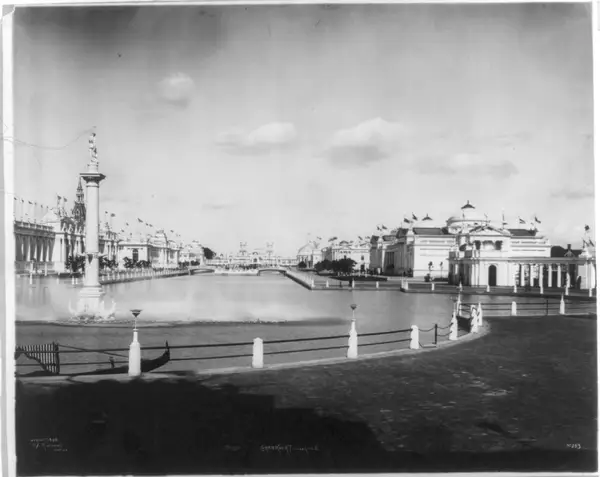
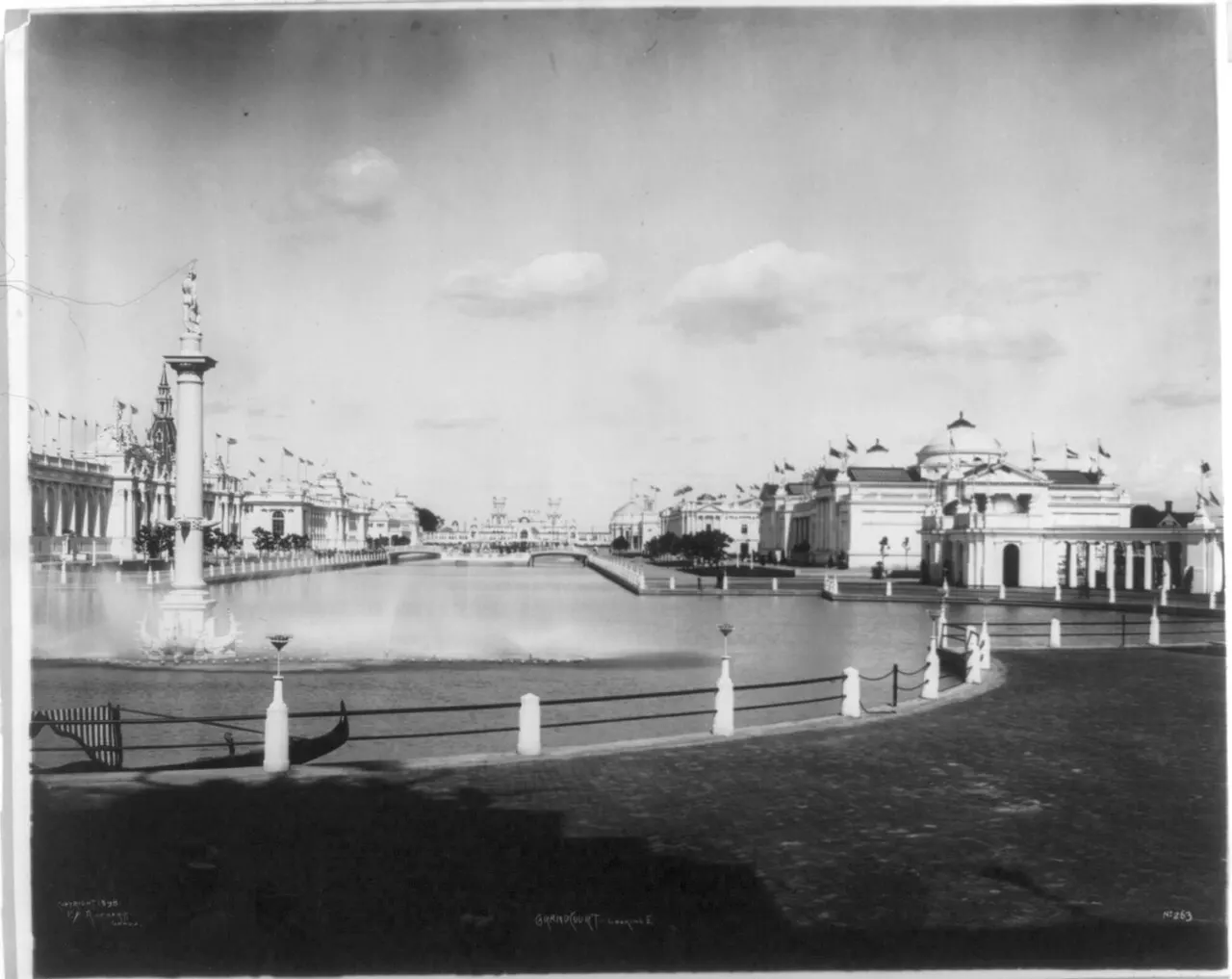
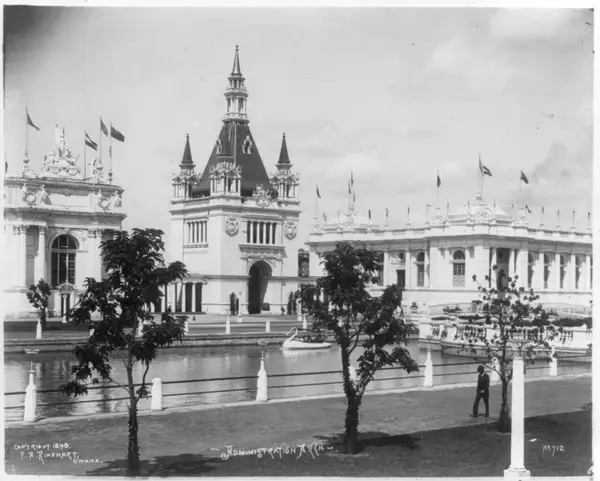
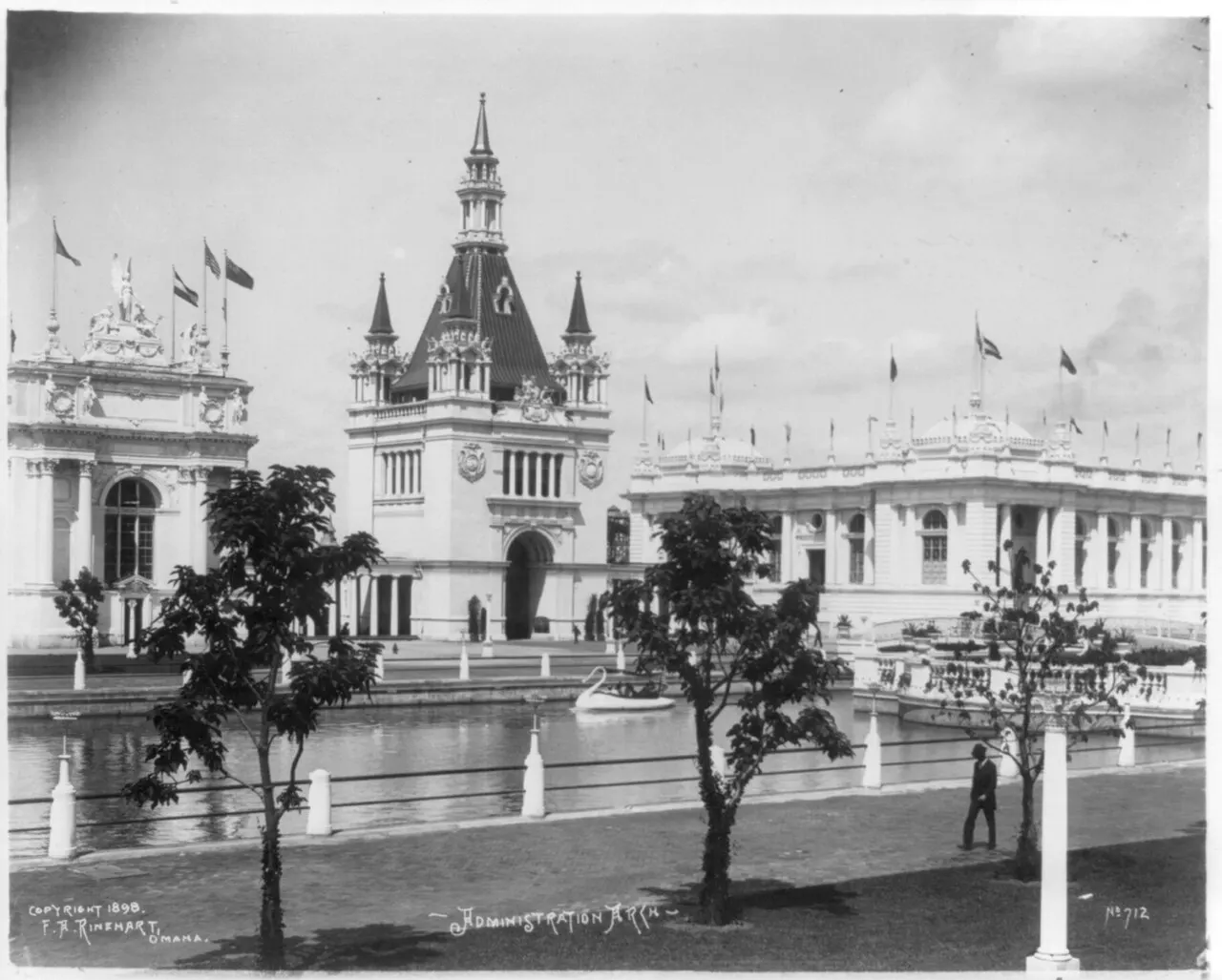
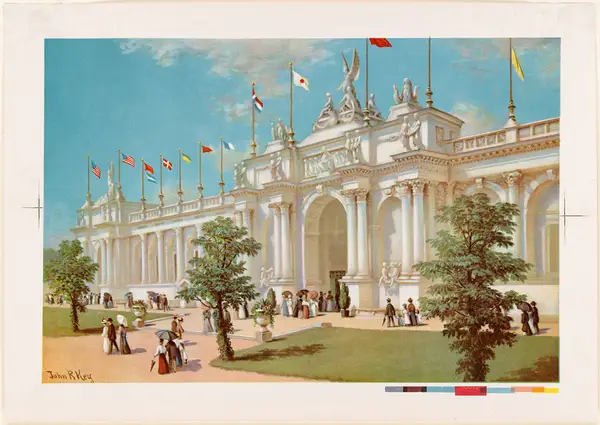
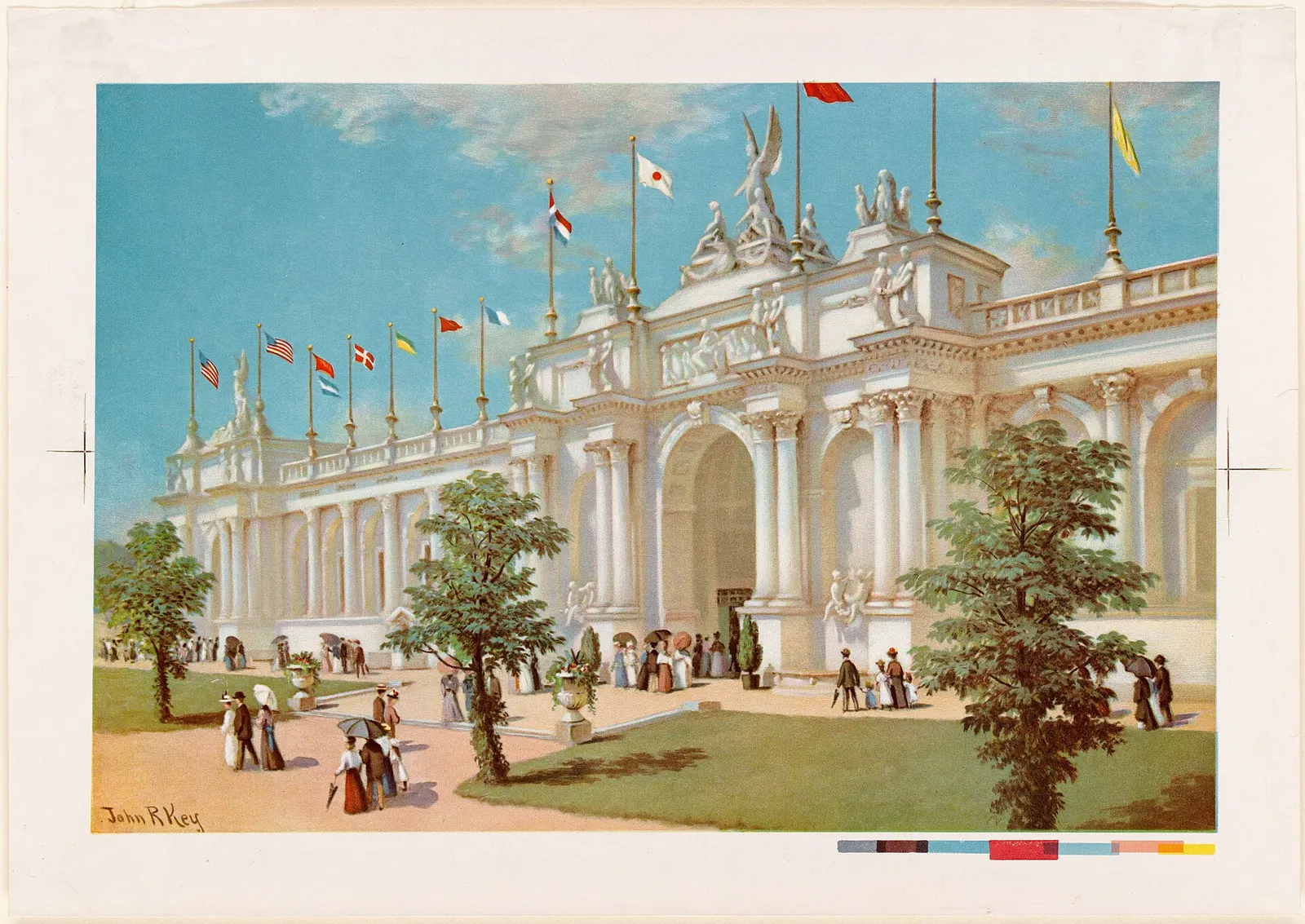
- The Grand Court and Administration Building show domed palaces with heavy sculpture.
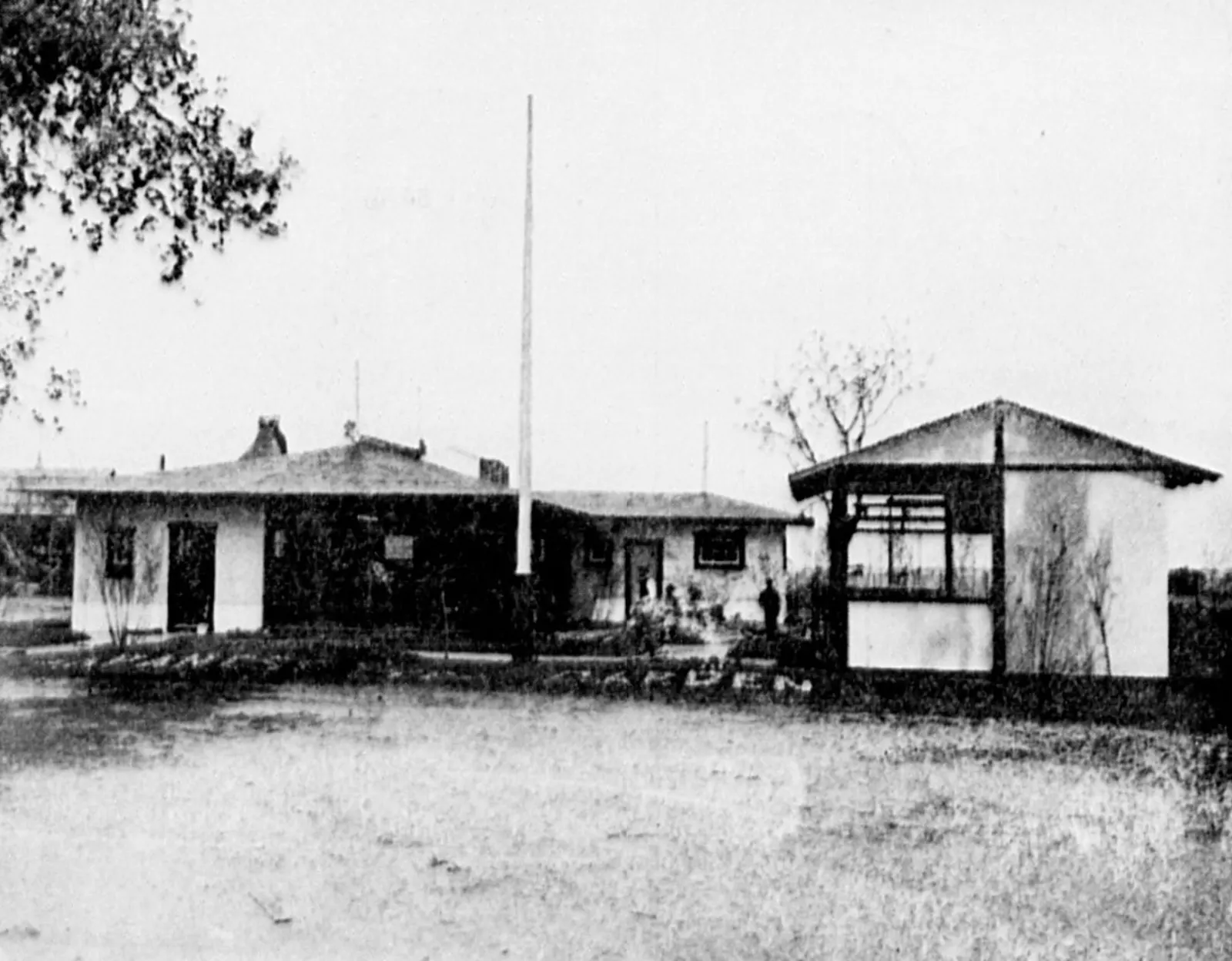
- Contrary detail: the court's trees are very young and thin, and the tea garden pavilions look light and quick.
- The record says all of the main buildings were demolished.
Open questions
- Where did the crews, materials and power come from?
- Why demolish everything?
- What is under Kountze Park?
What would settle it
- Labour and material records for the court.
- Foundation remains found in Kountze Park.
- Pre-1897 maps of the site.
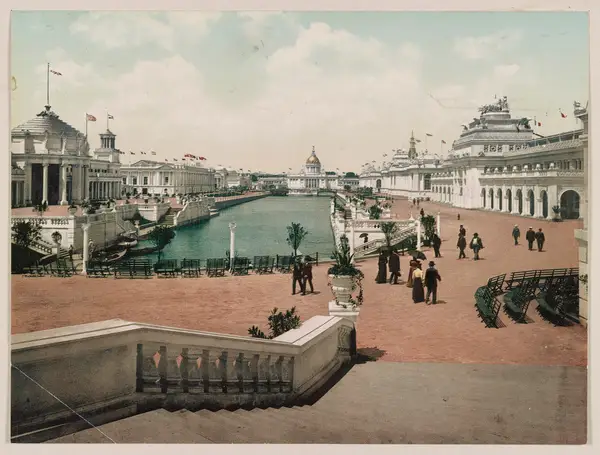
Photo 1
Grand Court - looking east, (Trans-Mississippi and international exposition, Omaha, Nebraska) LCCN2004668239
 Zoom in
Photo: Miscellaneous Items in High Demand, PPOC, Library of Congress · Public domain · via Library of Congress via Wikimedia Commons
- 1A Chicago-scale court in a prairie cityThe Grand Court shows domed palaces with heavy sculpture and crests along a lagoon with swan boats. The record says Omaha had about 100,000 people.The questionHow did a city that size supply the crews, materials and horses for a court like this?
- 2Young, thin trees: a contrary detailThe trees along the court are very young and thin, which looks like a fresh planting. That cuts against an 'old site' reading here.The questionIf the planting was new, was the ground new too, or was an older site cleared and replanted?
Photo 2
Trans-Mississippi and international exposition, Omaha, Neb.)- Administration Arch LCCN2004668245
 Zoom in
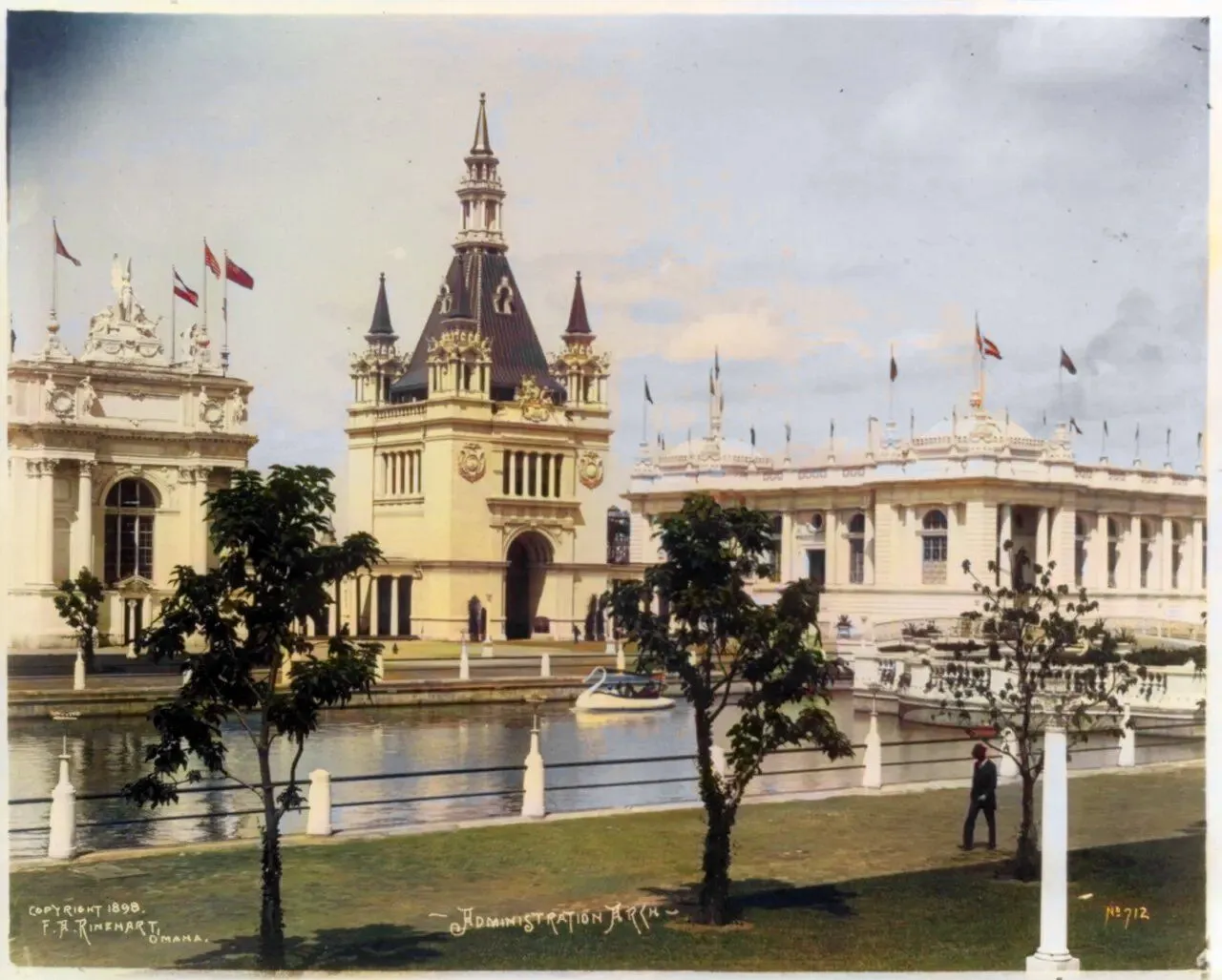
Photo: Miscellaneous Items in High Demand, PPOC, Library of Congress · Public domain · via Library of Congress via Wikimedia Commons
Photo 3
Grand Court, Night Illumination. Trans-Mississippi Exposition LCCN2017660316
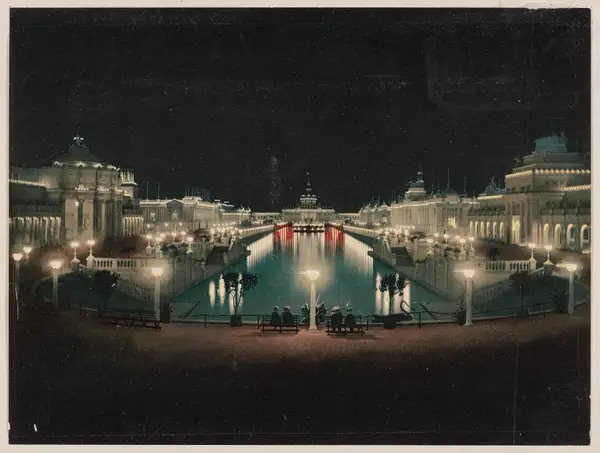
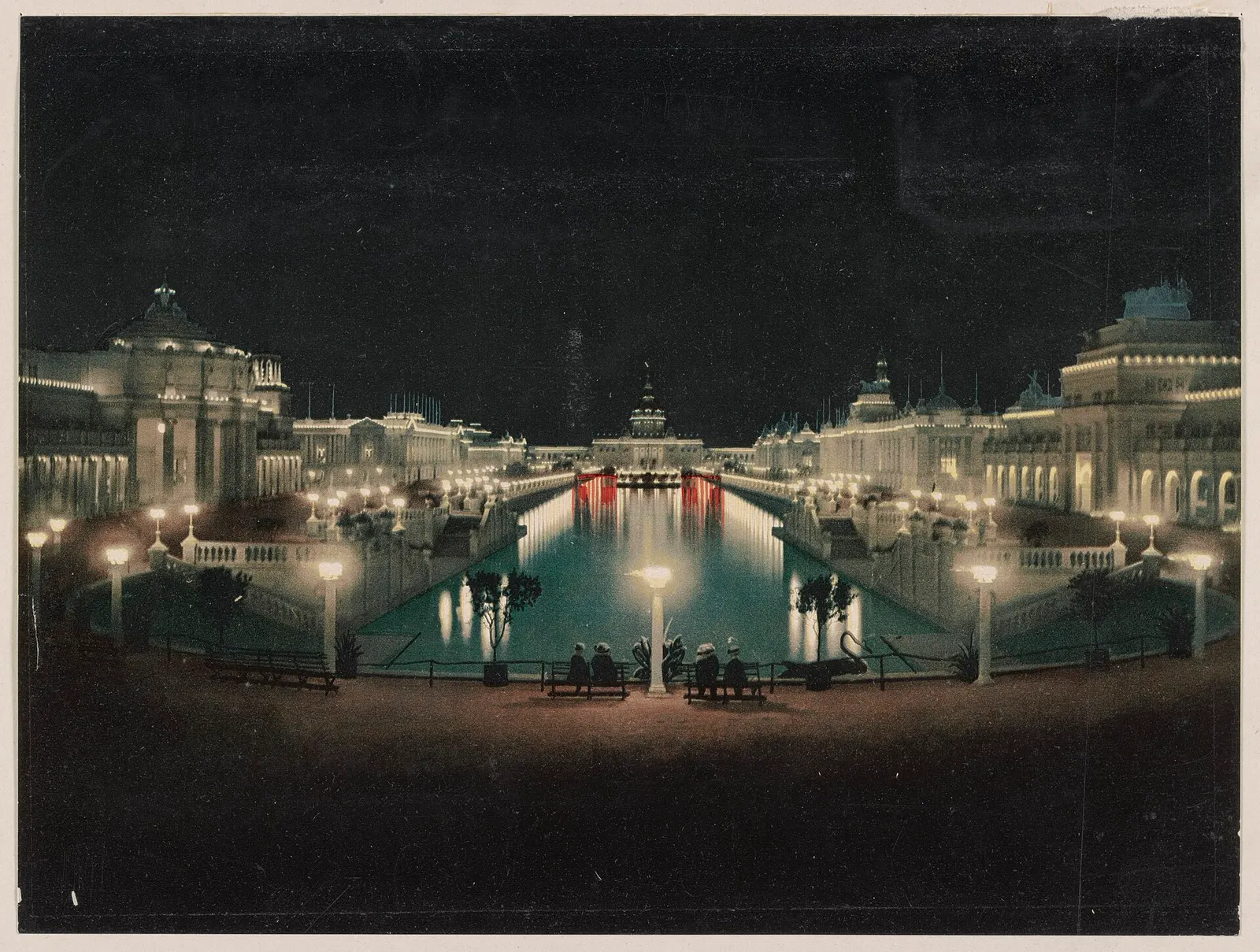 Zoom in
Photo: Detroit Photographic Co., publisher · Public domain · via Library of Congress via Wikimedia Commons
Photo 4
Japanese Tea Garden, Trans-Mississippi Exposition, Omaha, 1898
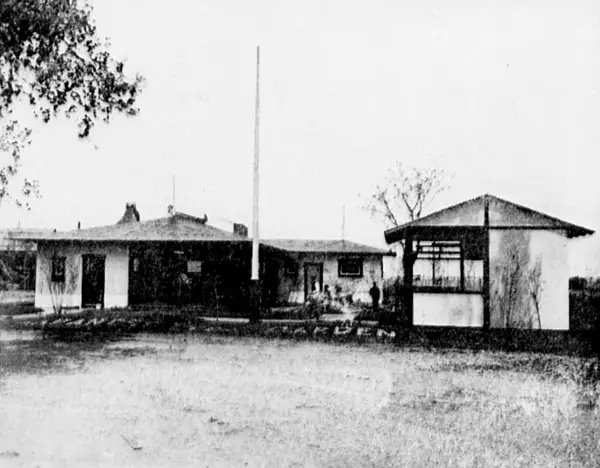
 Zoom in
Photo: Omaha Daily Bee · Public domain · via Library of Congress via Wikimedia Commons
Photo 5
Agricultural Building, Trans-Mississippi Exposition of 1898 in Omaha, Nebraska - DPLA - 813666d28eb40723fe32040a84afc13d
 Zoom in
Photo: Key, John Ross, 1832-1920; L. Prang & Co · Public domain · via Wikimedia Commons
Hypotheses this fair feeds
Patterns where this fair, its buildings or its photo clues are part of the evidence.
 Moderate31 entriesToo big for the townSet the recorded census next to the building and the mismatch is plain: asylums designed for a third of the town's whole population, a 37-year capitol begun in a prairie town of under 6,000, domed capitols in state capitals of 6,000 to 12,000 people. Common sense says a town of a few thousand doesn't have the money, the stone, the masons or the reason for a palace. One possibility is that some of these buildings were already standing and the town grew around them, or that they were paid for and supplied from far outside the town.
 Emerging11 entriesThe 1890 gap: jumps, drops and a missing censusIn the town census figures we pulled, 8 of 46 towns more than tripled between 1880 and 1890, and 4 of those 8 then shrank by 1900. The 1890 census is also the one whose schedules were mostly destroyed (1921 fire). Common sense says a city doesn't quadruple and then lose a quarter of its people in a decade without leaving a mark. One possibility is that the 1890 numbers, or the people they counted, were not what they seem, and we can't check because the forms are gone.
Related clues at other fairs
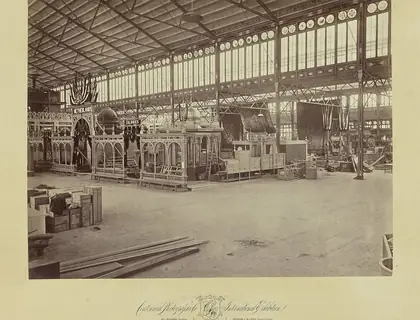 #3A 'construction' photo of a finished hallIf this is 'construction,' why is the building already finished and only the displays going in?
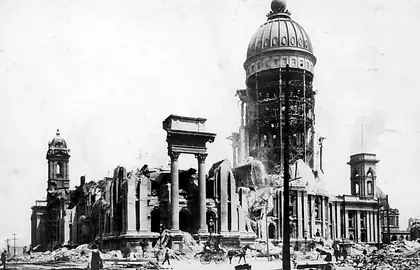 #6A steel cage under an intact domeIf grand civic buildings had steel and brick cores, what did the fair palaces have inside?
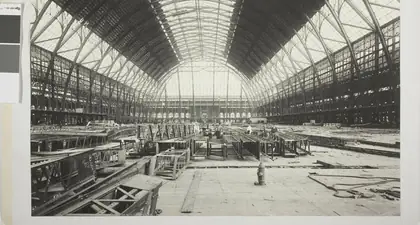 #7The iron arches, with three people in sightWhy is a 'construction' photo dated during the fair, and how was a span like this put up in the time recorded?
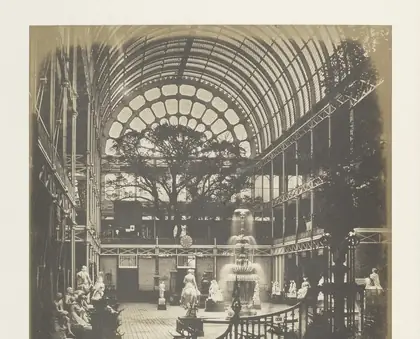 Solid wall at the lower levelWhat is that masonry base, when was it laid, and did it carry an earlier structure?
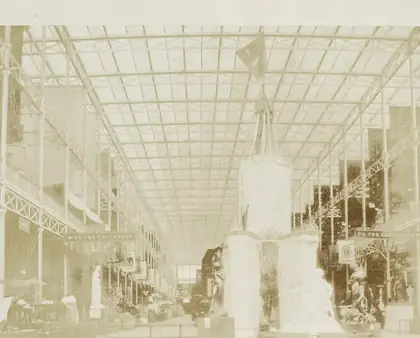 1,850 feet of iron and glass in about nine monthsHow many men, carts and horses would it take to cast, haul and raise thousands of matching iron parts that quickly, and where are the photos of that work?
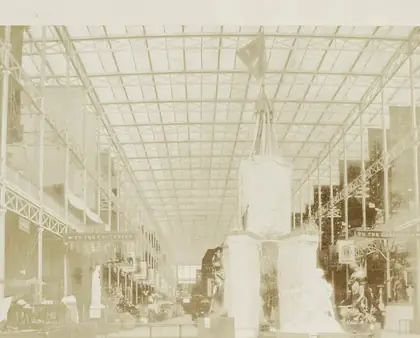 A finished interior, statues still shroudedIs this a building being completed, or an existing hall being dressed for opening?