Hypothesis #9 of 20
Too big for the town
Strength is how much of our gathered material lines up with the pattern. It is not the odds that the idea is true.
The working idea
Set the recorded census next to the building and the mismatch is plain: asylums designed for a third of the town's whole population, a 37-year capitol begun in a prairie town of under 6,000, domed capitols in state capitals of 6,000 to 12,000 people. Common sense says a town of a few thousand doesn't have the money, the stone, the masons or the reason for a palace. One possibility is that some of these buildings were already standing and the town grew around them, or that they were paid for and supplied from far outside the town.
Strongest examples
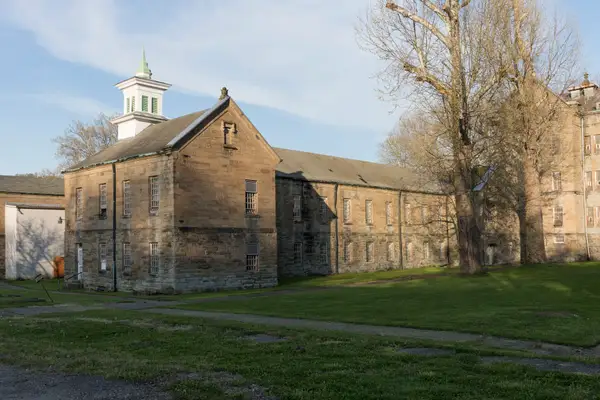 Trans-Allegheny Lunatic AsylumOne of the largest hand-cut stone buildings in North America, in a town of 820 (1860); masons from Germany and Ireland.
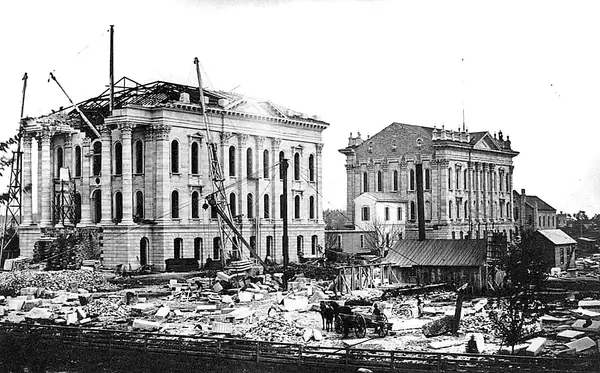 Kansas State CapitolBegun 1866 in a town of 759 (1860) / 5,790 (1870).
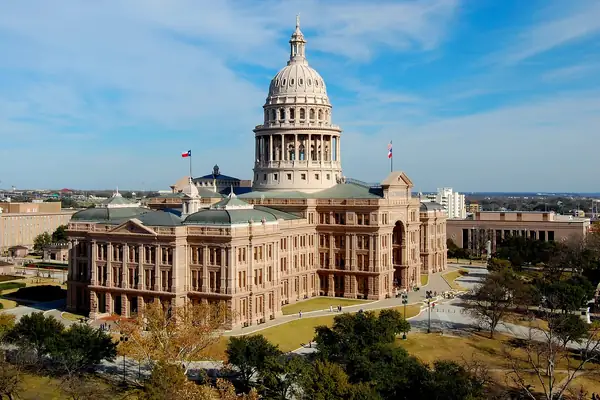 Texas State Capitol$3.7 million in a city of 11,013; builders paid in 3 million acres; cutters brought from Scotland.
The evidence
Building vs recorded census, now with census occupation counts (state level; city level where the town was 25,000+ by 1900)
23 town–building pairs
- Trans-Allegheny Lunatic AsylumWeston, West Virginia
Designed for 250 when Weston had 820 people (1860) = about 30% of the town; by 1880 it held 717, about 47% of the town's 1,516.
CensusWest Virginia 1880: 3,205 carpenters · 1,059 masons and stonecutters · 1,517 iron and steel workersWest Virginia 1900: 6,485 carpenters · 1,626 masons · 499 stonecutters · 354 plasterers · 2,200 iron and steel workersState figures cover the whole state, not the town. Town and county counts were not sourced (see censusOccupations.blanks).Census figures: Wikipedia ↗ 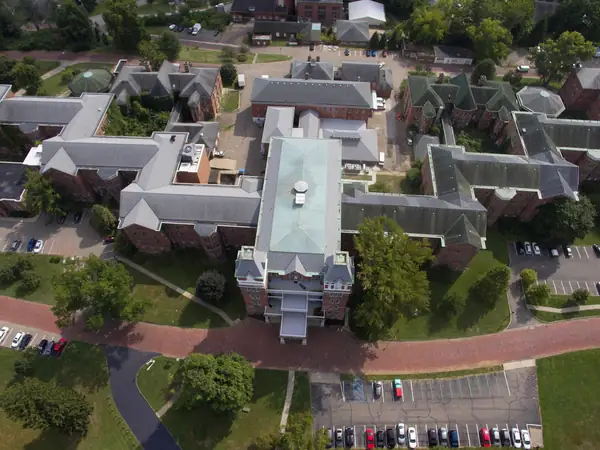 Athens Lunatic Asylum (The Ridges)Athens, Ohio
Room for 572 patients when Athens had 1,696 people (1870) = about 34%.
CensusOhio 1880: 29,770 carpenters · 10,713 masons and stonecutters · 13,419 iron and steel workersState figures cover the whole state, not the town. Town and county counts were not sourced (see censusOccupations.blanks).Census figures: Wikipedia ↗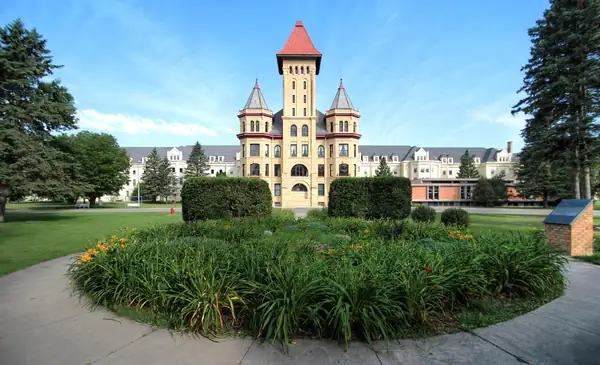 Fergus Falls State HospitalFergus Falls, Minnesota
A palace-scale Kirkbride in a town of 3,772 (1890).
CensusMinnesota 1900: 15,191 carpenters · 4,061 masons · 1,139 stonecutters · 804 plasterers · 1,889 iron and steel workersState figures cover the whole state, not the town. Town and county counts were not sourced (see censusOccupations.blanks).Census figures: Wikipedia ↗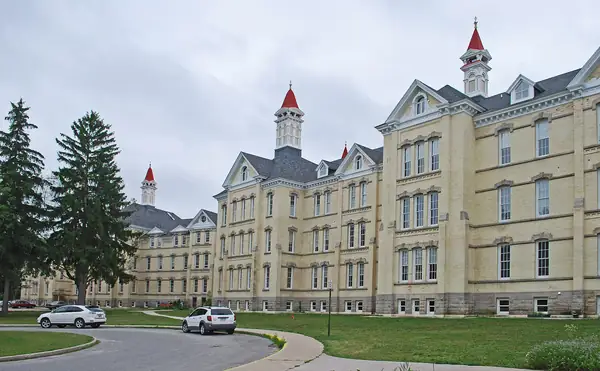 Northern Michigan AsylumTraverse City, Michigan
Traverse City had 1,897 people in 1880 and 4,353 in 1890.
CensusMichigan 1880: 16,541 carpenters · 4,412 masons and stonecutters · 2,868 iron and steel workersState figures cover the whole state, not the town. Town and county counts were not sourced (see censusOccupations.blanks).Census figures: Wikipedia ↗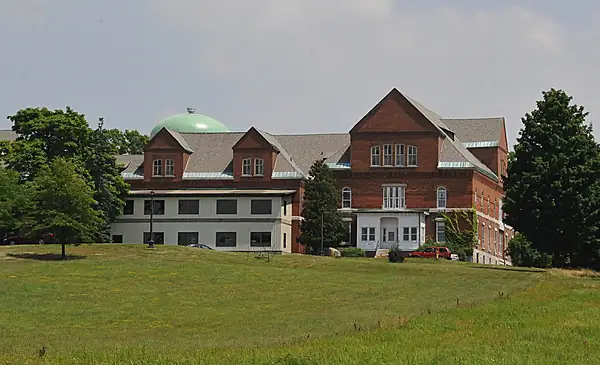 Willard AsylumWillard, New York
Ovid town: 2,403 people (1870).
CensusNew York 1880: 49,754 carpenters · 23,893 masons and stonecutters · 16,261 iron and steel workersState figures cover the whole state, not the town. Town and county counts were not sourced (see censusOccupations.blanks).Census figures: Wikipedia ↗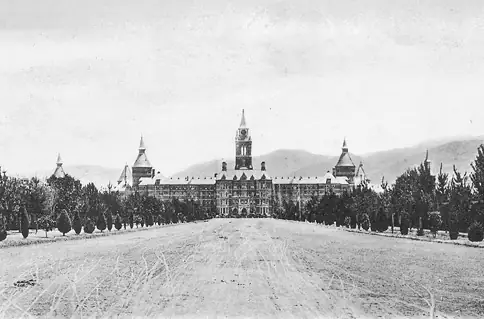 Napa State Hospital ('the Castle')Napa, California
Napa: 1,879 people (1870), 3,731 (1880).
CensusCalifornia 1880: 9,056 carpenters · 1,565 masons and stonecutters · 1,099 iron and steel workersCalifornia 1900: 15,916 carpenters · 1,774 masons · 960 stonecutters · 736 plasterers · 3,102 iron and steel workersState figures cover the whole state, not the town. Town and county counts were not sourced (see censusOccupations.blanks).Census figures: Wikipedia ↗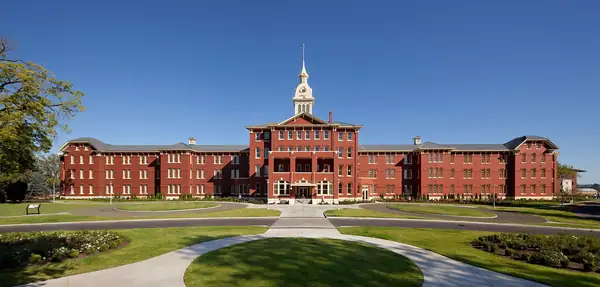 Oregon State HospitalSalem, Oregon
Salem: 2,538 people (1880); the hospital later held nearly 3,600.
CensusOregon 1880: 1,899 carpenters · 312 masons and stonecutters · 97 iron and steel workersOregon 1900: 4,357 carpenters · 573 masons · 155 stonecutters · 164 plasterers · 455 iron and steel workersState figures cover the whole state, not the town. Town and county counts were not sourced (see censusOccupations.blanks).Census figures: Wikipedia ↗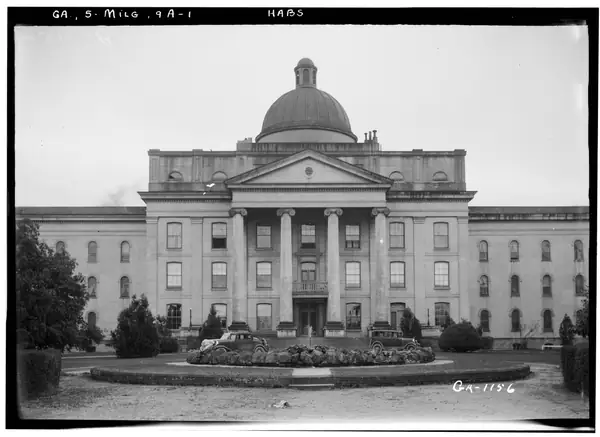 Central State HospitalMilledgeville, Georgia
Nearly 12,000 patients against a 1960 city count of 11,117.
CensusGeorgia 1900: 9,479 carpenters · 1,914 masons · 964 stonecutters · 370 plasterers · 923 iron and steel workersState figures cover the whole state, not the town. Town and county counts were not sourced (see censusOccupations.blanks).Census figures: Wikipedia ↗- Kansas State CapitolTopeka
Topeka had 759 people in 1860 and 5,790 in 1870 when a 37-year palace capitol was begun.
CensusTopeka, Kans. 1900 (city): 609 carpenters · 137 masons · 52 plasterersKansas 1880: 7,119 carpenters · 2,999 masons and stonecutters · 618 iron and steel workersCity figure is males only, 1900; state figure for comparison.Census figures: Wikipedia ↗ 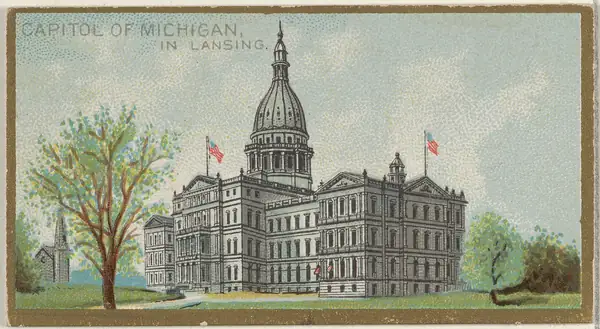 Michigan State CapitolLansing
Lansing: 5,241 people (1870).
CensusMichigan 1880: 16,541 carpenters · 4,412 masons and stonecutters · 2,868 iron and steel workersState figures cover the whole state, not the town. Town and county counts were not sourced (see censusOccupations.blanks).Census figures: Wikipedia ↗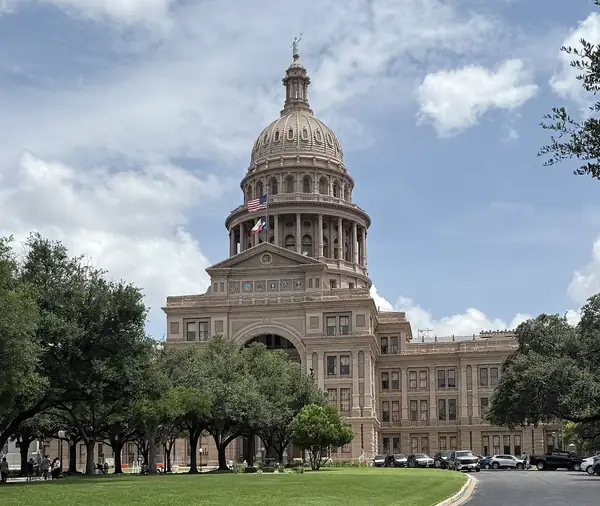 Texas State CapitolAustin
Austin: 11,013 people (1880); $3.7 million = about $336 per resident.
CensusTexas 1880: 5,693 carpenters · 1,668 masons and stonecutters · 155 iron and steel workersTexas 1900: 12,433 carpenters · 2,020 masons · 426 stonecutters · 242 plasterers · 745 iron and steel workersState figures cover the whole state, not the town. Town and county counts were not sourced (see censusOccupations.blanks).Census figures: Wikipedia ↗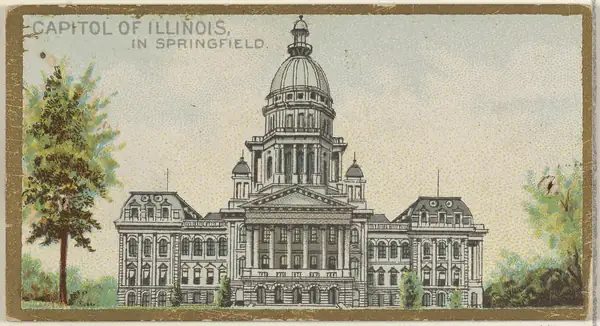 Illinois State CapitolSpringfield
Springfield: 17,364 (1870); $4.5 million = about $259 per resident.
CensusSpringfield, Ill. 1900 (city): 145 masons · 48 plasterersIllinois 1880: 22,972 carpenters · 7,535 masons and stonecutters · 6,283 iron and steel workersCity figure is males only, 1900; state figure for comparison.Census figures: Wikipedia ↗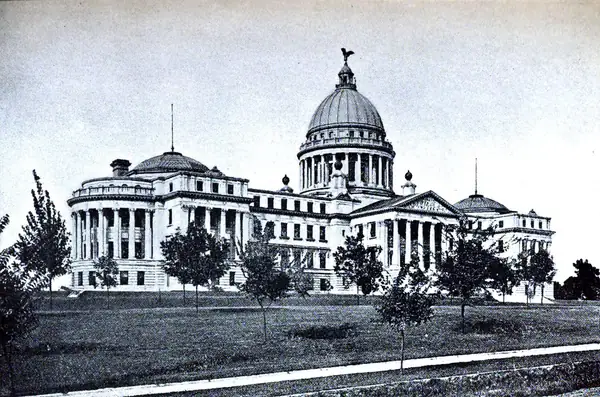 Mississippi State CapitolJackson
Jackson: 7,816 people (1900) for a domed Beaux-Arts capitol in about two years.
CensusMississippi 1900: 4,475 carpenters · 694 masons · 41 stonecutters · 76 plasterers · 154 iron and steel workersState figures cover the whole state, not the town. Town and county counts were not sourced (see censusOccupations.blanks).Census figures: Wikipedia ↗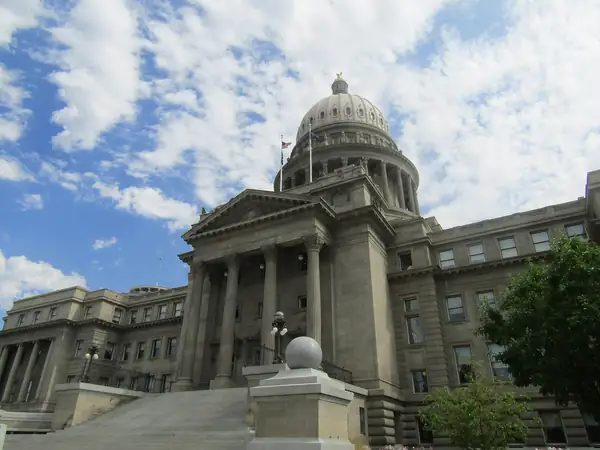 Idaho State CapitolBoise
Boise: 5,957 (1900).
CensusIdaho 1900: 1,265 carpenters · 191 masons · 44 stonecutters · 42 plasterers · 37 iron and steel workersState figures cover the whole state, not the town. Town and county counts were not sourced (see censusOccupations.blanks).Census figures: Wikipedia ↗ Washington State CapitolOlympia
Olympia: 7,795 (1920) for one of the tallest masonry domes in the world.
CensusWashington 1900: 7,671 carpenters · 1,036 masons · 238 stonecutters · 345 plasterers · 596 iron and steel workersState figures cover the whole state, not the town. Town and county counts were not sourced (see censusOccupations.blanks).Census figures: Wikipedia ↗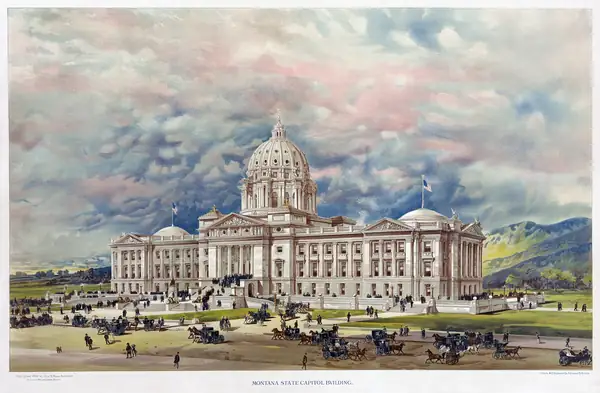 Montana State CapitolHelena
Helena: 10,770 (1900).
CensusMontana 1900: 2,831 carpenters · 572 masons · 138 stonecutters · 141 plasterers · 260 iron and steel workersState figures cover the whole state, not the town. Town and county counts were not sourced (see censusOccupations.blanks).Census figures: Wikipedia ↗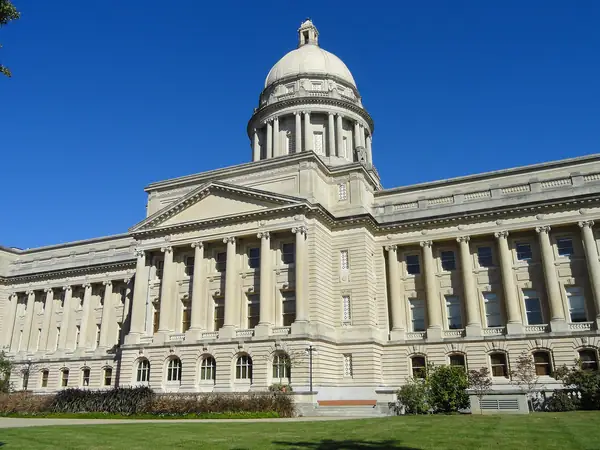 Kentucky State CapitolFrankfort
Frankfort: 9,487 (1900).
CensusKentucky 1900: 10,216 carpenters · 2,359 masons · 699 stonecutters · 808 plasterers · 3,889 iron and steel workersState figures cover the whole state, not the town. Town and county counts were not sourced (see censusOccupations.blanks).Census figures: Wikipedia ↗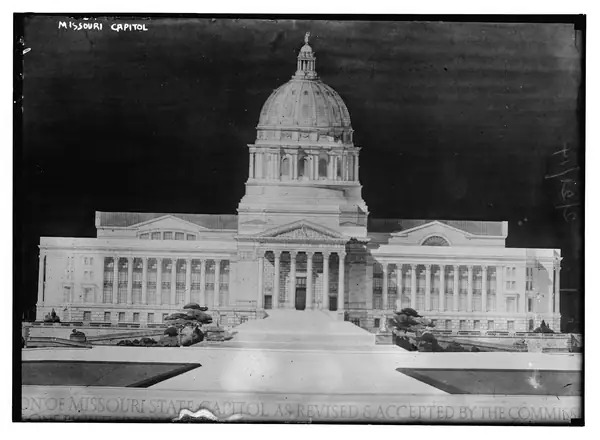 Missouri State CapitolJefferson City
Jefferson City: 11,850 (1910).
CensusMissouri 1900: 21,540 carpenters · 6,147 masons · 1,520 stonecutters · 1,966 plasterers · 5,440 iron and steel workersState figures cover the whole state, not the town. Town and county counts were not sourced (see censusOccupations.blanks).Census figures: Wikipedia ↗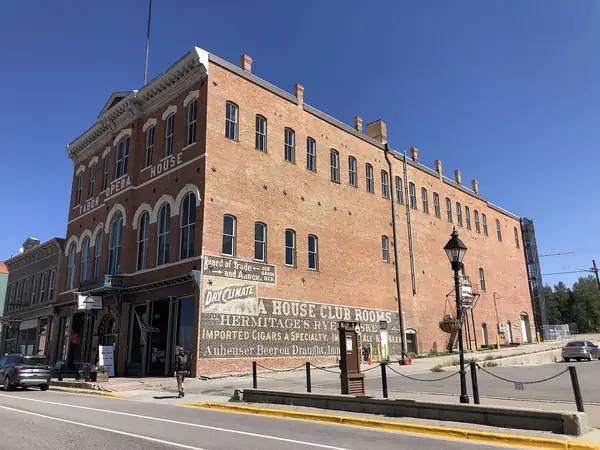 Tabor Opera HouseLeadville, Colorado
Leadville: 14,820 (1880), a mining camp that fell to 10,384 by 1890.
CensusColorado 1880: 3,773 carpenters · 1,166 masons and stonecutters · 177 iron and steel workersColorado 1900: 5,592 carpenters · 1,390 masons · 407 stonecutters · 388 plasterers · 1,475 iron and steel workersState figures cover the whole state, not the town. Town and county counts were not sourced (see censusOccupations.blanks).Census figures: Wikipedia ↗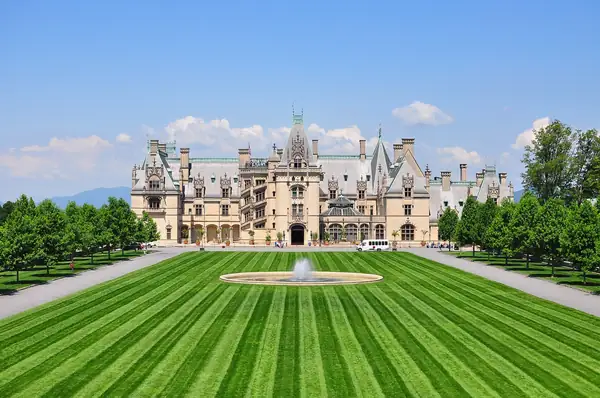 Biltmore HouseAsheville, North Carolina
Asheville: 10,235 (1890); 2,616 in 1880.
CensusNorth Carolina 1900: 8,067 carpenters · 1,756 masons · 415 stonecutters · 259 plasterers · 458 iron and steel workersState figures cover the whole state, not the town. Town and county counts were not sourced (see censusOccupations.blanks).Census figures: Wikipedia ↗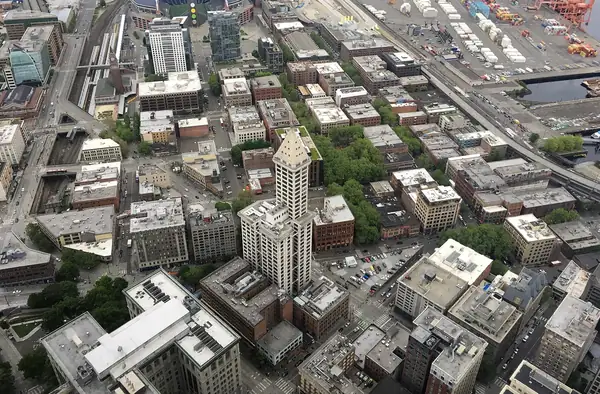 Seattle's Pioneer SquareSeattle
Seattle: 3,533 (1880) to 42,837 (1890).
CensusSeattle, Wash. 1900 (city): Washington 1900: 7,671 carpenters · 1,036 masons · 238 stonecutters · 345 plasterers · 596 iron and steel workersCity figure is males only, 1900; state figure for comparison.Census figures: Wikipedia ↗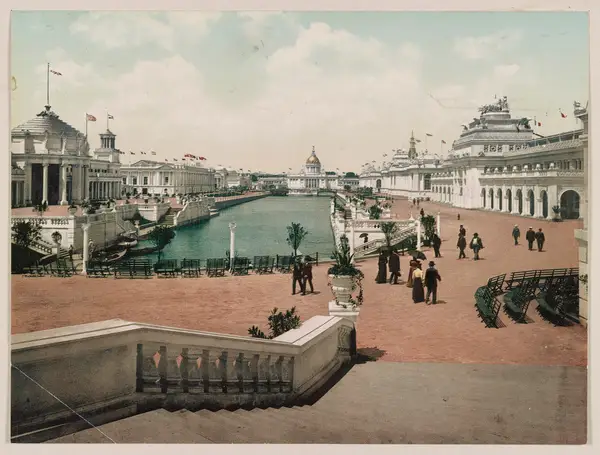 Trans-Mississippi and International ExpositionOmaha 1898
Omaha: 102,555 (1900) against 2.6 million admissions.
CensusOmaha, Nebr. 1900 (city): 1,364 carpenters · 423 masons · 94 stonecutters · 139 plasterers · 244 iron and steel workersNebraska 1900: 7,329 carpenters · 1,701 masons · 284 stonecutters · 692 plasterers · 472 iron and steel workersCity figure is males only, 1900; state figure for comparison.Census figures: Wikipedia ↗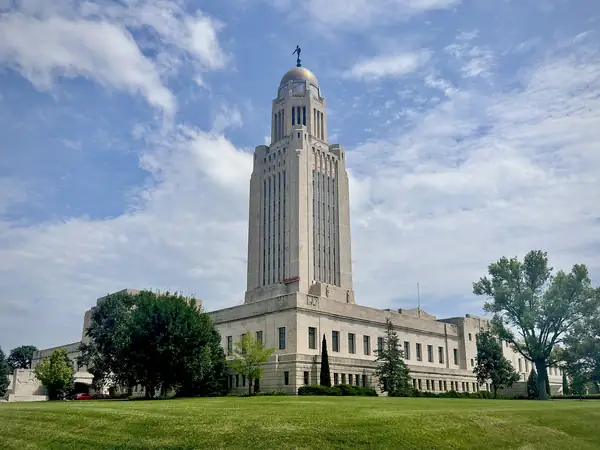 Bertram Goodhue: Nebraska State CapitolLincoln
Lincoln: 54,948 (1920); about $178 per resident, fully paid by 1935.
CensusLincoln, Nebr. 1900 (city): 481 carpenters · 168 masons · 52 plasterersNebraska 1900: 7,329 carpenters · 1,701 masons · 284 stonecutters · 692 plasterers · 472 iron and steel workersCity figure is males only, 1900; state figure for comparison.Census figures: Wikipedia ↗
Round-2 asylums whose recorded capacity or peak is 10% or more of the town (the second research batch mismatch inputs)
8 more pairs, from 15% (Northampton) to 247% (Central New York Psychiatric Center)
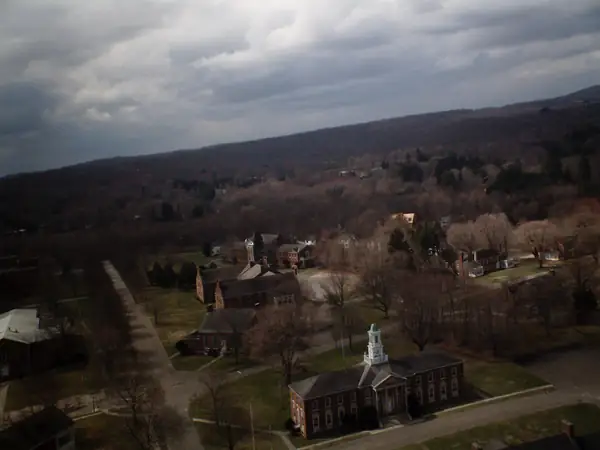 Fairfield Hills HospitalNewtown
At its peak, the hospital housed over 4,000 patients.; Newtown population 2,635 (1930 census); 4,000 (capacity) ÷ 2,635 = 152% of the town
Census figures: Wikipedia ↗- Mount Pleasant Mental Health InstituteMount Pleasant
In 1946, the facility reached its peak occupancy of 1,581 patients.; Mount Pleasant population 5,843 (1950 census); 1,581 (peak) ÷ 5,843 = 27% of the town
Census figures: Wikipedia ↗ 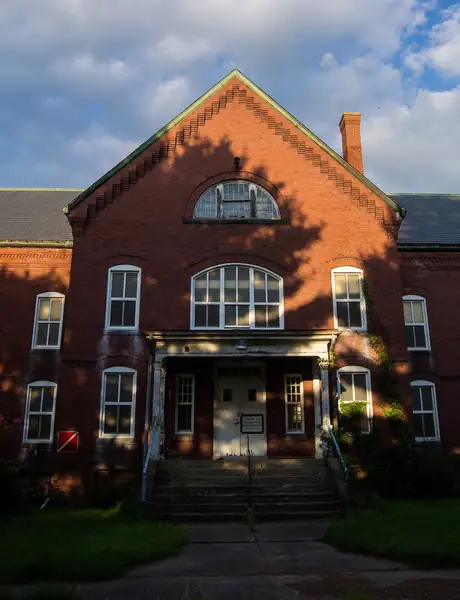 Medfield State HospitalMedfield
The complex included 58 buildings at its height on a property of some 1.4 sq mi (3.6 km2), and a capacity of 2,200 patients.; Medfield population 1,493 (1890 census); 2,200 (capacity) ÷ 1,493 = 147% of the town
Census figures: Wikipedia ↗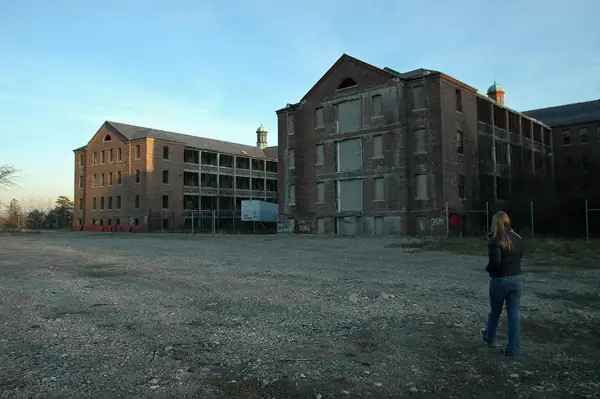 Northampton State HospitalNorthampton
Designed to accommodate 1000 patients, in 1925 work began on the largest expansion of Northampton State Hospital: Memorial Complex.; Northampton population 6,788 (1860 census); 1,000 (capacity) ÷ 6,788 = 15% of the town
Census figures: Wikipedia ↗- Marlboro Psychiatric HospitalMarlboro
It opened with a capacity to accommodate 500-800 patients.; Marlboro population 1,992 (1930 census); 800 (capacity) ÷ 1,992 = 40% of the town
Census figures: Wikipedia ↗ 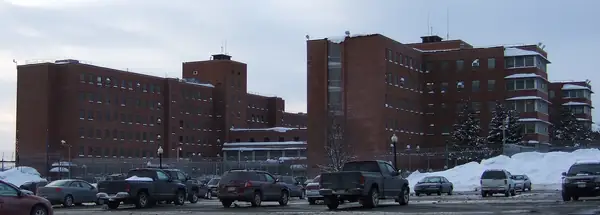 Central New York Psychiatric CenterMarcy
By the 1960s, Matteawan and Dannemora housed 3,000 inmates and suffered from extreme overcrowding.; Marcy population 1,213 (1890 census); 3,000 (capacity) ÷ 1,213 = 247% of the town
Census figures: Wikipedia ↗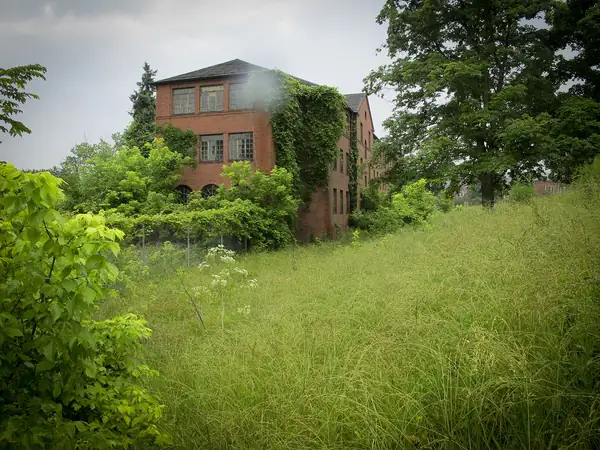 Mayview State HospitalBridgeville
By 1934, there were 4,200 patients and 450 staff at Mayview.; Bridgeville population 3,939 (1930 census); 4,200 (peak) ÷ 3,939 = 107% of the town
Census figures: Wikipedia ↗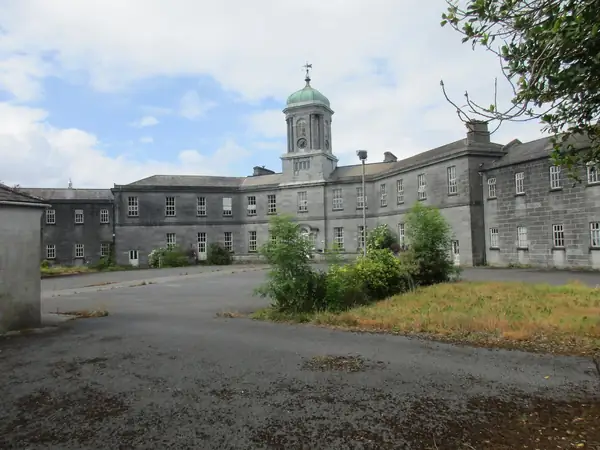 St. Brigid's HospitalBallinasloe
As it expanded conditions became very overcrowded with nearly 1,200 patients by the early 1900s and, having been renamed Ballinasloe Mental Hospital in the late 1920s, it accommodated some 2,000 patients by the 1950s.; Ballinasloe population 4,615 (1831 census); 1,200 (capacity) ÷ 4,615 = 26% of the town
Census figures: Wikipedia ↗
Capacity over 10% of the town
Trans-Allegheny about 30% at design (1860), 47% by 1880; Athens about 34% (1870); Central State patients exceed the 1960 city count
State capitals under 12,000 people when their capitol was begun
9: Topeka 5,790 (1870), Lansing 5,241 (1870), Boise 5,957 (1900), Jackson 7,816 (1900), Olympia 7,795 (1920), Frankfort 9,487 (1900), Helena 10,770 (1900), Austin 11,013 (1880), Jefferson City 11,850 (1910)
What the census occupation counts show
Every state we read had hundreds to tens of thousands of masons and stonecutters: in 1880 from 312 (Oregon) to 23,893 (New York); in 1900 from 191 masons (Idaho) to 6,147 (Missouri) among the pair states. The smallest pools sit under the late Western capitols: Idaho 191 masons and 44 stonecutters (1900) for the Boise capitol (1905–20); Montana 572 and 138 (1900) for Helena (1899–1902); Mississippi 694 masons but only 41 stonecutters (1900) for Jackson (1901–03).
3 entries
- Occupations/Idaho-1900US Census
- Occupations/Montana-1900US Census
- Occupations/Mississippi-1900US Census
What the census says
Counts of carpenters, masons, stonecutters, plasterers and iron workers, read from the printed US Census occupation tables. State counts cover the whole state, not the town.
Where it cuts against the hypothesis
- Strong by count (31) once the extra asylum-and-town pairs from the second research batch are added, but kept at moderate: the census occupation counts show large state-wide trade pools, which weakens the 'no one to build it' part of the mismatch. The size-versus-town gap itself stands.
- State census counts show sizeable trade pools in most pair states (e.g. Kansas 2,999 masons and stonecutters in 1880 while Topeka's capitol was going up; Michigan 4,412 in 1880 for Lansing and Traverse City). A state-funded building could draw on those pools, so a small town population on its own is not a labour gap.
Crews and the census
- Texas State CapitolAustin
- Texas, 1880: 1,668 brick and stone masons, marble and stone cutters in the whole state (1880 Table XXXIV, printed p. 847). 86 imported cutters = 5.2% of that count.
- Texas, 1900: 426 marble and stone cutters statewide (1900 Table 32). 86 = 20.2% of the 1900 cutters, twelve years after the capitol was finished.
Texas did have stoneworkers (1,668 masons and cutters in 1880), yet the builders still brought 86 cutters from Scotland. That fits a shortage of granite cutters specifically, not of masons in general.
- Biltmore HouseAsheville, North Carolina
- North Carolina, 1900: 1,756 masons (brick and stone) and 415 marble and stone cutters statewide (1900 Table 32). 60 stonemasons = 3.4% of the state's 1900 masons. (1890 North Carolina figures not sourced.)
- Biltmore is Indiana limestone, not brick, so no brick-rate estimate is made.
A crew of 60 is a small share of the state's masons.
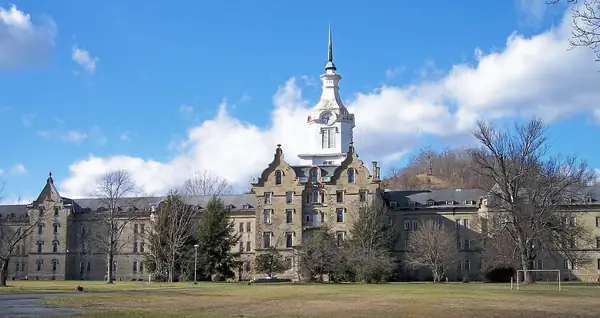 Trans-Allegheny Lunatic AsylumWeston, West Virginia
- West Virginia, 1880: 1,059 brick and stone masons, marble and stone cutters statewide; Weston itself had 1,516 people (1880 census, https://en.wikipedia.org/wiki/Weston,_West_Virginia). Weston town counts not sourced.
- West Virginia, 1900: 1,626 masons and 499 marble and stone cutters statewide.
No crew size is recorded, so no ratio can be made.
- Trans-Mississippi and International ExpositionOmaha 1898
- Omaha city, 1900 (males): 1,364 carpenters and joiners, 423 masons (brick and stone), 139 plasterers, 94 marble and stone cutters, 244 iron and steel workers (1900 Table 43, printed pp. 664 and 666).
- Nebraska, 1900: 7,329 carpenters, 1,701 masons, 692 plasterers statewide.
The fair palaces were staff (plaster and fibre) over frames, so carpenters and plasterers are the relevant trades. Without a recorded crew size there is nothing to divide.
31 census counts, by state and city
California 1880
9,056 carpenters1,565 masons and stonecutters1,099 iron and steel workers
Tenth Census of the United States (1880), Vol. 1, Statistics of the Population, p. 811 ↗Colorado 1880
3,773 carpenters1,166 masons and stonecutters177 iron and steel workers
carpenters: first digit 3 or 8 is hard to tell apart in this scan; 3,773 is read, and fits Colorado's 1900 figure of 5,592
Tenth Census of the United States (1880), Vol. 1, Statistics of the Population, p. 812 ↗Illinois 1880
22,972 carpenters7,535 masons and stonecutters6,283 iron and steel workers
Tenth Census of the United States (1880), Vol. 1, Statistics of the Population, p. 820 ↗Kansas 1880
7,119 carpenters2,999 masons and stonecutters618 iron and steel workers
Tenth Census of the United States (1880), Vol. 1, Statistics of the Population, p. 823 ↗Michigan 1880
16,541 carpenters4,412 masons and stonecutters2,868 iron and steel workers
Tenth Census of the United States (1880), Vol. 1, Statistics of the Population, p. 829 ↗New York 1880
49,754 carpenters23,893 masons and stonecutters16,261 iron and steel workers
Tenth Census of the United States (1880), Vol. 1, Statistics of the Population, p. 839 ↗Ohio 1880
29,770 carpenters10,713 masons and stonecutters13,419 iron and steel workers
Tenth Census of the United States (1880), Vol. 1, Statistics of the Population, p. 841 ↗Oregon 1880
1,899 carpenters312 masons and stonecutters97 iron and steel workers
carpenters: 1,899 read; the 8 could be a 3 in this scan (1,399)
Tenth Census of the United States (1880), Vol. 1, Statistics of the Population, p. 842 ↗Texas 1880
5,693 carpenters1,668 masons and stonecutters155 iron and steel workers
Tenth Census of the United States (1880), Vol. 1, Statistics of the Population, p. 847 ↗West Virginia 1880
3,205 carpenters1,059 masons and stonecutters1,517 iron and steel workers
carpenters: 3,205 read; the first digit could be an 8 in this scan, but 8,205 would be above the 1900 figure of 6,485
Tenth Census of the United States (1880), Vol. 1, Statistics of the Population, p. 852 ↗Arkansas 1900
4,192 carpenters671 masons (brick and stone)639 masons (line only)160 marble and stone cutters102 plasterers181 iron and steel workers
Twelfth Census of the United States (1900), Special Reports: Occupations (1904), p. 98, 100 ↗California 1900
15,916 carpenters1,774 masons (brick and stone)1,661 masons (line only)960 marble and stone cutters736 plasterers3,102 iron and steel workers
Twelfth Census of the United States (1900), Special Reports: Occupations (1904), p. 98, 100 ↗Colorado 1900
5,592 carpenters1,390 masons (brick and stone)1,249 masons (line only)407 marble and stone cutters388 plasterers1,475 iron and steel workers
Twelfth Census of the United States (1900), Special Reports: Occupations (1904), p. 98, 100 ↗Georgia 1900
9,479 carpenters1,914 masons (brick and stone)1,864 masons (line only)964 marble and stone cutters370 plasterers923 iron and steel workers
Twelfth Census of the United States (1900), Special Reports: Occupations (1904), p. 98, 100 ↗Idaho 1900
1,265 carpenters191 masons (brick and stone)186 masons (line only)44 marble and stone cutters42 plasterers37 iron and steel workers
Twelfth Census of the United States (1900), Special Reports: Occupations (1904), p. 99, 101 ↗Kentucky 1900
10,216 carpenters2,359 masons (brick and stone)2,087 masons (line only)699 marble and stone cutters808 plasterers3,889 iron and steel workers
Twelfth Census of the United States (1900), Special Reports: Occupations (1904), p. 99, 101 ↗Lincoln, Nebr. 1900 · city · males
481 carpenters168 masons (brick and stone)52 plasterers
Twelfth Census (1900), Special Reports: Occupations (1904), p. 449 ↗Minnesota 1900
15,191 carpenters4,061 masons (brick and stone)3,940 masons (line only)1,139 marble and stone cutters804 plasterers1,889 iron and steel workers
Twelfth Census of the United States (1900), Special Reports: Occupations (1904), p. 99, 101 ↗Mississippi 1900
4,475 carpenters694 masons (brick and stone)663 masons (line only)41 marble and stone cutters76 plasterers154 iron and steel workers
Twelfth Census of the United States (1900), Special Reports: Occupations (1904), p. 99, 101 ↗Missouri 1900
21,540 carpenters6,147 masons (brick and stone)5,356 masons (line only)1,520 marble and stone cutters1,966 plasterers5,440 iron and steel workers
Twelfth Census of the United States (1900), Special Reports: Occupations (1904), p. 108, 110 ↗Montana 1900
2,831 carpenters572 masons (brick and stone)535 masons (line only)138 marble and stone cutters141 plasterers260 iron and steel workers
Twelfth Census of the United States (1900), Special Reports: Occupations (1904), p. 108, 110 ↗Nebraska 1900
7,329 carpenters1,701 masons (brick and stone)1,614 masons (line only)284 marble and stone cutters692 plasterers472 iron and steel workers
Twelfth Census of the United States (1900), Special Reports: Occupations (1904), p. 108, 110 ↗North Carolina 1900
8,067 carpenters1,756 masons (brick and stone)1,658 masons (line only)415 marble and stone cutters259 plasterers458 iron and steel workers
Twelfth Census of the United States (1900), Special Reports: Occupations (1904), p. 108, 110 ↗Omaha, Nebr. 1900 · city · males
1,364 carpenters423 masons (brick and stone)94 marble and stone cutters139 plasterers244 iron and steel workers
Twelfth Census (1900), Special Reports: Occupations (1904), p. 664, 666 ↗Oregon 1900
4,357 carpenters573 masons (brick and stone)541 masons (line only)155 marble and stone cutters164 plasterers455 iron and steel workers
Twelfth Census of the United States (1900), Special Reports: Occupations (1904), p. 109, 111 ↗Seattle, Wash. 1900 · city · males
left blank: this column is too faint in the census.gov scan to read single digits (carpenters 1,8?0, masons 2?0, plasterers 11?)
Twelfth Census (1900), Special Reports: Occupations (1904), p. 469 ↗Springfield, Ill. 1900 · city · males
145 masons (brick and stone)48 plasterers
carpenters left blank: the scan reads 608, 603 or 508
Twelfth Census (1900), Special Reports: Occupations (1904), p. 469 ↗Texas 1900
12,433 carpenters2,020 masons (brick and stone)1,909 masons (line only)426 marble and stone cutters242 plasterers745 iron and steel workers
Twelfth Census of the United States (1900), Special Reports: Occupations (1904), p. 109, 111 ↗Topeka, Kans. 1900 · city · males
609 carpenters137 masons (brick and stone)52 plasterers
faint print; column order on the page is Taunton, Terre Haute, Toledo, Topeka
Twelfth Census (1900), Special Reports: Occupations (1904), p. 473 ↗Washington 1900
7,671 carpenters1,036 masons (brick and stone)1,014 masons (line only)238 marble and stone cutters345 plasterers596 iron and steel workers
Twelfth Census of the United States (1900), Special Reports: Occupations (1904), p. 109, 111 ↗West Virginia 1900
6,485 carpenters1,626 masons (brick and stone)1,564 masons (line only)499 marble and stone cutters354 plasterers2,200 iron and steel workers
Twelfth Census of the United States (1900), Special Reports: Occupations (1904), p. 109, 111 ↗
What the census volumes could not tell us
Town- or county-level counts for the small towns (Weston, Athens, Fergus Falls, Traverse City, Ovid/Willard, Napa, Salem OR, Milledgeville, Lansing, Austin, Jackson, Boise, Olympia, Helena, Frankfort, Jefferson City, Leadville, Asheville) in any year 1850–1900
The printed census volumes only break occupations down by city for the largest cities (1870 and 1880: 50 principal cities; 1890: cities of 25,000+ in Table 118; 1900: cities of 25,000+ in Table 42). None of these towns was big enough. County counts would need IPUMS full-count microdata, which needs an account, so they are left blank.
1850, 1860 and 1870 state counts
The 1870 census.gov PDFs we downloaded (1870a-34 to 40) have no text layer and were not read page by page in this pass; 1850 and 1860 volumes were not downloaded. Left blank.
1890 state and city counts
The 1890 Population Part II volumes were downloaded, but their state occupation tables did not come through in the text layer and were not read from images in this pass. Table 118 (cities of 50,000+) is in section 5; of the pair towns only Omaha and Lincoln were that size in 1890, and the table was not read from images in this pass. Left blank.
Seattle 1900 city counts; Springfield 1900 carpenters
Too faint in the census.gov scan to read every digit (see 'legibility').
Stone carvers and bricklayers as separate trades
Neither is its own line in these tables: bricklayers fall inside 'Masons (brick and stone)', and carvers are not split out from 'Marble and stone cutters'. Left blank rather than guessed.
UK and Canada equivalents (e.g. Holloway Sanatorium, Colney Hatch, Ottawa, Victoria BC)
Not sourced in this pass. Left blank.
Open questions
- How many masons, carvers and labourers lived in each town or county in the build years? State counts are now in (censusOccupations); town and county counts still need IPUMS full-count data.
- Who paid: the town, the state, or outside money?
- Where did the workers live while they built it?
What would support it
- Occupation counts showing far fewer masons and carvers locally than the job needed, with no record of camps or imported crews.
- Maps showing the building before the town.
What would rule it out
- State or federal funding and imported crews on record (as for Texas), with camps and payrolls.
- Patients and staff counted separately from the town (asylums and capitols serve a whole state, not a town). This is the strongest ordinary reading and should be checked case by case.
- State census counts show sizeable trade pools in most pair states (e.g. Kansas 2,999 masons and stonecutters in 1880 while Topeka's capitol was going up; Michigan 4,412 in 1880 for Lansing and Traverse City). A state-funded building could draw on those pools, so a small town population on its own is not a labour gap.
Selection bias
Medium: towns chosen where a building is known; census counts are city-proper and leave out surrounding county.
The rating counts how much of our gathered material lines up with the pattern. It is not a probability that the hypothesis is true, and every count is limited by which buildings were picked for the app (see 'selectionBias' on each card).
Next hypothesis
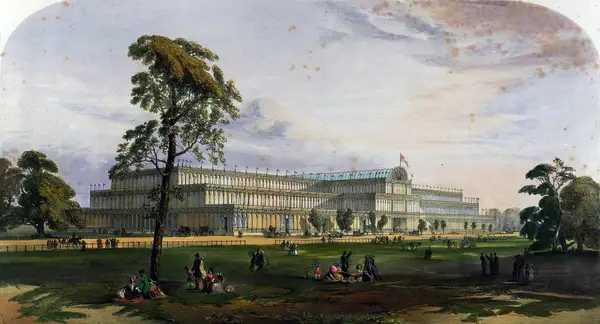 Moderate19 entries#10A second clearance: the 1930s and the 1950s–60sThe surviving giants of the fair era didn't fade out evenly. Five great fair halls were lost to fire or demolition between 1931 and 1937, and then a second wave of grand stations, city halls and banks came down between 1950 and 1968. Common sense: if these buildings were simply old and costly, losses would be spread out. Bunched losses suggest a policy, a fashion, or a reason to remove a particular kind of evidence.