1904 · St. Louis, United States
Investigate this fair
9 clues in 6 photos, strongest first. Tap a photo to zoom in on each clue.
- 2 Masonry, not plaster
- 2 Below-grade windows
- 1 Dug out
- 1 Scale
- 1 Other details
- 1 Weathering
- 1 Demolition core
Case file
The Hypothesis
The 1903 'construction' photos at St. Louis show the ground being dug out and replanted around palaces that were already standing, which points to cleanup and staging of existing buildings rather than building from nothing.
St. Louis has the single best photo for this case: a trench being dug against a palace that is already standing. Mature trees being hoisted in, a drained basin and a survivor whose plinth meets the lawn add to it.
What the photos and records show
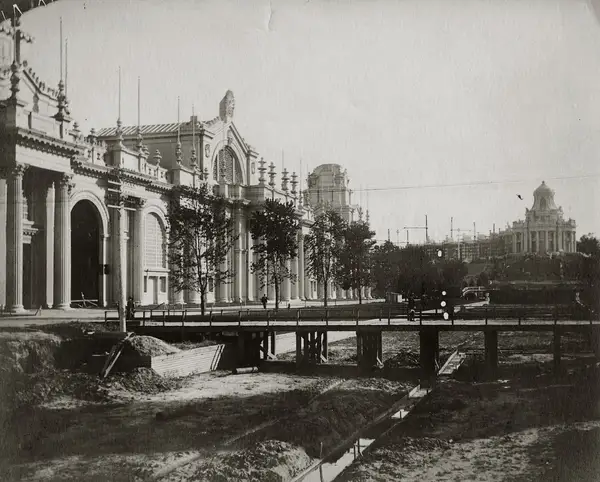
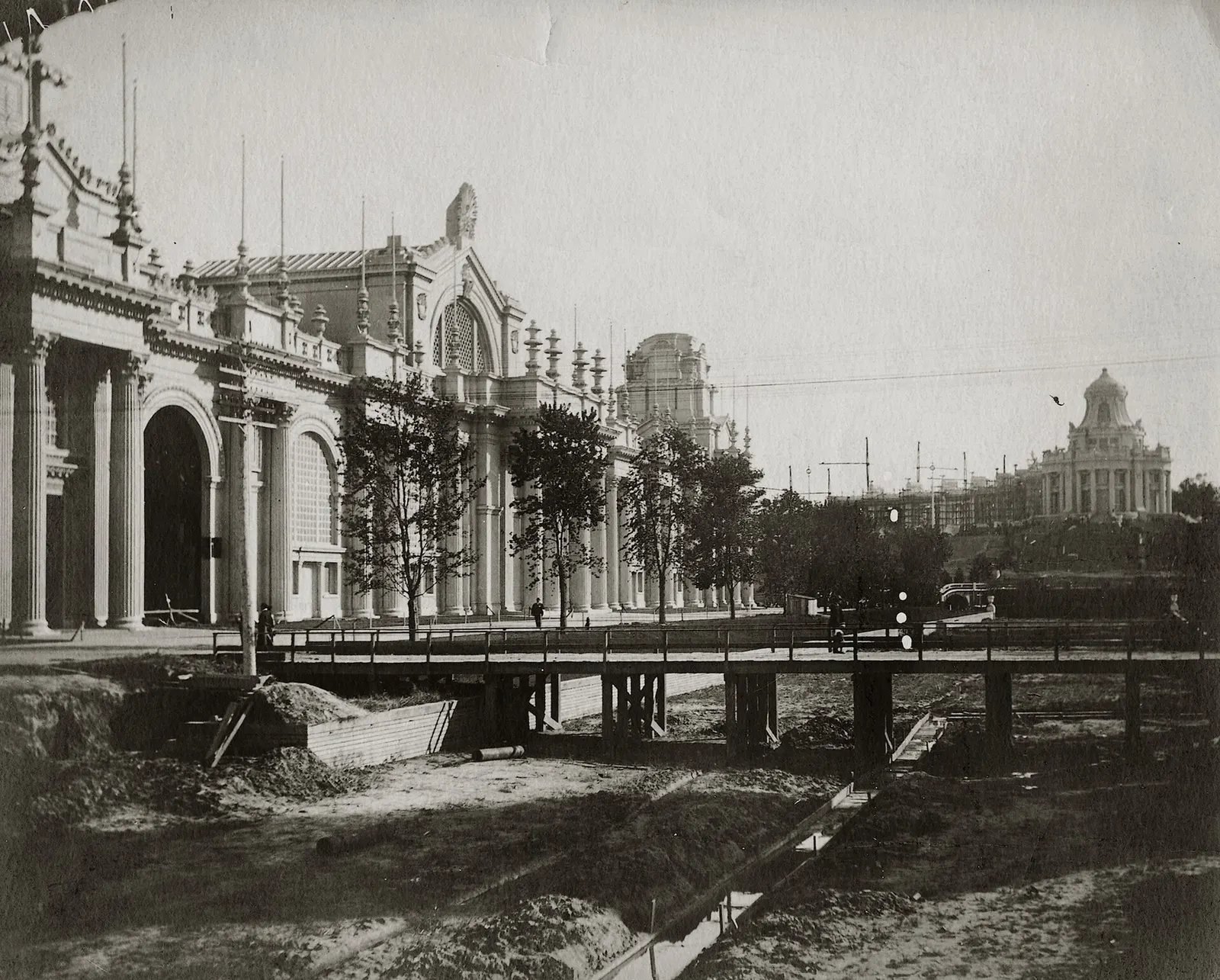
- The 1903 canal photo shows a raw trench with spoil heaps and a masonry retaining wall right against a palace whose colonnade already looks finished.
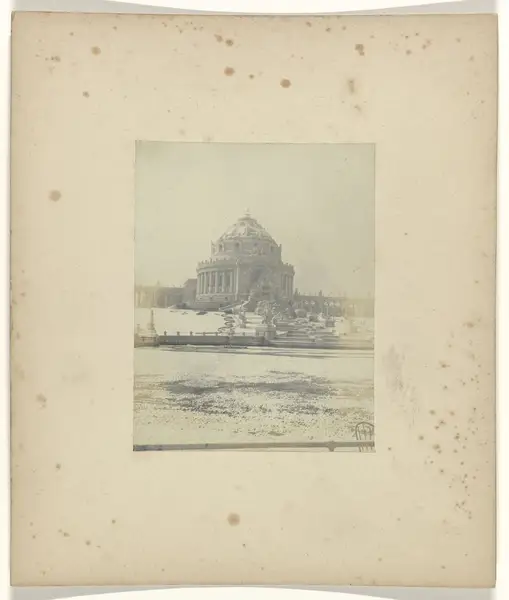
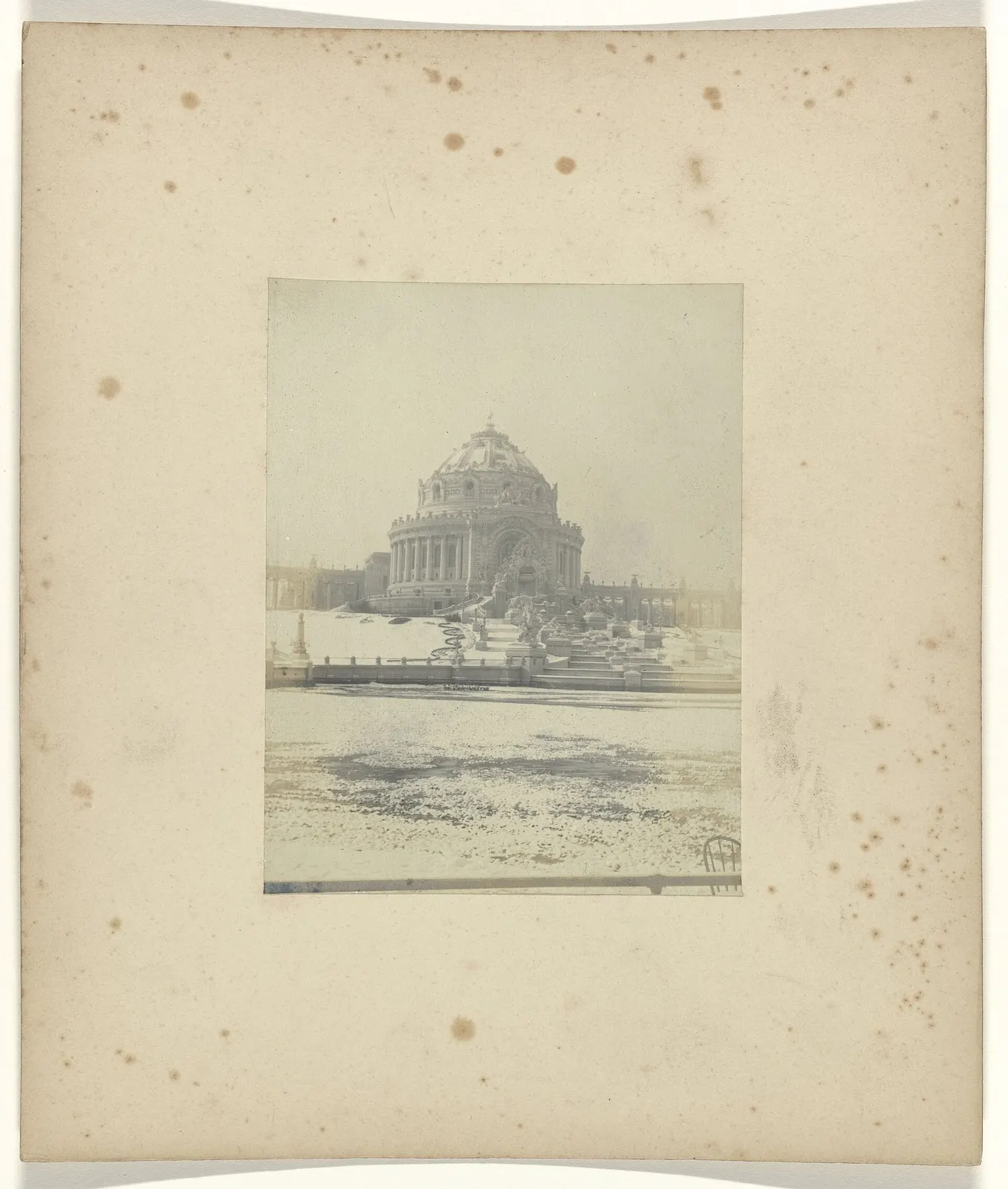
- Festival Hall stands over the drained, snowy Grand Basin with dry cascades.
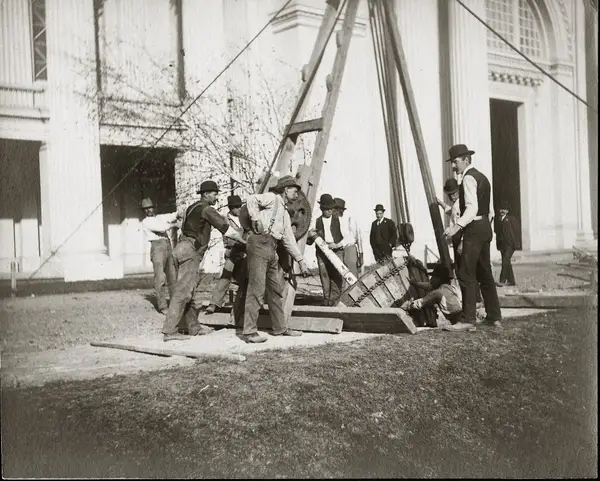
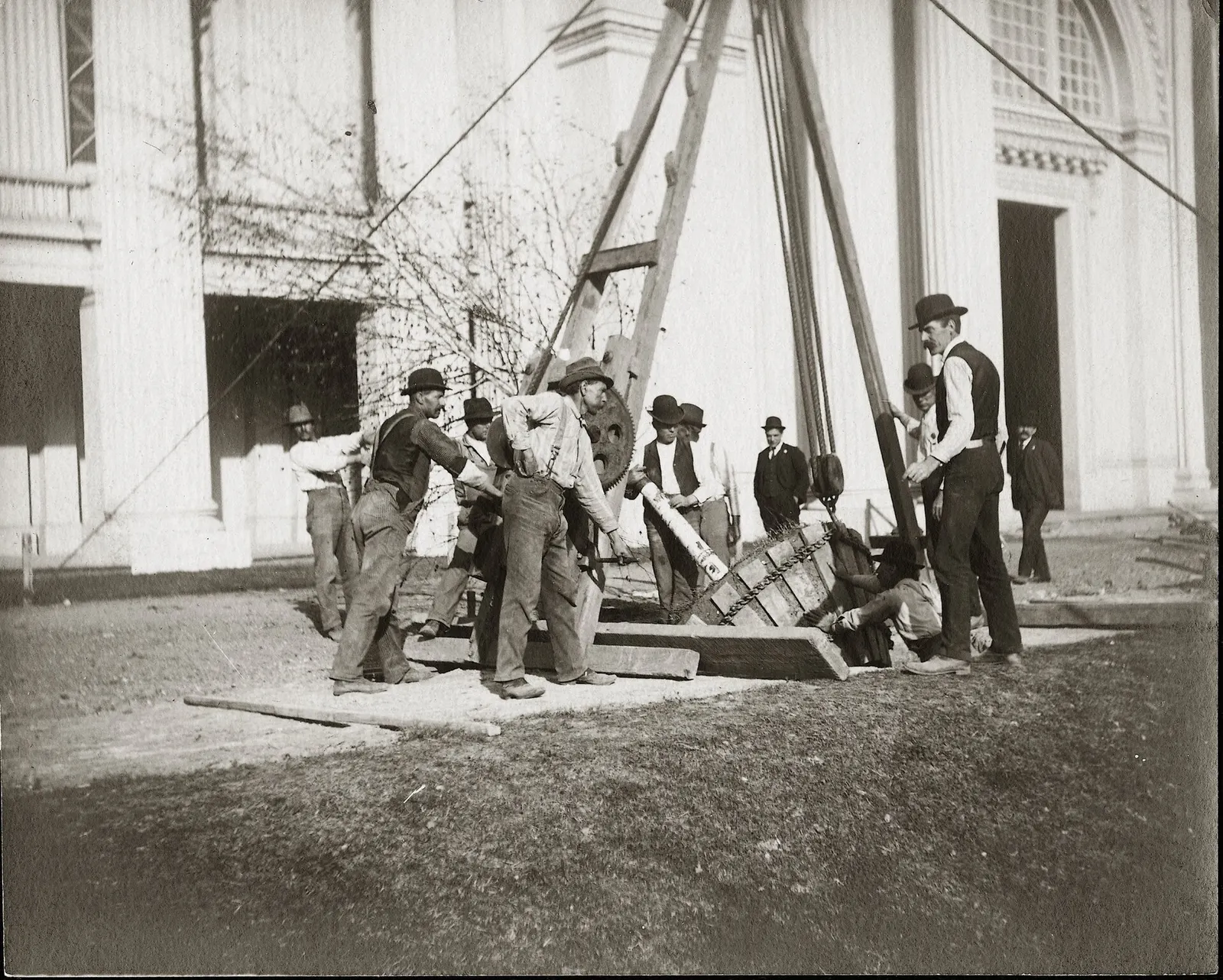
- Mature trees were moved in by about twelve men with a timber tripod, one tree at a time.
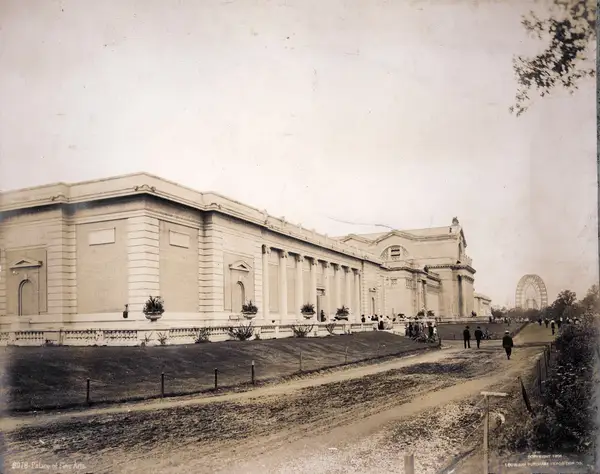
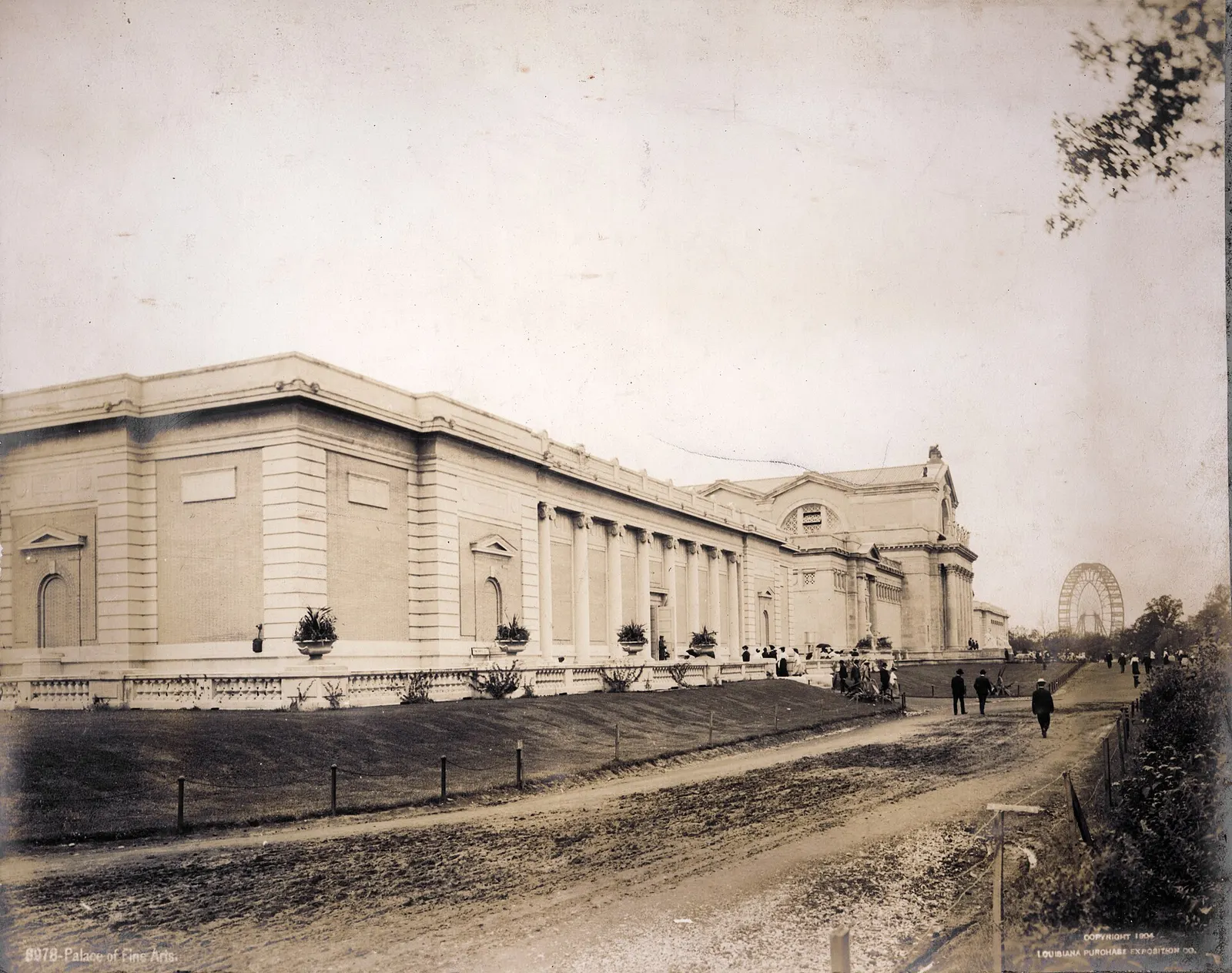
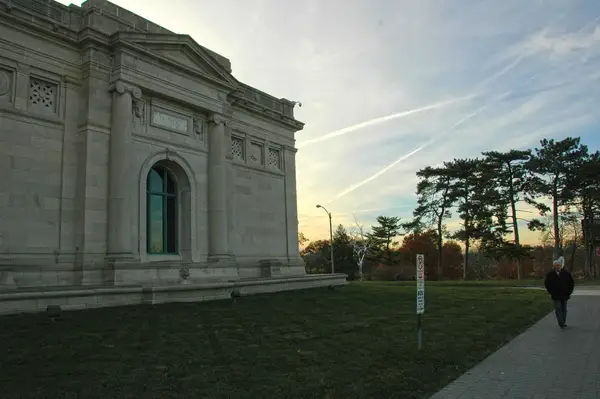
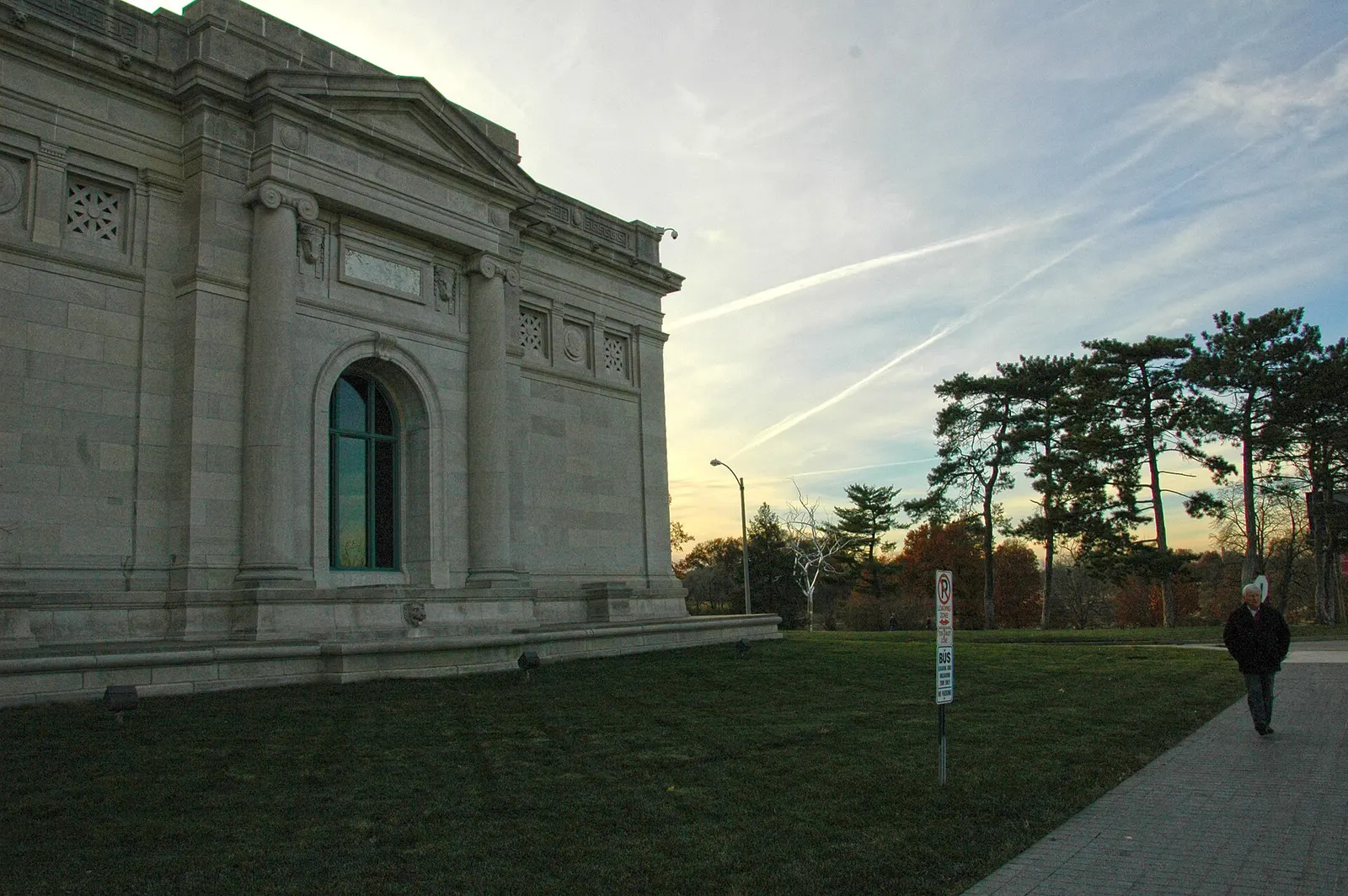
- The Fine Arts Palace sits on a graded bank; today its plinth meets the lawn with a lion head at grade.
- The record gives about 1,200 acres and asks where 1,500 buildings' worth of material went.
Open questions
- Why is the ground still being dug when the palace is already standing?
- Is the Fine Arts Palace's original ground line higher than in 1904?
- Where did the demolished material go?
What would settle it
- A dated photo series of the palaces rising from foundations.
- Survey of the Saint Louis Art Museum's foundations and any lower floor.
- Salvage and demolition contracts.
Photo 1
View of construction work in the canal on the west side of the Palace of Electricity at the Louisiana Purchase Exposition, 27 September 1903
 Zoom in
Photo: Unknown photographer · Public domain · via Wikimedia Commons
- 1A trench dug beside a finished palaceThe 1903 photo shows a raw trench with spoil heaps and a brick or masonry retaining wall right against a palace whose colonnade already looks finished. A wooden footbridge crosses the cut, and derrick poles stand on a far building.The questionWhy is the ground still being dug out when the palace is already standing?
- 2Masonry retaining wallThe canal wall is laid in brick or stone courses, not timber.The questionWhat does a masonry wall like that say about the building above it?
Photo 2
Workers planting a tree in front of the Palace of Electricity in preparation for the Louisiana Purchase Exposition
 Zoom in
Photo: Unknown photographer · Public domain · via Wikimedia Commons
Photo 3
Gezicht op de Festival Hall en het drooggelegde Grand Basin (of Lagoon) op het terrein van de wereldtentoonstelling in St. Louis (Louisiana Purchase Exposition), 1904, RP-F-2010-21-9
 Zoom in
Photo: Rijksmuseum · CC0 · via Wikimedia Commons
Photo 4
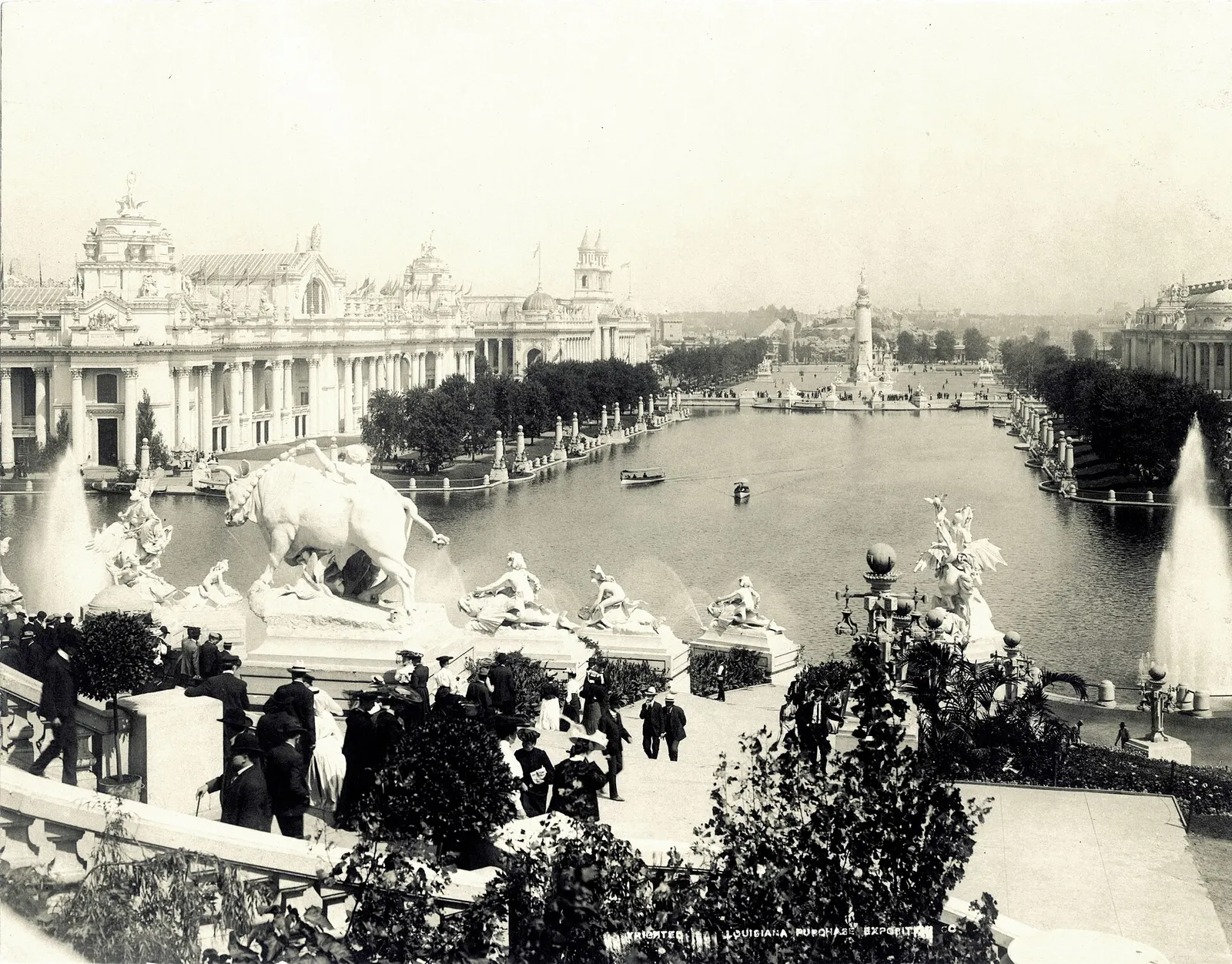
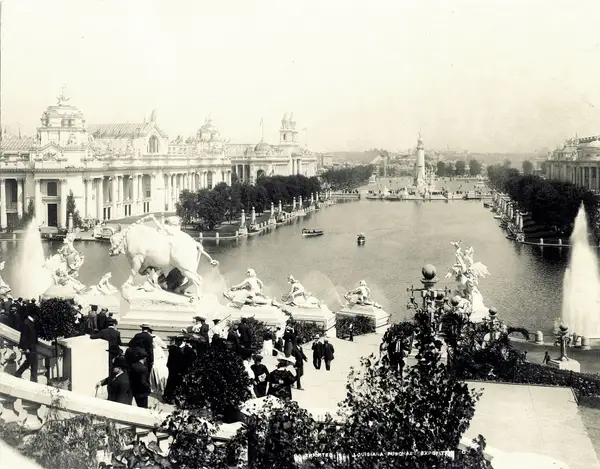
View looking north over the Grand Basin towards the Peace Monument (Louisiana Purchase Monument) at the 1904 World's Fair
 Zoom in
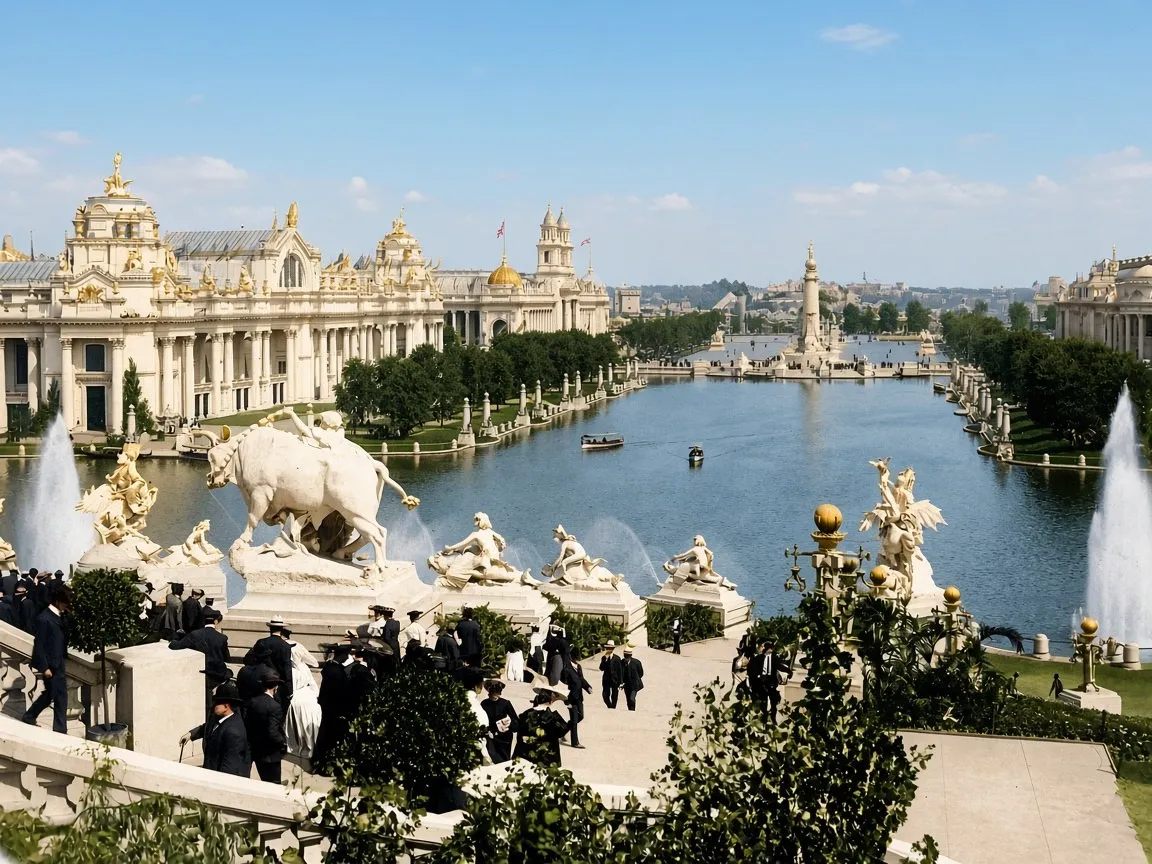
Photo: Official Photographic Company · Public domain · via Wikimedia Commons
- 1Full canopy along the Grand BasinBy 1904 the Grand Basin is lined with full, dense trees. The 1903 photo shows big trees being transplanted.The questionHow many mature trees were moved, and from where?
- 21,500 buildings, almost none leftThe panorama runs to the horizon with palaces on every side. The record gives about 1,200 acres and asks where 1,500 buildings' worth of material went.The questionWhere did all that material go?
Photo 5
View of the completed Palace of Fine Arts at the 1904 World's Fair
 Zoom in
Photo: Official Photographic Company · Public domain · via Wikimedia Commons
Photo 6
St. Louis Art Museum in Forest Park
 Zoom in
Photo: AmyBautz · CC BY-SA 3.0 · via Wikimedia Commons
- 1The plinth meets the lawnToday the Saint Louis Art Museum's stone walls meet the lawn at a low plinth, with a lion-head carving at grade.The questionIs the original ground line higher than it was in 1904?
- 2Stone ashlar wallsThe surviving palace has stone ashlar walls. The record says it was the one building kept.The questionWhy this one, and were the others really so different?
Hypotheses this fair feeds
Patterns where this fair, its buildings or its photo clues are part of the evidence.
 Strong124 entriesThe Great Completion Window, 1865–1915Most of the grand stone buildings in our collection are put on the record as finished inside one 50-year window, on every continent at the same time. Common sense says a world that had never built like this before doesn't suddenly finish capitols, opera houses, stations and city halls from Texas to Kuala Lumpur in the same few decades. One possibility is that much of this was older building stock that got new paperwork, new names and new 'completion' dates in that window.
 Strong111 entriesOne template, every continentThe same domes, the same Kirkbride layout, the same Garnier opera house and the same star-shaped fort turn up on every inhabited continent, often in the same decades and often openly called copies. Common sense says that in an age of letters and steamships, a style doesn't normally spread to Manaus, Hanoi, Durban and Winnipeg at once. One possibility is a shared source: a common building tradition or pattern-book much older than the names now attached to it.
 Strong110 entriesThe ground came up: buried floors are everywhereBuried ground floors, stairs that go down to a door, raised streets and dug-out temples appear in 35 countries in our collection, from Seattle to Rome to Edfu. Common sense says ground doesn't rise metres in a few centuries without something bringing it. The documented causes vary (river silt, drifting sand, volcanic ash, rubble, deliberate street raising), but the result is the same: older cities sit under newer ones far more often than most people picture. The open possibility is that some of the raising on record was the cleanup of a deposit rather than a choice.
 Strong57 entriesBuilt in two years, gone in one: the 'temporary' palacesEvery fair palace in our records is said to have gone up in three years or less, while permanent capitols and cathedrals of the same era took 8 to 24 years. Then most of the palaces were taken down or burned within months or a few years of closing. Common sense asks why anyone would spend that much effort on buildings meant to last one season, and why the 'temporary' ones went up so much faster than the permanent ones. One possibility is that some fair sites re-used or cleared existing structures, and the fair was the story that went with the clearance.
Related clues at other fairs
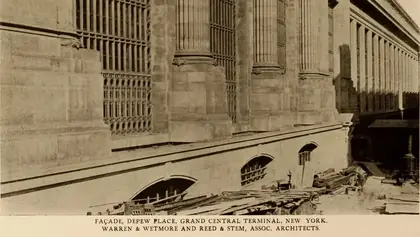 #4Grand Central: arched windows at the debris lineWhy does a brand-new terminal have arched openings at or below the working grade?
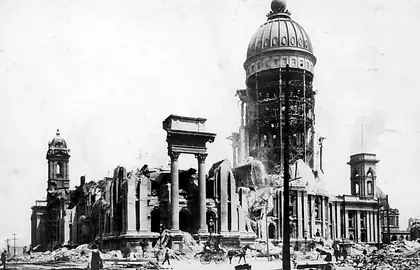 #6A steel cage under an intact domeIf grand civic buildings had steel and brick cores, what did the fair palaces have inside?
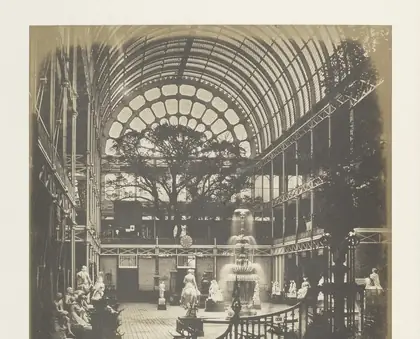 Solid wall at the lower levelWhat is that masonry base, when was it laid, and did it carry an earlier structure?
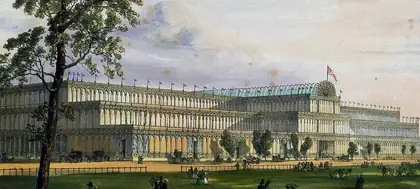 Carriages for scale along the north-east frontAt that scale, what did the hauling and erection really require from a horse-powered city?
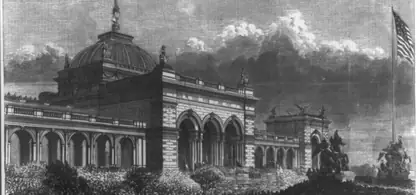 Memorial Hall: stone at the openingMemorial Hall was always meant to stay, but what does that say about the 'temporary' halls standing beside it?
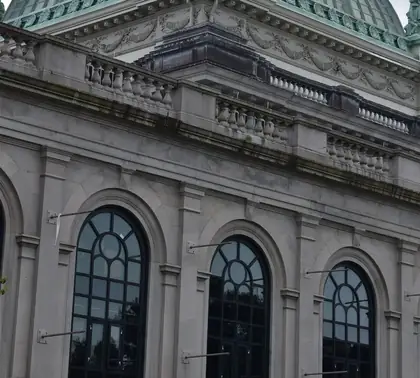 Dark streaks on the surviving corniceHow long does weathering like this take, and does any of it predate 1876?